Kickboxing Classes for Adults Build Discipline
July 13, 2026
Exercise for Anxiety Relief That Builds Control
July 15, 2026
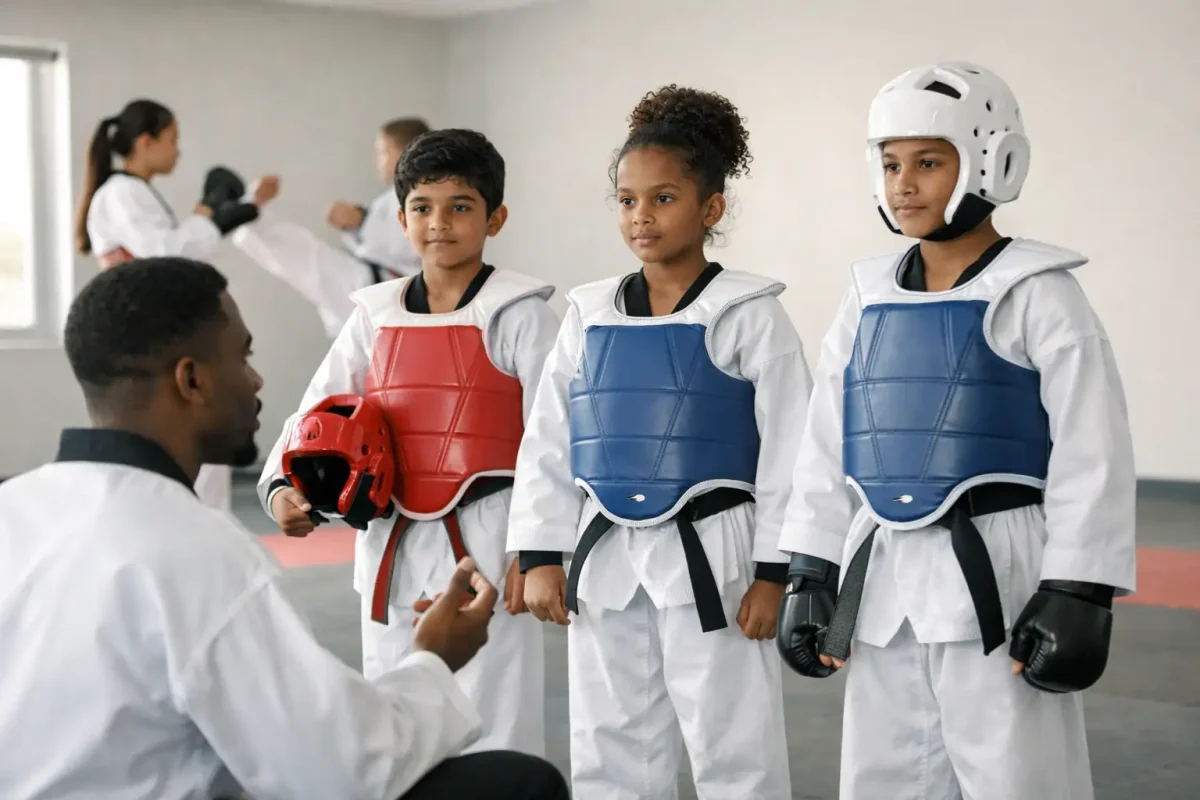
A child who struggles to pack a school bag, leave a screen, or recover after losing a game isn’t necessarily lazy or defiant. They may be missing a reliable structure for practising self-control. Kids martial arts discipline isn’t about making children silent, fearful, or rigid. It’s about giving them repeated opportunities to pause, listen, regulate their body, and follow through.
That work happens one class at a time. A bow at the beginning of training. A uniform worn with care. A clear instruction followed before the next movement begins. These are small actions, but they teach a powerful lesson: your choices matter, even when no one is chasing you.
What Kids Martial Arts Discipline Actually Means
Discipline is often mistaken for punishment. In a strong martial arts environment, it means something more useful: the ability to do what’s required, with respect and attention, even when motivation is low.
For children, this begins with simple expectations. Stand in line. Keep hands to yourself. Watch the coach. Try again after a mistake. Finish the drill. Over time, these expectations become internal skills rather than rules imposed from outside.
A good programme doesn’t demand perfect behaviour from day one. It teaches children how to build it. Beginners need repetition, clear boundaries, and adults who can correct them without shaming them. A child who is overwhelmed doesn’t need a lecture about being difficult. They need a calm coach, a predictable next step, and a chance to reset.
This matters especially for children with ADHD, autism, anxiety, or difficulties with emotional regulation. Martial arts isn’t a replacement for clinical care where that’s needed. It can, however, provide a valuable setting to practise attention, body awareness, frustration tolerance, and recovery within a consistent routine.
Structure Gives Children a Place to Practise Control
Children can’t develop discipline from speeches alone. They need an environment where the standard is visible and the routine repeats.
Martial arts classes naturally create that environment. There’s a beginning, a middle, and an end. Children warm up, learn skills, train with partners, and cool down. They know when it’s time to move, when it’s time to listen, and when it’s time to ask for help. Predictability lowers unnecessary stress, which makes learning easier.
The physical side matters too. A child who is restless, upset, or distracted often experiences those feelings in the body first. Controlled kicks, footwork, pad work, grappling drills, and breathing exercises create safe channels for energy. Instead of being told simply to “calm down”, they learn what calm can feel like after effort, breathing, and focus.
This is why discipline should never be confused with harshness. Excessive shouting may force short-term compliance, but it doesn’t reliably build judgement or self-regulation. Firm coaching works best when it’s paired with clear reasons, consistent consequences, and genuine respect.
The Lesson Isn’t the Belt
Belts can be motivating. They give children a visible marker of progress and a reason to keep showing up. But a belt alone doesn’t create character.
The deeper value is found in what happens before the grading: arriving when they don’t feel like it, correcting a stance for the tenth time, accepting feedback, and treating a newer student with patience. Those moments shape identity. The child starts to see themselves as someone who can stay with a challenge.
That identity is more durable than excitement. Motivation rises and falls. Discipline is what carries a child through a difficult school term, a disappointing competition result, or a day when confidence is low.
Parents can support this without turning martial arts into another pressure point. Ask questions that go beyond “Did you win?” or “What belt are you getting?” Try asking what was difficult, how they handled a correction, or whether they helped someone in class. Praise effort, composure, and consistency as much as athletic ability.
Confidence Must Be Earned Safely
Real confidence isn’t loudness. It’s evidence.
A child gains evidence when they learn a technique that once felt impossible, speak clearly when called on, or return to training after a frustrating day. Martial arts creates frequent, manageable tests of courage. The child is challenged, supported, corrected, and allowed to improve.
There’s a trade-off here. A programme that’s too easy may entertain children but leave them unprepared for challenge. A programme that’s too intense, poorly supervised, or obsessed with winning can make a child anxious or ashamed. The right standard is demanding but achievable. Children should feel stretched, not crushed.
At Edson Breedy Athletics, that balance is central to the work. Training is structured and purposeful, while coaching recognises that every child arrives with a different nervous system, confidence level, and learning style. The goal isn’t to produce identical children. The goal is to help each child become more capable of directing themselves.
How Martial Arts Discipline Carries Into Home and School
No class can guarantee a child will suddenly tidy every room or complete every piece of homework without resistance. Children are still children. But regular training can strengthen habits that transfer into daily life.
A child who has practised listening for a sequence of instructions may find it easier to begin a school task. A child who has learned to breathe and reset after missing a target may be less likely to collapse after a mistake. A child who understands that progress comes from repetition may be more willing to revise, read, or try again.
Transfer is strongest when parents keep the message consistent. Use the same language at home that the child hears in training: focus on the next task, control your body, take a breath, finish what you started. Keep expectations age-appropriate. A six-year-old needs shorter instructions and more reminders than a teenager. Discipline grows in stages.
Avoid using martial arts as a threat. Saying “You can’t go training because you misbehaved” can remove one of the very places where a child practises regulation and positive peer connection. In some situations a consequence may be appropriate, but it’s often more effective to let training reinforce the expectation: responsibility at home and responsibility in class belong together.
What Parents Should Look For in a Martial Arts Class
Not every martial arts class develops discipline in the same way. Style matters less than coaching quality, safety, and culture.
Look for instructors who set standards without humiliating children. They should be able to explain expectations clearly, adapt communication for different learners, and maintain control of the room without creating fear. Children should be supervised closely during partner drills and taught that skill includes restraint.
A well-run class also has progression. Children need to know what they’re working towards and what good effort looks like. That doesn’t mean every child advances at exactly the same pace. It means the path is understandable: attendance, technique, respect, effort, and readiness all matter.
Pay attention after the first few sessions. Does your child feel challenged but willing to return? Are they beginning to use the language of focus and effort? Do they feel safe enough to make mistakes? A little nervousness is normal when learning something new. Persistent dread is a signal to ask questions.
Discipline Over Mood
The most valuable lesson martial arts can offer a child is simple: feelings are real, but they don’t have to be in charge.
Your child may feel tired, embarrassed, angry, excited, or unsure. Training teaches them to notice that state and still make a useful choice. Stand ready. Breathe. Listen. Try once more.
That isn’t just preparation for a grading or a competition. It’s preparation for the moments when life asks them to stay steady before they feel ready.
Train your mind. Build your body.
Your first week is just TTD $50, every discipline, every class, no experience needed. Come find out what training with EBA feels like.