Nervous System Regulation Exercises That Build Control
July 19, 2026
Mind Body Training Classes That Build Resilience
July 21, 2026
A child who can’t sit still isn’t always being difficult. An adult who feels tense, distracted or flat isn’t always lacking willpower. Often, the nervous system is asking for a safe, purposeful way to discharge energy and practise control. Movement changes the brain because the body isn’t separate from the mind. Train the body with structure, and you give the brain repeated evidence that it can settle, adapt and follow through.
That’s why training should be more than burning calories or surviving a hard class. A well-led session can become practice for attention, emotional regulation, confidence and discipline. The goal isn’t to feel motivated every day. The goal is to build a brain that knows what to do when motivation disappears.
How movement changes the brain under pressure
Your brain is constantly assessing safety. When it detects threat, overload or uncertainty, it shifts resources towards survival: faster breathing, muscle tension, racing thoughts, irritability or shutdown. This response is useful when danger is real. It becomes exhausting when it stays switched on through work stress, school pressure, conflict, poor sleep or constant digital stimulation.
Deliberate movement gives that stress response somewhere to go. A boxing combination, a set of controlled squats, a jiu-jitsu drill or a yoga sequence asks the brain to organise breathing, balance, timing and effort. Rather than being trapped in a loop of thought, you’ve a physical task that requires presence.
This doesn’t mean every hard workout is calming. Training too intensely when you’re depleted can leave you more wired, sore or discouraged. The right dose depends on the person, their sleep, health, experience and current stress load. Sometimes the best session is technical and controlled. Sometimes it’s demanding. Disciplined training means choosing the dose that develops you, not simply punishing yourself.
Focus is built through repetition, not reminders
Telling someone to focus rarely works. Giving them a clear task, immediate feedback and a reason to repeat it works far better.
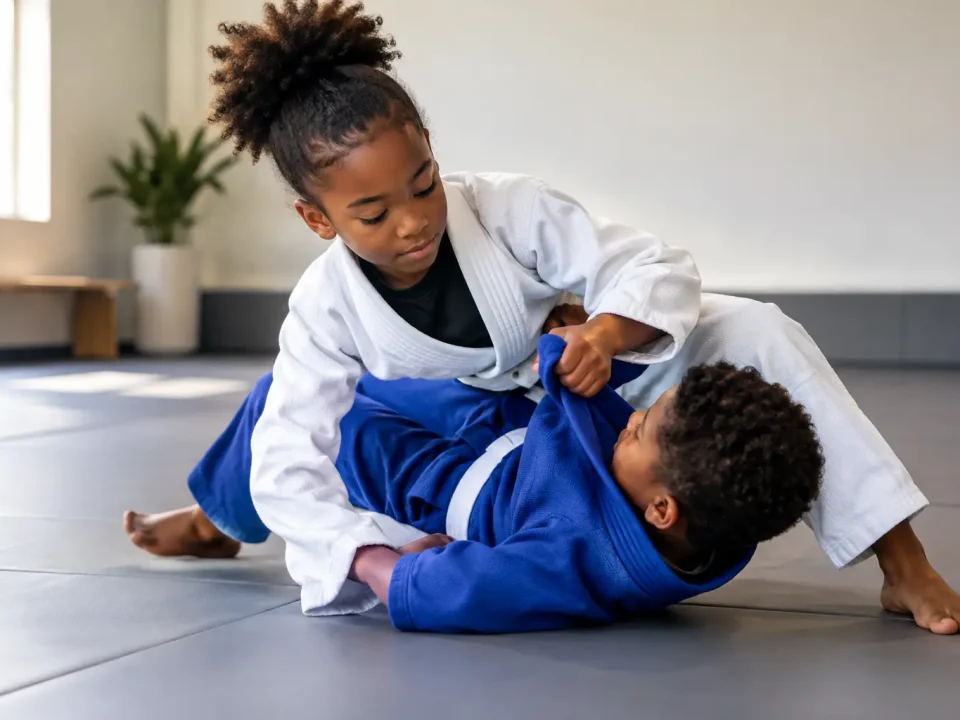
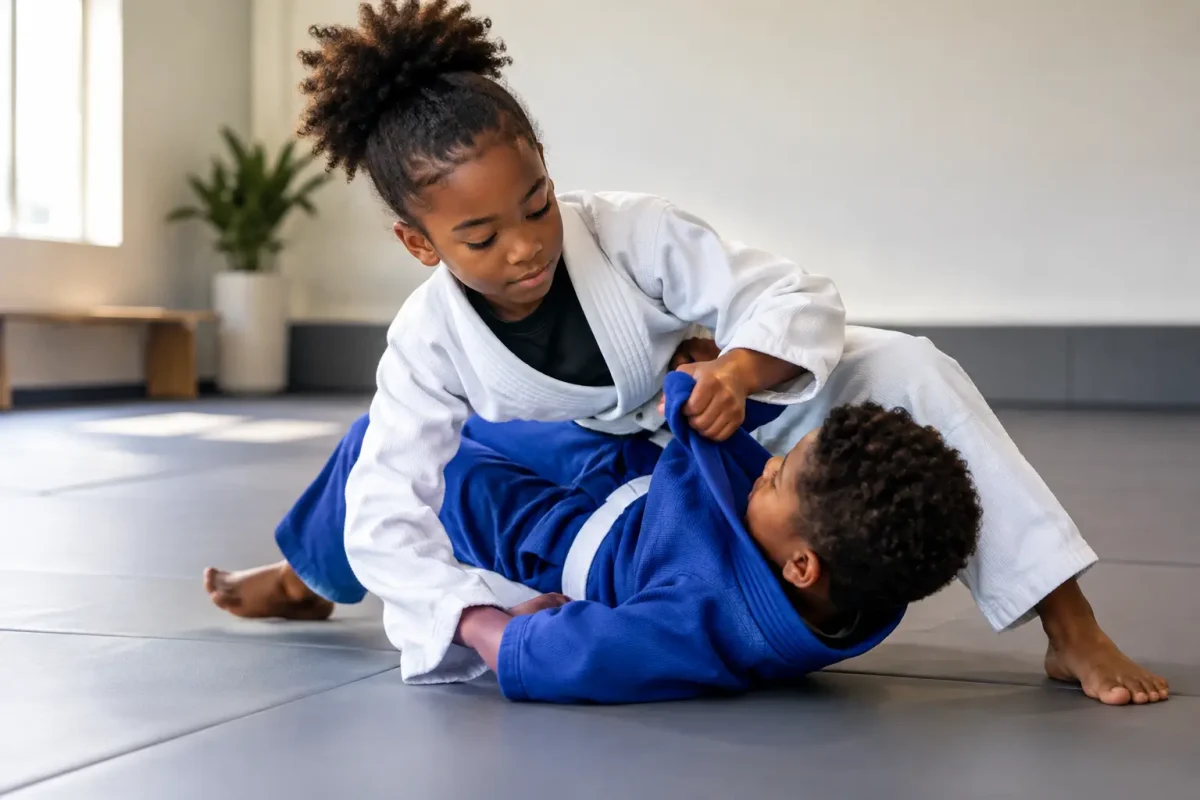
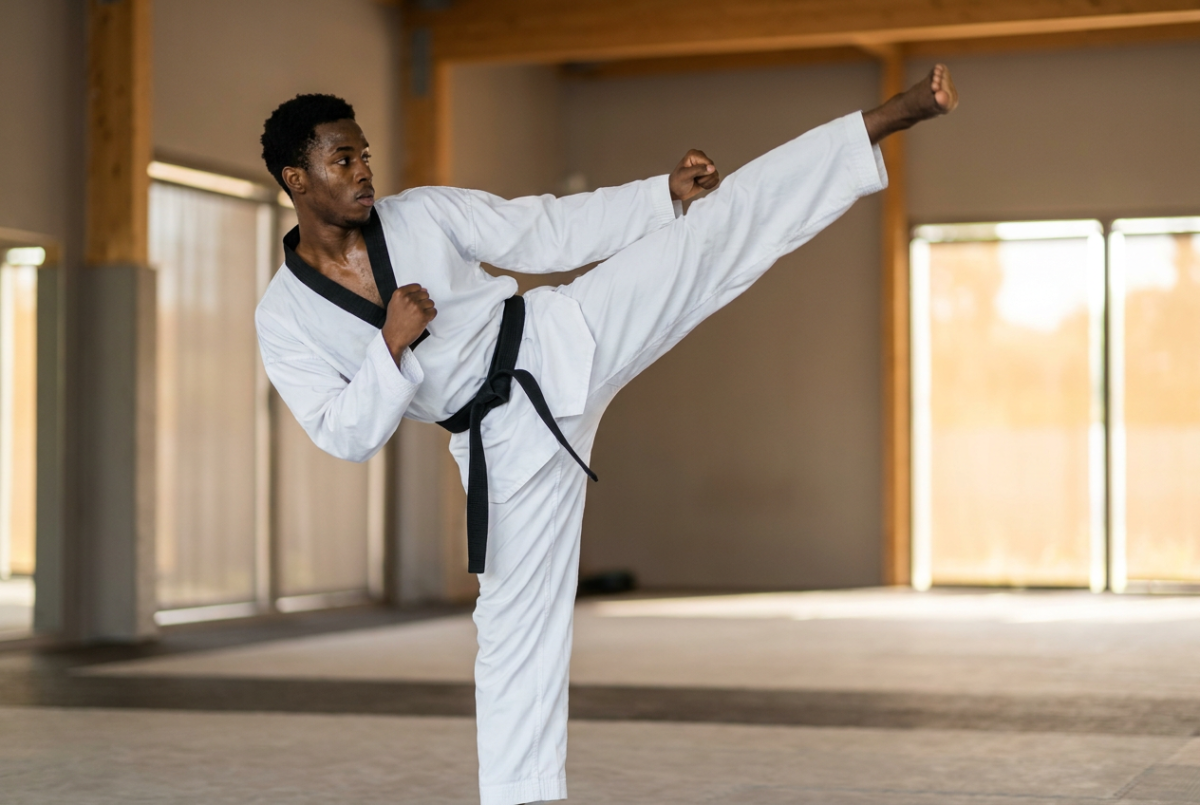
Martial arts make attention physical. In Taekwondo, a student must hear the instruction, organise their stance, remember the sequence and control the strike. In boxing or kickboxing, they must recognise distance, protect themselves and respond without panicking. In jiu-jitsu, they learn that rushing usually creates mistakes, while position, patience and pressure create options.
Each repetition strengthens a useful pattern: notice, choose, act, adjust. That pattern matters outside training too. It’s the same basic sequence needed before reacting to an upsetting message, abandoning a difficult task or speaking from frustration.
For children and teenagers, this can be especially powerful. They don’t need a lecture about self-control at the exact moment they’ve lost it. They need regular chances to practise self-control when the stakes are manageable. Following a class routine, waiting for a turn, returning to stance after an error and respecting a partner all teach regulation in action.
For adults, structured training interrupts a different habit: negotiating with yourself. You said you would train. You arrive. You warm up. You complete the next round. That simple chain rebuilds trust in your own word.
Confidence comes from evidence
Real confidence isn’t loud. It isn’t pretending that everything is easy. It’s the quiet knowledge that you’ve faced discomfort before and can meet it again.
Movement provides evidence. The first clean push-up, the first time a nervous beginner completes a pad round, the moment a child remembers a full pattern, the steady breath after a difficult sparring drill - these experiences change self-perception. The brain begins to update its story from “I can’t do this” to “I can learn this if I stay with it”.
That shift is particularly valuable for people living with anxiety, depression, ADHD or autism, although no class should promise to cure a clinical condition. Training can support wellbeing and provide routine, movement and community, but it should complement appropriate medical or mental health care where needed.
The environment matters as much as the exercise. A beginner who is shouted at for being confused may associate movement with shame. A neurodivergent student who is given clear expectations, predictable transitions and respectful coaching has a better chance to engage and progress. Challenge is necessary. Humiliation isn’t.
Why martial arts offer more than exercise
A walk, a run and a gym session can all support brain health. Martial arts add another layer: skill.
Skill gives movement direction. You aren’t merely tired at the end of training; you’re more capable than when you began. You’ve improved your guard, sharpened a kick, understood a grip or stayed composed for one more round. Progress is measurable, even when life outside the academy feels uncertain.
Martial arts also teach boundaries. You learn when to advance and when to create space. You learn that power without control is dangerous, and that control without confidence can become hesitation. Good training develops both. This is why combat sport, taught responsibly, can be a constructive outlet rather than an aggressive one.
At Edson Breedy Athletics, the standard isn’t perfection on day one. It’s purposeful repetition in a structured environment where physical development and mental resilience belong in the same conversation.
Build a brain-training routine that lasts
The most effective plan is rarely the most extreme. It’s the plan you can repeat during a busy week, a stressful month and a season when life isn’t ideal. Consistency teaches the nervous system that effort is normal and recovery is possible.
Start by choosing a form of movement that demands enough attention to pull you into the present. For some people, that’s striking combinations. For others, it’s yoga, strength work or learning to move with a partner. Then make the commitment specific. “I should exercise more” creates room for avoidance. “I train on Tuesday and Thursday at 6 pm” creates a decision that can be acted on.
Keep the first target modest. Two sessions completed every week for eight weeks will usually do more for confidence than one punishing week followed by a month away. Track practical signs of change: better sleep, fewer impulsive reactions, improved posture, more energy after work, or the ability to return to a task after distraction. These are meaningful wins.
Recovery belongs in the plan. Eat adequately, hydrate, sleep where possible and allow your body to adapt. Soreness isn’t the only measure of progress. A calmer response in a tense moment may be the greater achievement.
The discipline carries beyond the mat
The brain learns from what you repeatedly do, not only from what you repeatedly say. If you practise quitting when training becomes uncomfortable, that pattern can travel. If you practise breathing, resetting and completing the next small task, that travels too.
This is the deeper promise of purposeful movement. You aren’t training solely for the hour in class. You’re building a more reliable response to pressure at school, at work, at home and within yourself.
Start where you’re. Move with intention. Let each session be one more vote for the person you’re becoming.
Train your mind. Build your body.
Your first week is just TTD $50, every discipline, every class, no experience needed. Come find out what training with EBA feels like.