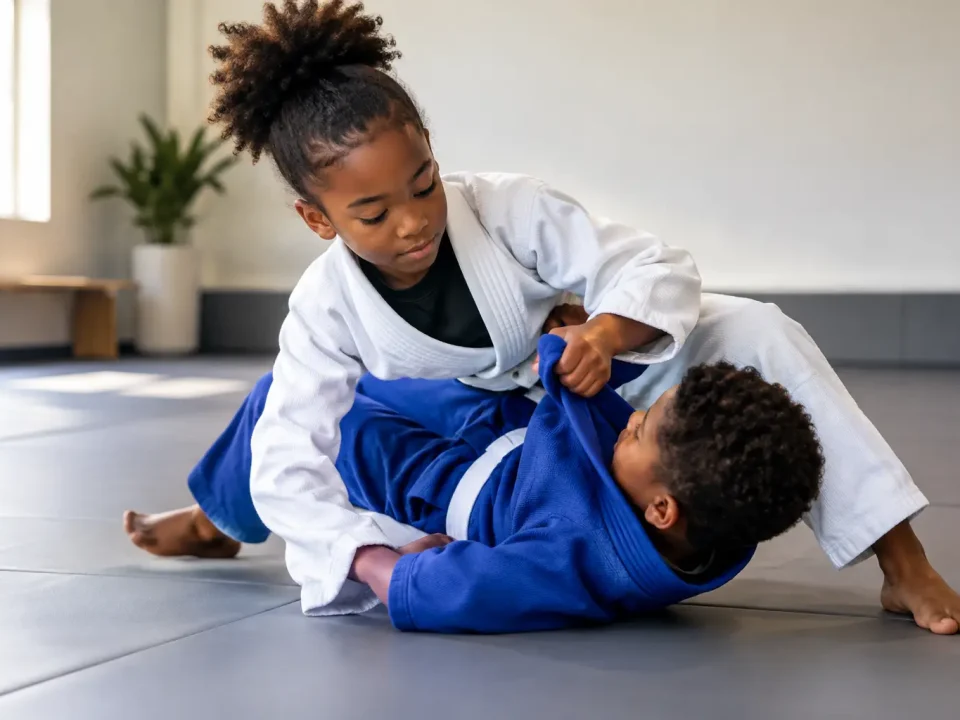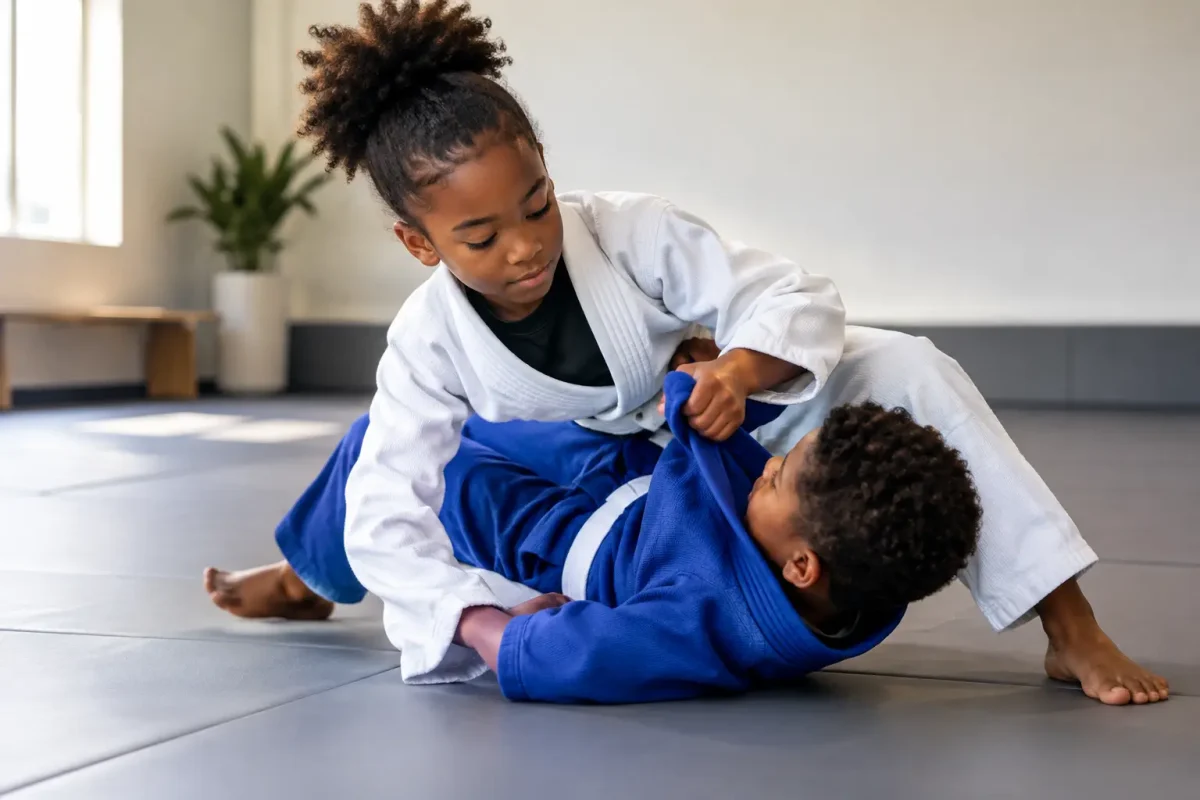
Top Benefits of Youth Jiu Jitsu for Children
October 16, 2026
The Future of Mental Health Fitness Coaching
October 20, 2026
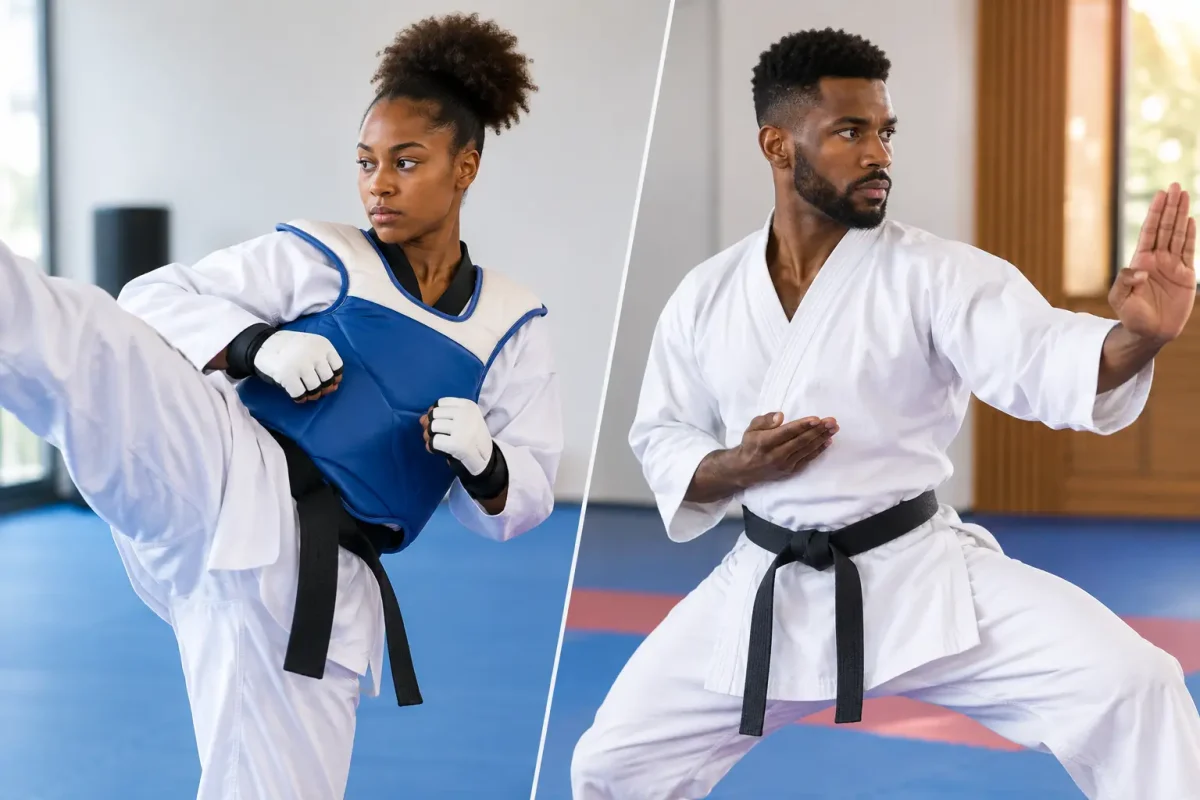
A child who struggles to sit still, a teenager carrying school stress, and an adult who needs a disciplined outlet may all ask the same question: taekwondo versus karate classes - which one is right for me? The answer isn’t about choosing the ‘better’ martial art. It’s about choosing the training environment and method that will help you build skill, regulate pressure, and keep showing up.
Both arts can develop confidence, respect, coordination and fitness. Both can give children a clear structure outside school and give adults a demanding practice that pulls attention away from work, screens and daily stress. The difference lies in emphasis, teaching style and what your body and mind need from training.
Discipline over guesswork. A good first class should make the next step clearer, not more intimidating.
Taekwondo versus karate classes: the real difference
Taekwondo and karate are both striking-based martial arts, but they tend to express that striking in different ways. Taekwondo is widely recognised for its dynamic kicking. Students spend significant time learning balance, mobility, footwork and kicks delivered at different heights and angles. Karate traditionally places more emphasis on hand techniques, stable stances, direct movement, blocks and close-range striking.
That doesn’t mean taekwondo ignores punches or karate ignores kicks. A serious programme teaches a complete foundation: posture, distance, timing, defensive awareness and control. Yet the overall feel of each class can be different.
Taekwondo often suits people who enjoy movement, athletic kicking and the challenge of coordinating the whole body. It can be particularly engaging for children and teens who need a constructive channel for physical energy. The repeated practice of chambers, pivots and controlled kicks asks the brain to organise movement with precision. That isn’t just exercise. It’s focused neurological practice.
Karate may appeal to students who enjoy deliberate technique, grounded power and clear patterns of movement. Its emphasis on stance and body alignment can help a student understand how force travels from the floor through the body. For someone who prefers a more rooted, measured approach, karate can feel immediately satisfying.
Still, labels alone don’t tell the full story. Two taekwondo schools can feel completely different, just as two karate schools can. The instructor’s standards, safety culture and ability to teach beginners matter more than a badge on a uniform.
What each style asks of the body
Taekwondo classes usually demand flexibility, leg endurance, balance and cardiovascular conditioning. High kicks aren’t a requirement on day one. They’re a result of patient practice. A well-run class gives beginners progressions that match their current mobility while building strength through repetition.
For children, this process teaches an important lesson: effort comes before ease. They may not land a clean turning kick in their first session, but they can improve their chamber, balance on one foot and listen for a coaching cue. Those small wins create confidence that’s based on evidence, not empty praise.
Karate classes often place a stronger visible focus on stances, hip rotation, hand strikes and sharp linear techniques. This can develop lower-body strength, posture and body awareness. The fixed nature of some early movements may feel more accessible to students who benefit from clear boundaries and repeatable sequences.
Neither art should be treated as a shortcut to flexibility, fitness or self-defence. Progress comes from consistent attendance, recovery and quality instruction. Children need coaching that’s firm without humiliation. Adults need training that challenges them without pretending pain is proof of progress.
The mental benefits are built through structure
The most valuable part of martial arts training is often what happens between techniques. Students line up. They listen. They wait. They practise the same movement again when it doesn’t work. They learn to reset after correction rather than take it personally.
That structure can be especially useful for people managing anxiety, ADHD, autism, low confidence or emotional overload. Predictable routines reduce uncertainty. Physical exertion gives the nervous system a safe outlet. Clear coaching cues direct attention to a single task: breathe, set your stance, guard, move.
For an anxious adult, a demanding class can interrupt rumination by giving the mind a meaningful problem to solve. For a child with ADHD, movement paired with boundaries can make focus more achievable than being told simply to ‘concentrate’. For autistic students, a respectful coach who explains expectations, avoids unnecessary sensory overload and honours individual communication needs can turn training into a place of belonging.
Martial arts aren’t a replacement for clinical care when clinical care is needed. But they can be a powerful part of a wider routine for stress regulation, self-respect and resilience. The goal isn’t to train people to suppress emotion. The goal is to give them a reliable way to respond when pressure rises.
How to choose between taekwondo and karate classes
Start with the student, not the stereotype. A child who loves kicking, movement and fast-paced drills may naturally enjoy taekwondo. A child who responds well to precise forms, strong stances and a more grounded style may prefer karate. Adults should ask the same practical question: which class will I attend consistently for the next six months?
Then look closely at the coaching. Observe how instructors correct mistakes. Do they explain the purpose of a drill? Are beginners supported without being singled out? Is control expected during partner work? Do children receive structure, attention and standards rather than noise and chaos?
A strong academy doesn’t confuse aggression with confidence. It teaches students to control their bodies, respect boundaries and use skill responsibly. Sparring, if included, should be introduced progressively, with appropriate protective equipment, supervision and an emphasis on composure.
Parents should also ask how the programme develops beyond physical technique. Is attendance tracked? Are students given attainable milestones? Does the instructor communicate clearly about behaviour, effort and progression? A belt should represent more than time served. It should reflect growing competence, responsibility and consistency.
Competition, self-defence and real-world confidence
Some students are drawn to taekwondo because of its competitive formats and spectacular kicks. Others choose karate because they value forms, traditional discipline or a particular competition pathway. Competition can be excellent for learning composure under pressure, but it isn’t compulsory for martial arts to be worthwhile.
Self-defence is another reason people enrol, but it should be discussed honestly. Real-world safety begins with awareness, distance, verbal boundaries and the judgement to leave early. Martial arts training improves coordination, confidence and the ability to stay calmer under stress. It doesn’t make anyone invincible, and responsible instructors never sell that fantasy.
The deeper confidence gained from training is quieter. It’s the knowledge that you can arrive when you don’t feel motivated, practise when something is difficult and recover after a poor session. That confidence carries into school, work, parenting and relationships.
The right class should challenge without overwhelming
At Edson Breedy Athletics, training is approached as mind-body development, not simply a workout or a way to collect belts. Technique matters. So does the ability to manage frustration, follow through on commitments and leave class feeling stronger than when you arrived.
For families in Trinidad and Tobago, a trial week can be a sensible way to assess fit. Notice how the student responds before, during and after class. Do they feel safely challenged? Do they understand what’s expected? Are they eager to return, even if the session was hard?
Choose taekwondo if its movement, kicking and rhythm make you want to practise. Choose karate if its grounded precision and traditional structure make you feel engaged. But above all, choose coaching that builds discipline with care. The class you return to consistently can become one of the strongest anchors in your week.
Train your mind. Build your body.
Your first week is just TTD $50, every discipline, every class, no experience needed. Come find out what training with EBA feels like.