How to Start Strength Training Safely as a Beginner
October 14, 2026
Taekwondo Versus Karate Classes Which Fit You?
October 18, 2026
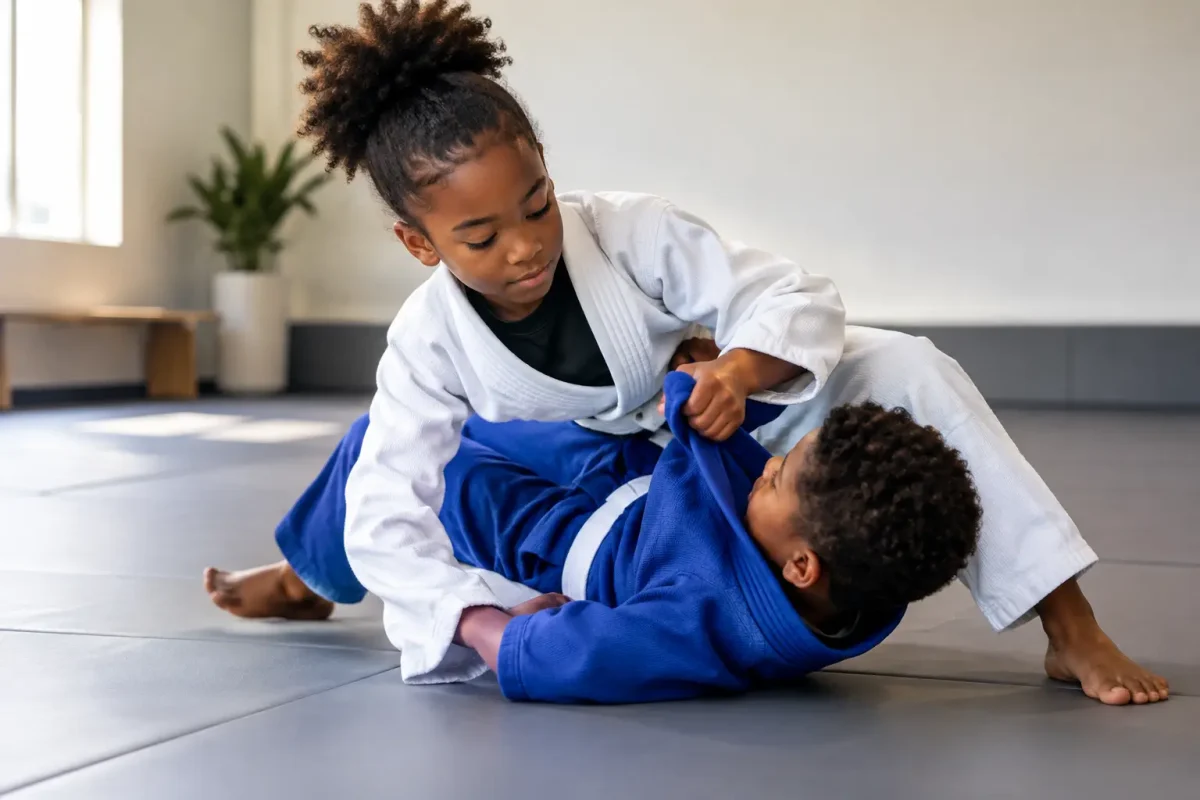
A child who freezes when corrected, loses focus halfway through homework, or avoids unfamiliar groups doesn’t need another lecture about confidence. They need repeated evidence that they can meet a challenge, stay present, make a decision, and improve. That’s where the top benefits of youth jiu jitsu become meaningful. On the mat, confidence isn’t a slogan. It’s earned one controlled repetition at a time.
Jiu-jitsu gives young people a practical system for handling physical pressure without panic. It asks them to think, listen, move with intention, and respect another person’s boundaries. For parents, that combination can be far more valuable than simply finding an activity that keeps a child busy after school.
Top Benefits of Youth Jiu Jitsu Beyond Fitness
Youth jiu-jitsu is often described as a martial art, and it’s. But a well-coached class is also a structured environment for building emotional regulation, discipline, body awareness, and social confidence. Children learn through direct experience: a difficult position can be uncomfortable without being dangerous; a mistake can be corrected; losing a round isn’t the same as failing.
That distinction matters. Many children are used to either avoiding discomfort or being rescued from it too quickly. Jiu-jitsu creates manageable challenge. The coach sets clear rules, partners work with control, and children practise responding rather than reacting.
Confidence built through competence
Real confidence has a foundation. It comes from knowing, “I have practised this before. I can try again.” In jiu-jitsu, progress is visible in small but important ways: learning how to fall safely, escaping a hold, remembering a sequence, maintaining balance, or staying composed with a stronger training partner.
For a shy child, even making eye contact, joining a drill, or speaking clearly during class can be a significant win. For a child who is naturally bold, the lesson may be different: confidence also includes patience, control, and the willingness to learn from someone else.
Belt progression can support motivation, but the deeper reward is capability. Children begin to carry themselves differently because they’ve evidence of their own growth.
Focus that has a purpose
Jiu-jitsu demands attention. A child can’t rely on strength alone or drift through a technique and expect it to work. They must notice body position, grip, timing, breathing, and their partner’s movement. This creates a clear reason to focus.
That can be especially helpful for children who find sitting still difficult or who disengage when instructions feel abstract. Rather than being told to “concentrate”, they’re given a physical problem to solve. The feedback is immediate. If their posture changes or they forget a key step, they can feel the difference.
For children with ADHD, this structure can be particularly valuable when coaching is patient and consistent. Jiu-jitsu isn’t a treatment for ADHD, nor should it be presented as one. However, regular training can give children a healthy place to practise listening, sequencing, impulse control, and returning attention to the task after distraction.
Learning Calm Under Pressure
One of the strongest benefits of youth jiu-jitsu is that it teaches children how to regulate themselves when things feel intense. In a safe training context, they may find themselves underneath a partner, unable to move as freely as they want, or faced with a technique they haven’t yet mastered.
The first instinct may be to rush, tense up, or quit. Training teaches another option: breathe, assess, create space, and use what you know.
Nervous system regulation in action
Children don’t need complicated neuroscience language to benefit from nervous system regulation. They need coaches who understand that overwhelm looks different from defiance, and that a child may need clear cues, a brief pause, or a more gradual introduction to partner work.
When the environment is well managed, jiu-jitsu gives children repeated opportunities to move from activation back to control. They learn that a racing heart doesn’t always mean danger. They learn that they can pause before reacting. Over time, this can support better responses to frustration at school, at home, and with friends.
This isn’t about making children passive or teaching them to tolerate poor behaviour from others. It’s about helping them recognise their internal state and choose an effective response. Calm is a skill. It can be trained.
Respect for boundaries and consent
Because jiu-jitsu involves close contact, good youth instruction must make boundaries explicit. Children learn to ask, listen, tap when they need to stop, and release immediately when their partner taps. Those habits aren’t minor details. They teach bodily autonomy, responsibility, and respect.
A quality programme doesn’t glorify roughness or encourage children to prove themselves through pain. It teaches controlled training. Partners aren’t enemies. They’re part of each other’s learning.
For children who are anxious about contact, autistic, or new to group activities, the pace matters. Some children need more time to become comfortable with proximity, noise, transitions, or unfamiliar sensations. A neurodiversity-friendly class makes room for that without lowering expectations for respect and steady effort.
Discipline Without Fear
Discipline is often misunderstood as harshness. It isn’t. Discipline is the ability to do what supports your goal, even when you don’t feel like it. A strong youth jiu-jitsu programme develops this through predictable routines: arriving on time, lining up, listening during demonstrations, caring for equipment, practising safely, and returning after a difficult session.
Children need standards. They also need to understand why those standards exist. Clear expectations make the training space feel safer, not stricter for the sake of it.
A child who has been corrected respectfully learns that feedback isn’t rejection. They can adjust their stance, try the movement again, and move forward. That’s a powerful lesson for school, sport, relationships, and future work.
Parents should be realistic, though. Jiu-jitsu won’t transform behaviour overnight, and one class per week can’t replace sleep, supportive routines, or professional care where it’s needed. The benefits build through consistency. The child who keeps showing up, especially on the days when they feel awkward or frustrated, is practising resilience.
Physical Literacy That Carries Into Life
Jiu-jitsu develops strength, mobility, coordination, balance, and spatial awareness. Yet its value isn’t limited to exercise. Children learn how their body moves in relation to the floor, a partner, and their own centre of gravity. They learn to use leverage rather than simply pushing harder.
That makes the art accessible to many body types. A child doesn’t have to be the fastest, tallest, or most naturally athletic to improve. Thoughtful technique gives every student something to work on.
Physical training can also create a healthier relationship with effort. Instead of seeing exercise as punishment or appearance-based, children experience their body as useful. They become more aware of posture, breathing, recovery, hydration, and the connection between preparation and performance.
Choosing the Right Youth Jiu-Jitsu Environment
The benefits depend heavily on the coaching environment. A good class has age-appropriate instruction, clear safety rules, active supervision, and a culture where children can ask questions. It should challenge students without humiliating them.
Look for a coach who can balance standards with emotional intelligence. Children need correction, but they don’t need shouting to learn. They need a programme that values control over chaos and long-term development over quick trophies.
At Edson Breedy Athletics, that principle sits at the centre of training: build a capable body, a steadier mind, and the discipline to keep progressing. For families in Trinidad and Tobago, the right class can become a reliable part of a child’s weekly routine - a place where effort is expected, support is available, and growth is visible.
The most valuable outcome isn’t that your child learns a submission or earns a new belt. It’s that, when life applies pressure, they’ve practised what to do next: breathe, think, stay respectful, and keep working.
Train your mind. Build your body.
Your first week is just TTD $50, every discipline, every class, no experience needed. Come find out what training with EBA feels like.