Exercise for Depression Support That Builds You Back
July 18, 2026
How Movement Changes the Brain Through Training
July 20, 2026
A hard round on the pads can reveal more than your fitness. If your shoulders rise, your breath disappears and every correction feels like criticism, your body isn’t failing you. It’s trying to protect you. Nervous system regulation exercises give you a way to recognise that response, train through it safely and return to control.
This isn’t about becoming calm all the time. A fighter needs intensity. A parent needs urgency sometimes. A child needs energy and play. The goal is range: the ability to rise to a challenge, stay present under pressure and come back down afterwards. That’s a skill. Like a clean jab or a stronger squat, it improves through repetition.
What nervous system regulation actually means
Your nervous system constantly scans for cues of safety, effort, threat and recovery. When it senses pressure, your heart rate may climb, your muscles may tighten and your attention may narrow. That response can help you move fast and defend yourself. It becomes a problem when it stays switched on long after the stressful moment has passed.
For some people, this looks like irritability after work, restless sleep or a mind that won’t slow down. For others, especially people living with anxiety, ADHD, autism or depression, it may show up as overwhelm, shutdown, avoidance or difficulty switching tasks. These aren’t character flaws. They’re signals that the system needs clearer support.
Training can provide that support when it’s structured properly. Random intensity isn’t regulation. A hard session with no attention to breathing, pacing or recovery can leave an already overloaded person more activated. Purposeful movement teaches a different lesson: effort can be challenging without being unsafe, and recovery can follow exertion.
Nervous system regulation exercises for real life
The best nervous system regulation exercises are simple enough to use before class, after work, during a difficult school morning or between demanding tasks. Don’t wait until you’re completely overwhelmed. Practise when you’re reasonably settled too. That’s how the skill becomes available when pressure rises.
1. Lengthen the exhale before you react
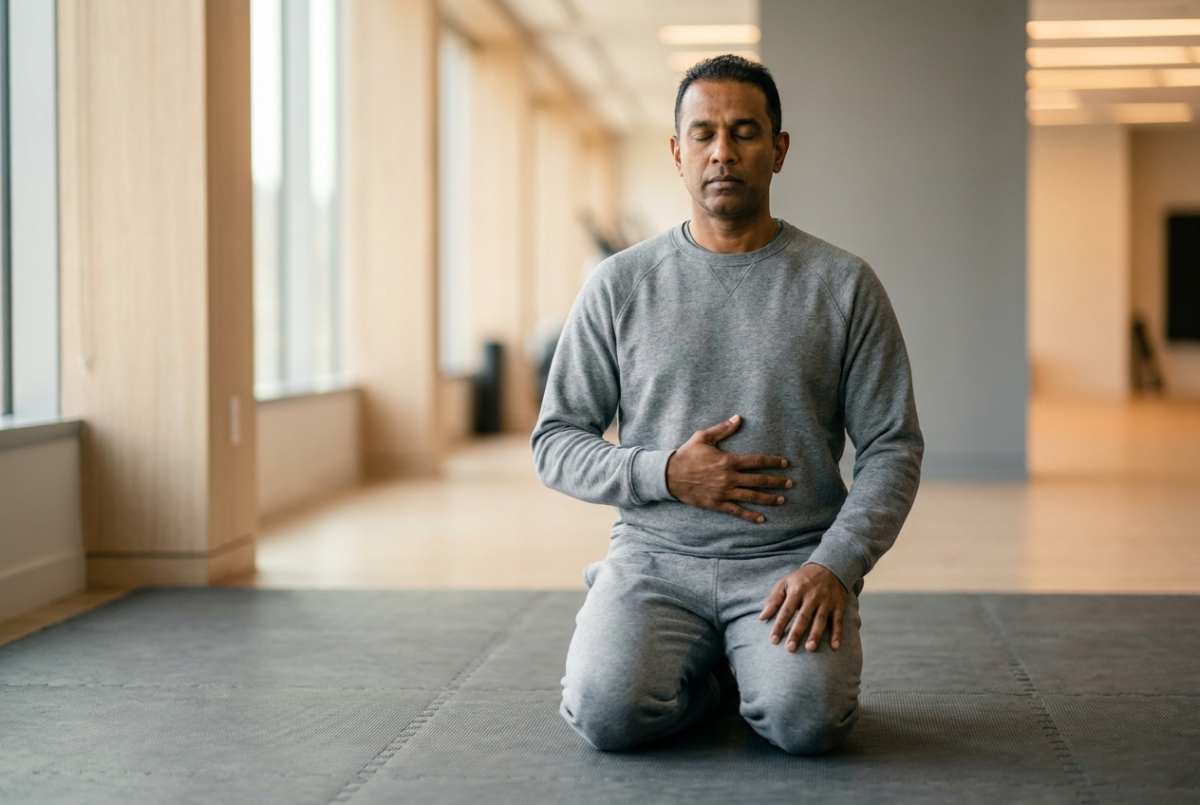
Start with a breath you can actually maintain. Inhale gently through your nose for around three or four seconds. Exhale slowly for five or six seconds. Repeat for one to three minutes, without forcing a huge breath or holding your breath at the top.
A longer, softer exhale can signal that immediate action isn’t required. It’s useful before sparring, before a presentation, after an argument or while waiting in traffic. If slower breathing makes you feel dizzy, panicky or uncomfortable, shorten the count and breathe normally. Regulation should feel supportive, not like another test to pass.
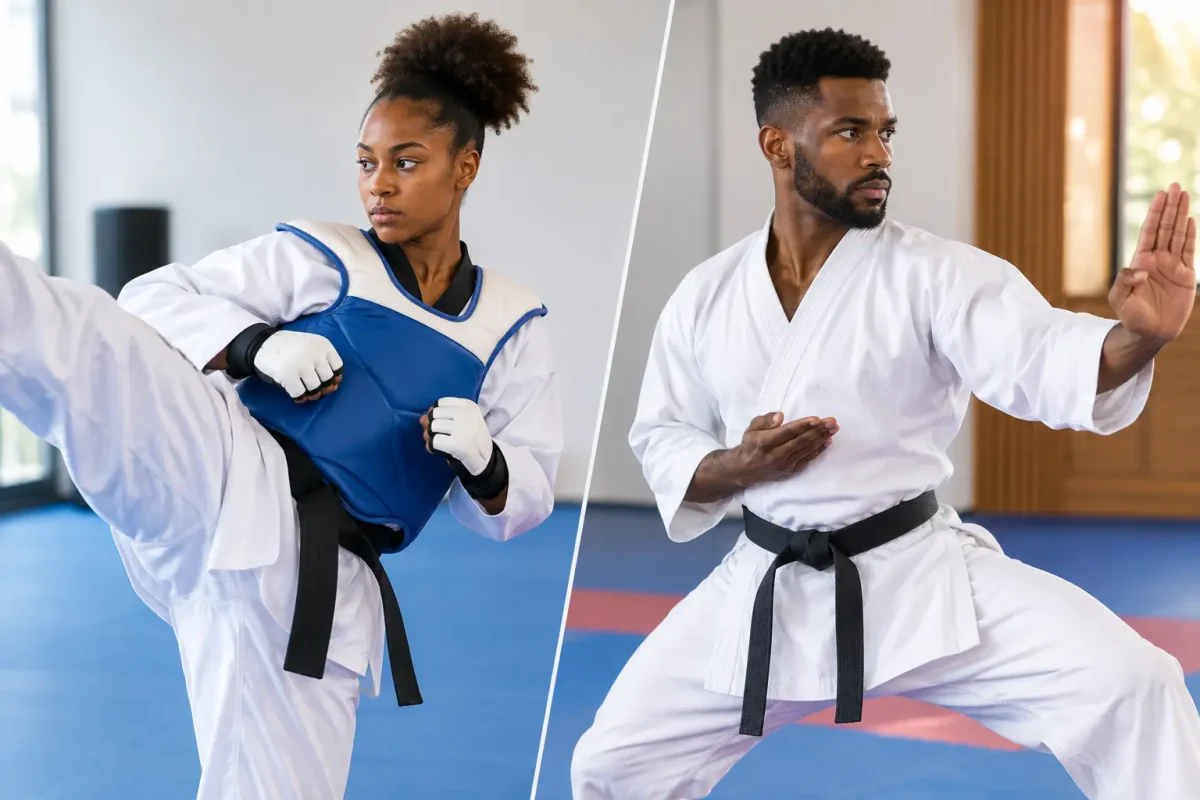
In martial arts, use this principle between rounds. One controlled exhale while you reset your stance can stop adrenaline from turning into rushed technique. Breathe, look up, listen to the coach, then return to work.
2. Use grounding through your feet and hands
When the mind races, give it a physical job. Stand with both feet on the floor and notice pressure beneath your heels, the outside edges of your feet and your toes. Press your palms together for five seconds, then release. Repeat a few times while naming three things you can see in the room.
This isn’t about pretending the stressor doesn’t exist. It’s about bringing your attention back to where your body is right now. For children, the instruction can be even simpler: “Feel your feet. Squeeze your hands. Find three blue things.” Clear, concrete cues are often more useful than a long explanation.
Grounding is especially valuable before technical training. A student who is scattered doesn’t need to be shouted into focus. They need a clear entry point. Feet set. Eyes forward. One instruction at a time.
3. Try rhythmic, bilateral movement
Walking, skipping, shadowboxing and controlled cross-body movements can settle excess energy while organising attention. The alternating pattern matters. Right arm, left leg. Left arm, right leg. The body receives predictable rhythm and the brain has something constructive to track.
Try two minutes of relaxed shadowboxing: step, jab, reset; step, jab, reset. Keep the pace low enough that you can breathe through your nose or speak a short sentence. This isn’t conditioning work. It’s practice in coordination and control.
For a child who is restless after school, a brisk walk, skipping rope or a simple kick-and-step pattern may work better than being told to “calm down”. Movement meets the body where it’s. Then it gives that energy direction.
4. Build tension, then let it go
Stress often leaves the body braced without us noticing. Progressive muscle release helps you feel the difference between effort and unnecessary tension. Clench your fists gently for five seconds, then fully release them. Raise your shoulders towards your ears, pause briefly, then allow them to drop. Press your feet into the ground, then soften your legs.
Don’t use maximum force. The point is contrast, not strain. This can be particularly useful after desk work, long commutes or intense training, when the jaw, hands and shoulders are still carrying the day.
In a class setting, this becomes a powerful coaching tool. A student can learn that a strong guard doesn’t mean squeezing every muscle. Good technique is organised tension followed by release. The same principle applies to emotional pressure.
5. Use controlled impact with a clear stop point
Hitting pads or a heavy bag can be regulating, but only when it’s coached and contained. A set of clean combinations gives strong sensory feedback, a specific target and a safe channel for energy. Finish the round, step back, lower your hands and take two steady breaths. That final reset is part of the exercise.
Unstructured rage training can reinforce escalation. Controlled striking teaches something better: you can access power without losing judgement. You can feel intensity without becoming consumed by it.
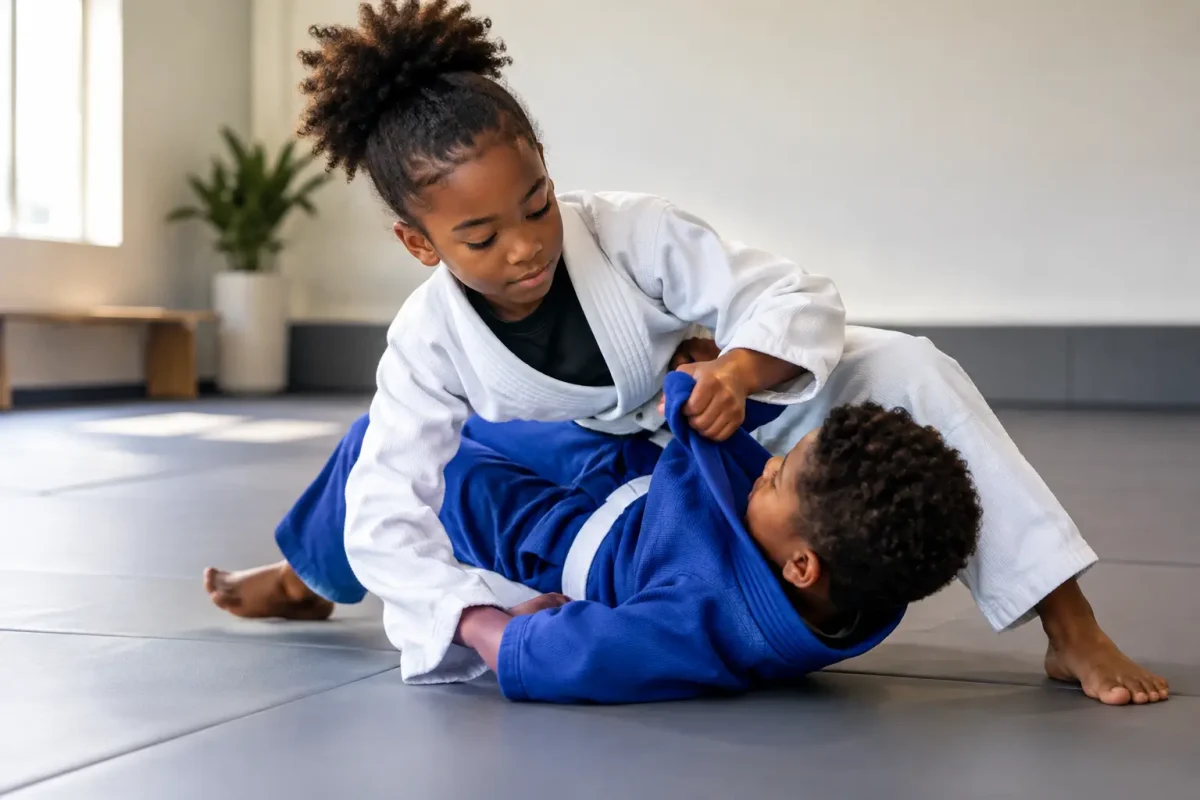
This is one reason skilful martial arts training can be so valuable for adults and young people. The work is demanding, but the boundaries are clear. There’s a start, a finish, a coach, a rule set and a recovery period.
Regulation isn’t the same as avoidance
There are moments when a calming exercise is the right next move. There are also moments when the answer is to have the conversation, attend the appointment, complete the assignment or set the boundary you’ve been avoiding. Regulation gives you enough internal space to choose your response. It shouldn’t become a way to disappear from your responsibilities.
Discipline over motivation matters here. You won’t always feel ready to train, breathe, stretch or go for the walk. But a small repeatable practice changes the baseline over time. Ten deliberate minutes, four days a week, will often do more than one dramatic session followed by two weeks of nothing.
The right dose depends on the person. Some people regulate through quiet breathing and yoga. Others need a heavy bag, a run or technical drills before stillness feels possible. Neurodivergent trainees may need more predictability, clearer transitions, reduced sensory load or permission to take short breaks. Good coaching adjusts the environment without lowering the standard of progress.
Build a routine you can keep
Choose one exercise for before pressure, one for during pressure and one for after pressure. For example, take three longer exhales before work, use feet-and-hands grounding before a difficult conversation, then walk or shadowbox for five minutes after the day ends. Keep it simple enough that you’ll do it on a busy Tuesday.
At Edson Breedy Athletics, training is built around this principle: physical effort should develop more than fitness. It should build focus, emotional control and trust in your own ability to recover. Beginners don’t need to arrive confident. They need a structured environment where confidence can be earned.
If panic, shutdown, persistent low mood or distress is affecting daily life, movement can be a meaningful support but it isn’t a substitute for appropriate medical or mental health care. Speak with a qualified professional, particularly if symptoms feel severe, sudden or unsafe.
Your nervous system learns from what you practise. Give it repeated evidence that you can breathe under pressure, move with purpose and recover after effort. Stop negotiating with yourself. Start with one controlled breath, one grounded stance and one session where you keep the promise to show up.
Train your mind. Build your body.
Your first week is just TTD $50, every discipline, every class, no experience needed. Come find out what training with EBA feels like.