Kids Martial Arts Discipline Starts With Structure
July 14, 2026
Fitness Classes for ADHD That Build Real Focus
July 16, 2026
Your body can’t always be talked out of anxiety. When your chest is tight, your thoughts are racing and every small task feels urgent, you need a constructive physical signal: move, breathe, focus, recover. Exercise for anxiety relief isn’t about punishing yourself into feeling better. It’s about teaching your nervous system that effort can be safe, controlled and temporary.
That distinction matters. Random activity may distract you for an hour. Structured training can build a repeatable response to stress. You show up, follow a plan, tolerate discomfort, regulate your breathing and leave with evidence that you can handle more than your anxiety tells you.
Why exercise for anxiety relief works
Anxiety prepares the body for danger. Heart rate rises, muscles brace, breathing becomes shallow and attention narrows towards threat. Those reactions are useful when danger is real. They become exhausting when your system stays on alert during work, school, family responsibilities or ordinary social situations.
Physical training gives that activation somewhere to go. A brisk walk, a boxing combination, a set of squats or a yoga flow uses muscular effort and rhythm to help discharge some of the energy that anxiety creates. Afterwards, the body has a clearer reason for being tired, the breath can slow and the mind often becomes less crowded.
There’s another benefit that matters just as much: mastery. Anxiety often says, “You can’t cope.” Training gives you a practical answer. You completed the round. You learned the sequence. You returned after a difficult day. Confidence isn’t a motivational speech. It’s proof collected through action.
Exercise isn’t a replacement for professional mental health care when you need it. Persistent panic, severe depression, trauma symptoms, thoughts of self-harm or a sudden change in functioning deserve prompt support from an appropriate health professional. But for many people, movement is a powerful part of a wider plan for regulation and resilience.
The best exercise depends on your nervous system
There’s no single best workout for anxiety. The right choice depends on what your body needs today, your fitness level and whether intensity settles you or overwhelms you.
For restless, high-energy anxiety: choose skill and effort
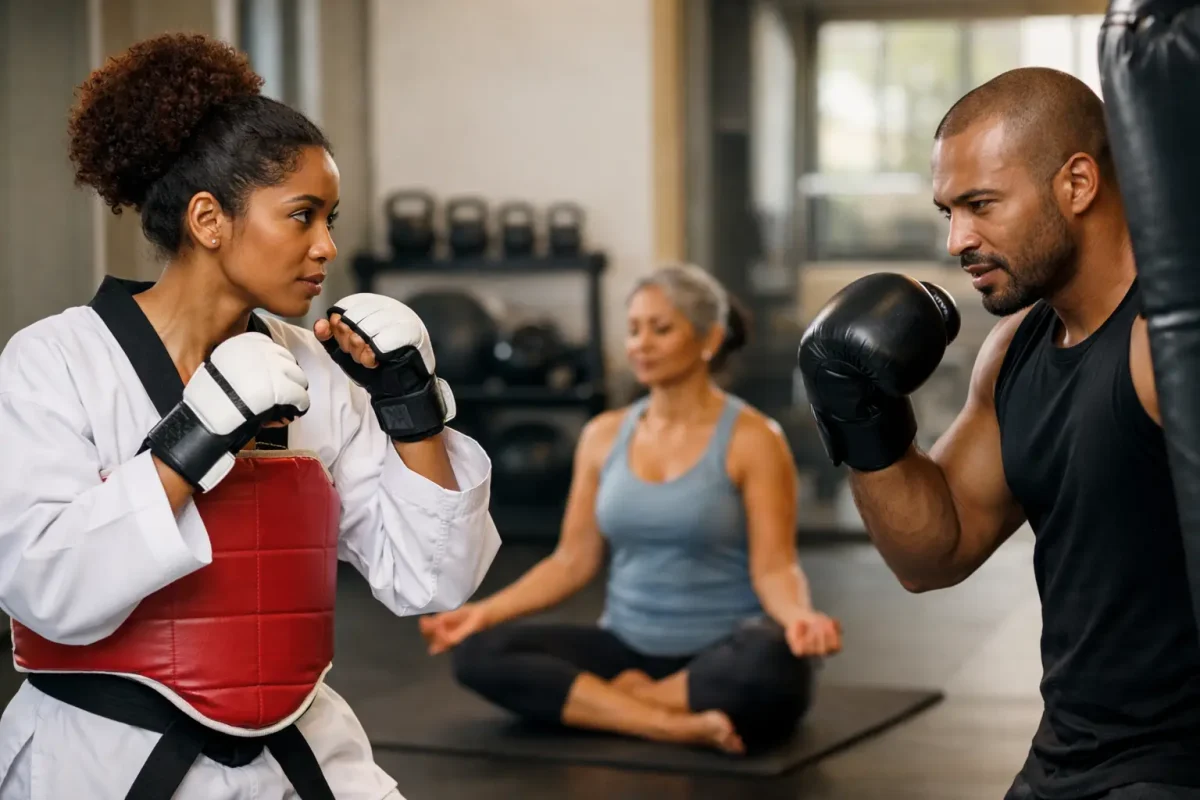
Boxing, kickboxing, Taekwondo drills, jogging, cycling and strength training can be useful when you feel agitated, irritable or trapped in your own head. These sessions create a clear task for the brain: maintain stance, count repetitions, control technique, move with purpose.
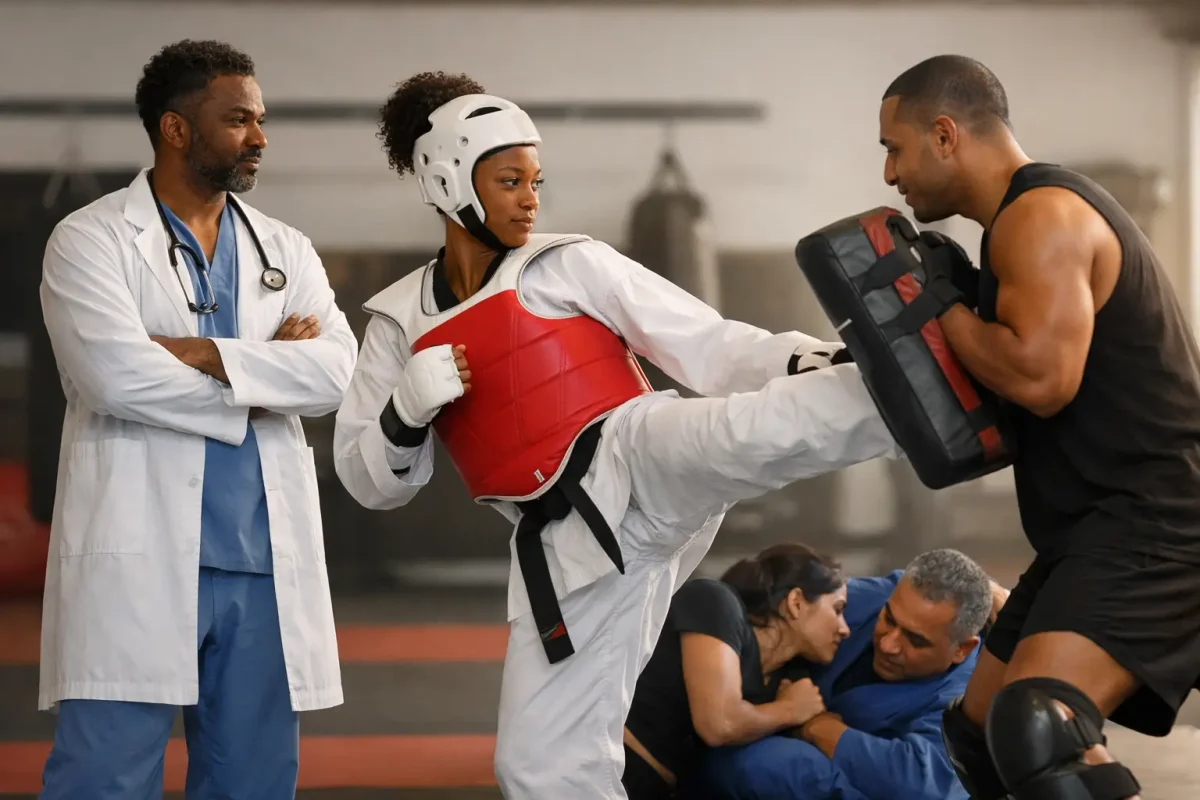
Martial arts are especially valuable because they combine exertion with discipline. You aren’t simply hitting pads or moving fast. You’re learning distance, timing, balance and restraint. The goal isn’t uncontrolled aggression. It’s controlled intensity.
Start below your maximum. A hard session can feel relieving for one person and too stimulating for another. If your anxiety leaves you shaky, dizzy or unable to settle after training, reduce the pace, shorten the rounds and finish with deliberate breathing rather than forcing more intensity.
For overwhelm and mental fatigue: choose rhythm and recovery
When you’re exhausted, a punishing workout is rarely the answer. Walking, gentle cycling, yoga, mobility work and light resistance training can lower the barrier to starting while still giving your body a regulating routine.
Try a 20-minute walk without scrolling on your mobile phone. Notice the pace of your feet, the temperature of the air and the rhythm of your breath. This isn’t about achieving perfect calm. It’s practice in returning attention to the present when your mind wants to run ahead.
Yoga and mobility sessions are particularly useful when anxiety shows up as tight shoulders, jaw tension, headaches or a constantly braced body. Slow movement is still training. It teaches you to notice tension before it becomes your normal state.
For social anxiety: choose a structured group
Many people avoid group exercise because they fear being watched, judged or left behind. Yet the right class can become one of the safest places to rebuild confidence. A well-coached environment gives you a role, a lesson plan and clear expectations. You don’t need to invent conversation or prove that you belong before you begin.
Look for coaching that offers options, explains drills clearly and respects beginners. At Edson Breedy Athletics, training is built around progress, structure and mental health-informed coaching, not around pretending that every member arrives with the same needs.
Build a routine that anxiety can’t easily negotiate away
Motivation is unreliable when anxiety is high. Structure is stronger. Stop negotiating with yourself every time you need to train. Decide in advance what counts as success and make the first step small enough that you can repeat it.
Aim for three planned movement sessions each week, with lighter activity on other days if it feels good. One session might be martial arts or boxing, one could be strength training, and one could be walking or yoga. That variety is useful because it gives you different tools: intensity for release, strength for confidence and slower movement for recovery.
Keep the promise realistic. A 30-minute class you attend consistently is more valuable than a demanding programme you abandon after ten days. On difficult weeks, reduce the target rather than disappear. Ten minutes of mobility, a short walk or a few controlled rounds of shadowboxing still protect the habit.
A simple pre-training ritual also helps. Change into your training clothes, drink water, put your mobile phone away and take five slow breaths before you start. Repeating the same sequence tells the brain that training time is predictable. Predictability is calming when life feels uncertain.
Train your breath, not just your muscles
Breathing is one of the fastest ways to influence your state, but it works best when it’s practised during manageable effort rather than saved for a crisis. During strength work, exhale through the hardest part of the repetition. During bag work or drills, avoid holding your breath. Between rounds, lengthen the exhale slightly and let your shoulders drop.
You don’t need complicated techniques. Try breathing in gently for three counts and out for five counts while walking or resting between exercises. If counting makes you more tense, simply focus on a quieter, longer exhale. The aim isn’t to force relaxation. It’s to give your body a cue that the immediate threat has passed.
Measure the right kind of progress
Don’t judge anxiety-focused training only by calories, body weight or how hard you worked. Those measures may have a place, but they miss the deeper changes. Notice whether you recover faster after stress, sleep more consistently, feel more patient with your family or return to a task instead of avoiding it.
For children and teenagers, progress may look like waiting their turn, following a sequence, tolerating correction or using a break before frustration becomes a meltdown. For neurodivergent trainees, the most supportive programme may include clear routines, visual demonstration, reduced sensory pressure and permission to progress at an individual pace. Discipline doesn’t mean ignoring your needs. It means learning how to work with them.
Keep a brief note after each session: your anxiety level before training, what you did and how you felt 30 minutes later. Over several weeks, patterns become visible. You may find that evening kickboxing improves your mood but disrupts sleep, while a morning strength session leaves you steady for the day. Adjust the plan based on evidence, not guilt.
Know when to ease back
Training should challenge you, not repeatedly push your nervous system beyond capacity. Scale down if you’re sick, severely sleep-deprived, injured or noticing that exercise is becoming another source of fear and self-criticism. Rest isn’t weakness. Recovery is part of the programme.
If panic symptoms occur during exercise, pause somewhere safe, slow the breath and remind yourself that exertion can create sensations similar to anxiety: a faster heart rate, warmth and heavier breathing. If symptoms are new, severe or medically concerning, seek medical advice before returning to intense activity.
The goal isn’t a life without anxiety. The goal is a body and mind that know what to do when anxiety arrives. Put on the gloves, step onto the mat, take the walk or complete the first set. Then do it again next week. Every controlled repetition is a vote for the person you’re becoming.
Train your mind. Build your body.
Your first week is just TTD $50, every discipline, every class, no experience needed. Come find out what training with EBA feels like.