Boxing Classes Saint Joseph for Real Discipline
October 26, 2026
What’s Sensory Friendly Training and Who Is It For?
October 30, 2026
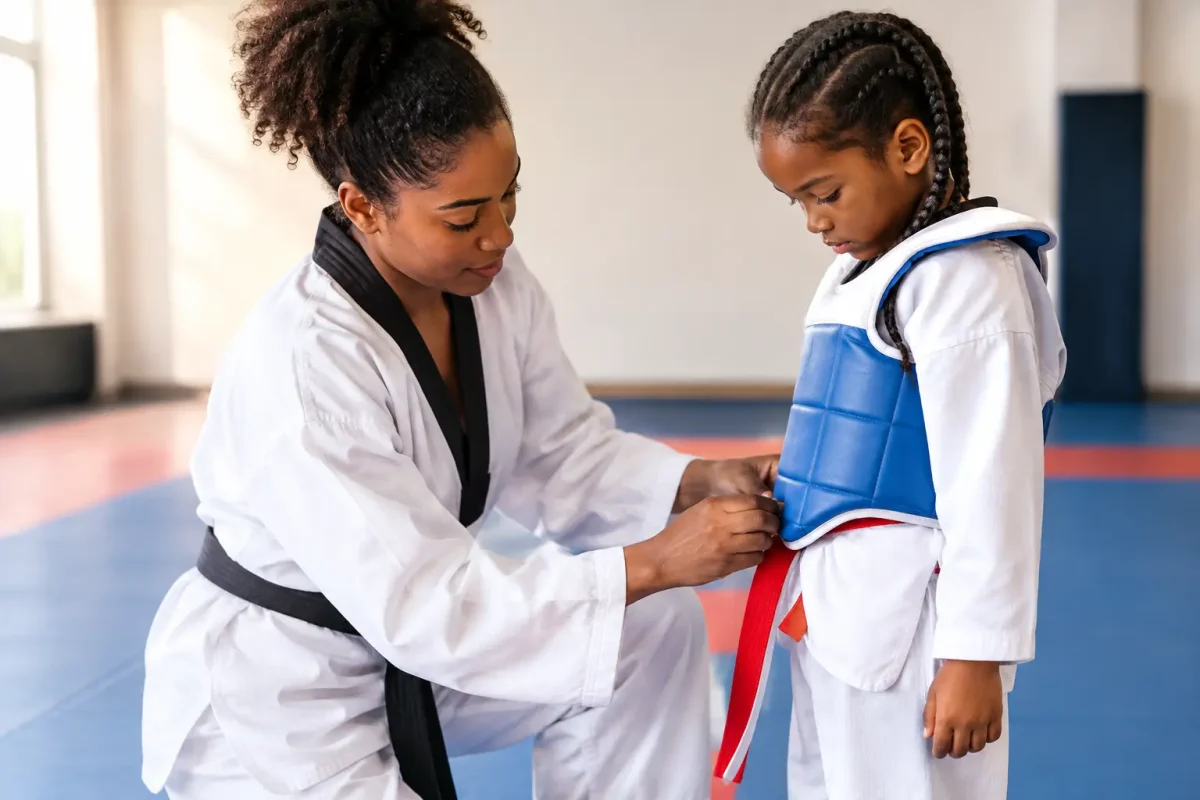
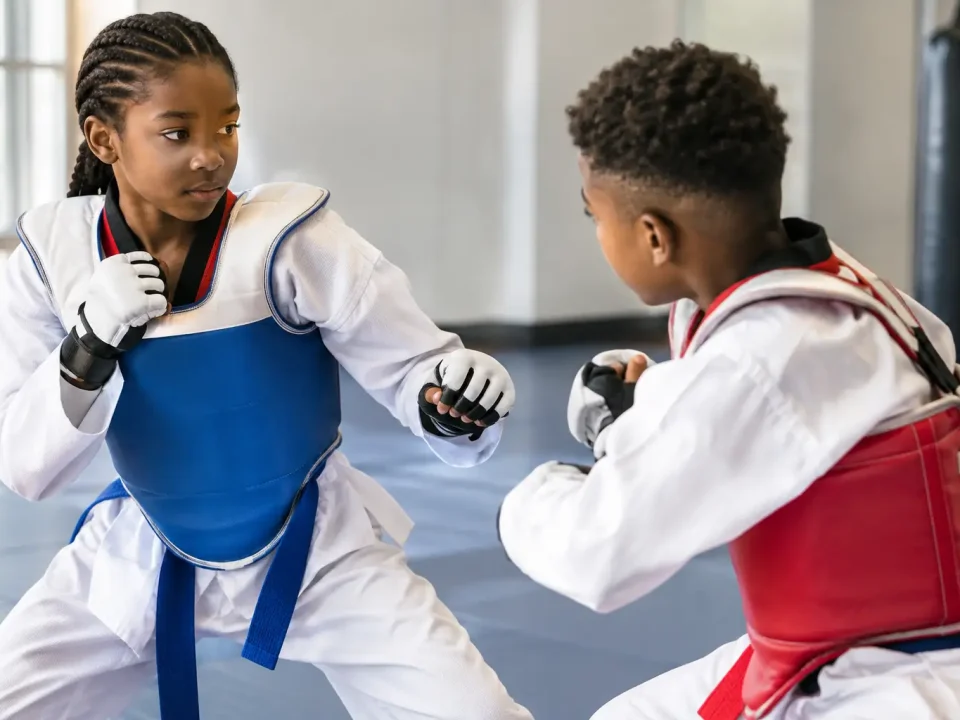
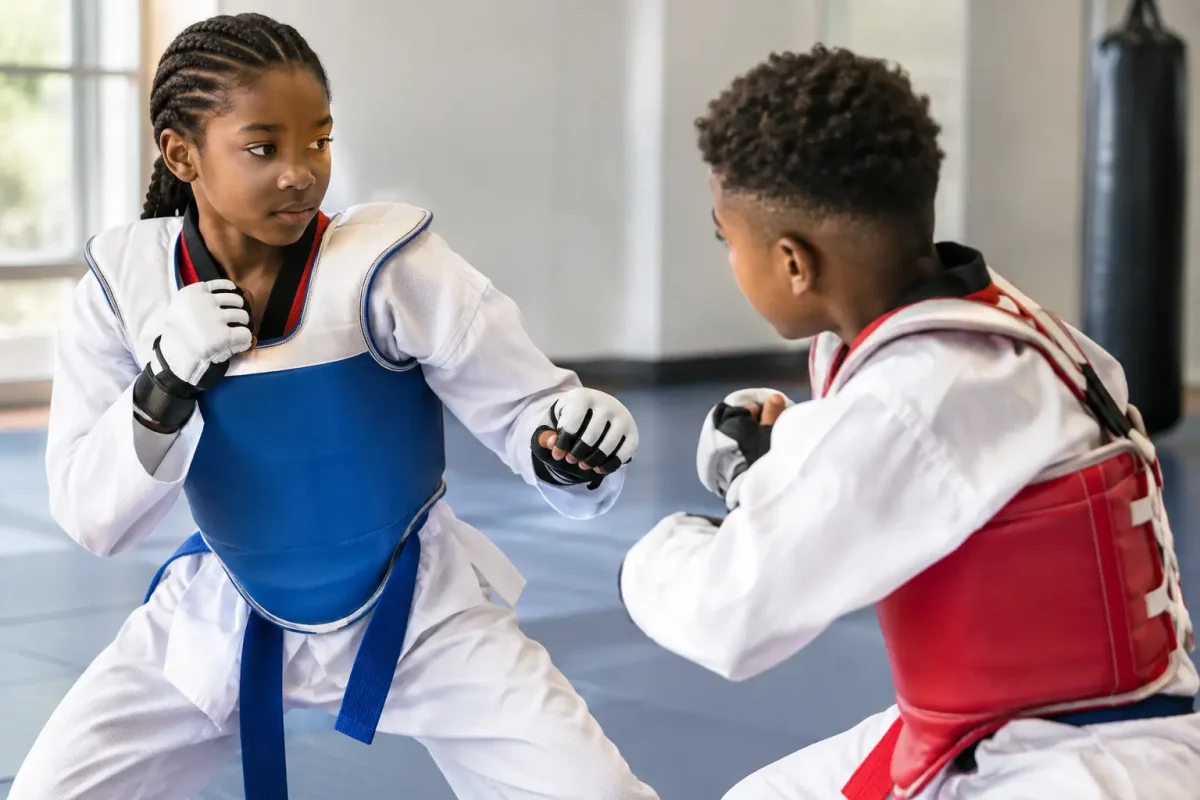
The hardest part of a child’s first Taekwondo class is often not the warm-up, the kicks or the uniform. It’s the moment before they enter the room. New sounds, unfamiliar adults, close movement and the fear of getting something wrong can make even an excited child hesitate. If you’re wondering how to prepare a child for Taekwondo, start there: prepare their mind and nervous system, not just their kit bag.
Taekwondo can build strength, coordination, focus and confidence, but it works best when a child feels safe enough to learn. The goal isn’t to make them fearless. The goal is to help them arrive ready to try.
How to prepare a child for Taekwondo before the first class
Set the expectation clearly and simply. Tell your child that their first class is for learning, watching and having a go. They don’t need to know how to kick. They don’t need to be the strongest, fastest or loudest person in the room. They only need to listen, move safely and keep trying.
Avoid promising that it’ll be easy. Children are quick to notice when adults oversell an experience. A more useful message is: “Some parts may feel new, and your coach will show you what to do one step at a time.” This builds trust while giving them permission to be a beginner.
If possible, talk through what the class may look like. There will usually be a greeting, a warm-up, basic stances and movements, partner or pad work, then a closing routine. Predictability reduces anxiety. For children with ADHD, autism or general anxiety, knowing the sequence in advance can make a major difference to their ability to settle.
Practise being a beginner at home
You don’t need to turn your living room into a martial arts school. In fact, avoid teaching techniques from online videos before a child has learned them properly with a coach. Poor habits are harder to correct than no habits at all.
Instead, practise the behaviours that make training easier. Ask your child to stand still for ten seconds, copy a simple movement, take a slow breath, or respond when you call their name. Make it light, not military. The purpose is to introduce the idea that Taekwondo involves attention, body control and listening.
A simple phrase can help: “Eyes watching, ears listening, body ready.” Repeating the same cue before school, homework or sport gives the child a familiar anchor when they enter class.
Prepare the body without exhausting it
Children don’t need a demanding fitness plan before beginning Taekwondo. They need sleep, food, hydration and enough energy to participate. A tired, hungry child is more likely to become frustrated, distracted or overwhelmed, especially after a full school day.
On class day, offer a normal meal or substantial snack one to two hours beforehand. Choose foods they already tolerate well rather than experimenting with something heavy or sugary. Bring water, but teach them that drinking happens at appropriate breaks, not whenever a feeling becomes uncomfortable.
Dress them in comfortable sports clothing unless the academy has asked them to wear a uniform. Clothes should allow them to lift their knees, move their arms and sit comfortably on the floor. Remove jewellery, tie back long hair and make sure nails are trimmed. These small details protect both your child and their training partners.
If your child has asthma, an injury, sensory sensitivities, medication needs or a diagnosed condition that may affect participation, tell the instructor privately before class. Good coaching isn’t about lowering standards. It’s about knowing what support helps a child meet those standards safely.
Don’t train through pain
Taekwondo asks children to challenge themselves. That’s different from ignoring pain. Explain the difference before they begin: hard breathing, warm muscles and effort can be normal; sharp pain, dizziness, nausea or a feeling that something is wrong should be reported immediately.
Children sometimes stay quiet because they want to impress a coach or avoid standing out. Give them clear permission to speak up. Confidence includes recognising their limits and communicating them.
Build respect without creating fear
Martial arts has structure. Children learn to line up, follow instructions, wait their turn and treat training partners with care. Those routines are part of the value. Discipline helps a child direct their energy instead of being directed by every impulse, distraction or emotion.
But discipline shouldn’t mean fear. Avoid telling your child that they’ll be shouted at, punished or embarrassed if they make a mistake. A well-run class uses clear boundaries, consistent correction and encouragement. Children should understand that respect applies in every direction: to coaches, classmates, the training space and themselves.
At home, frame respect in practical language. “We use controlled hands and feet.” “We listen when safety instructions are given.” “We help newer students.” These principles travel beyond Taekwondo into school, friendships and family life.
Help an anxious or neurodivergent child enter at their pace
Some children walk into a new room and join immediately. Others need to observe from the side, ask the same question three times, or stay close to a parent for the first few minutes. Neither response predicts whether they’ll succeed.
If your child finds transitions difficult, arrive early. Rushing from the car into a busy class increases stress before training has even begun. Give them time to see the room, meet the coach and identify where they’ll place their shoes and water bottle.
Be specific with staff about what helps. A child may respond well to visual demonstrations, short instructions, a quieter correction, predictable positioning in the line, or a brief sensory break. They may need extra time to process a command before moving. This is useful information, not an excuse.
At the same time, resist becoming their permanent shield. If they’re safe, allow the coach to build rapport. Step back gradually. The first independent bow, drill or conversation with a classmate can be a powerful confidence marker.
Choose goals your child can control
Parents sometimes ask after the first lesson, “Did you win?” That question belongs to competition, not to a child’s first stage of learning. Ask instead: “What was one thing you practised?” “When did you feel brave?” or “What would you like to try again next time?”
These questions teach a growth mindset without turning every class into a performance review. Progress in Taekwondo is rarely linear. A child may focus beautifully one week and struggle to settle the next. They may love kicking pads but dislike partner drills. Stay curious rather than critical.
Set a small process goal for the first month. It could be arriving on time, learning the opening routine, following one instruction without a reminder, or returning after a difficult class. Discipline over motivation matters here. Motivation rises and falls. Consistent attendance gives the nervous system repeated evidence that a new challenge can become familiar.
Give them the right message after class
The car journey home matters more than many parents realise. Your reaction can determine whether the child remembers a correction as failure or as part of learning. Start with warmth. Offer water, food if needed and a little quiet before asking questions.
If they say they weren’t good at something, don’t rush to contradict them with empty praise. Try: “You’re right, it was new. What did you do when it felt hard?” This helps them notice effort, recovery and problem-solving.
If they were upset, listen first. A difficult first class doesn’t always mean Taekwondo is the wrong fit. It may mean the class was demanding, the environment was unfamiliar or the child needs a clearer settling routine. However, persistent distress, fear or physical pain deserves a direct conversation with the coach and a thoughtful decision about next steps.
At Edson Breedy Athletics, the expectation isn’t perfection on day one. It’s purposeful progress through structured coaching, physical challenge and emotional regulation.
Your child doesn’t need to arrive confident to begin Taekwondo. They can arrive shy, energetic, uncertain or easily distracted. Bring them rested, prepared and supported, then let the training do its work. Every class is a chance to practise the same lifelong skill: feeling discomfort without letting it decide what happens next.
Train your mind. Build your body.
Your first week is just TTD $50, every discipline, every class, no experience needed. Come find out what training with EBA feels like.