Kids Fitness Trinidad Builds Discipline That Lasts
November 1, 2026
Neurodiversity Fitness Builds Discipline
November 5, 2026
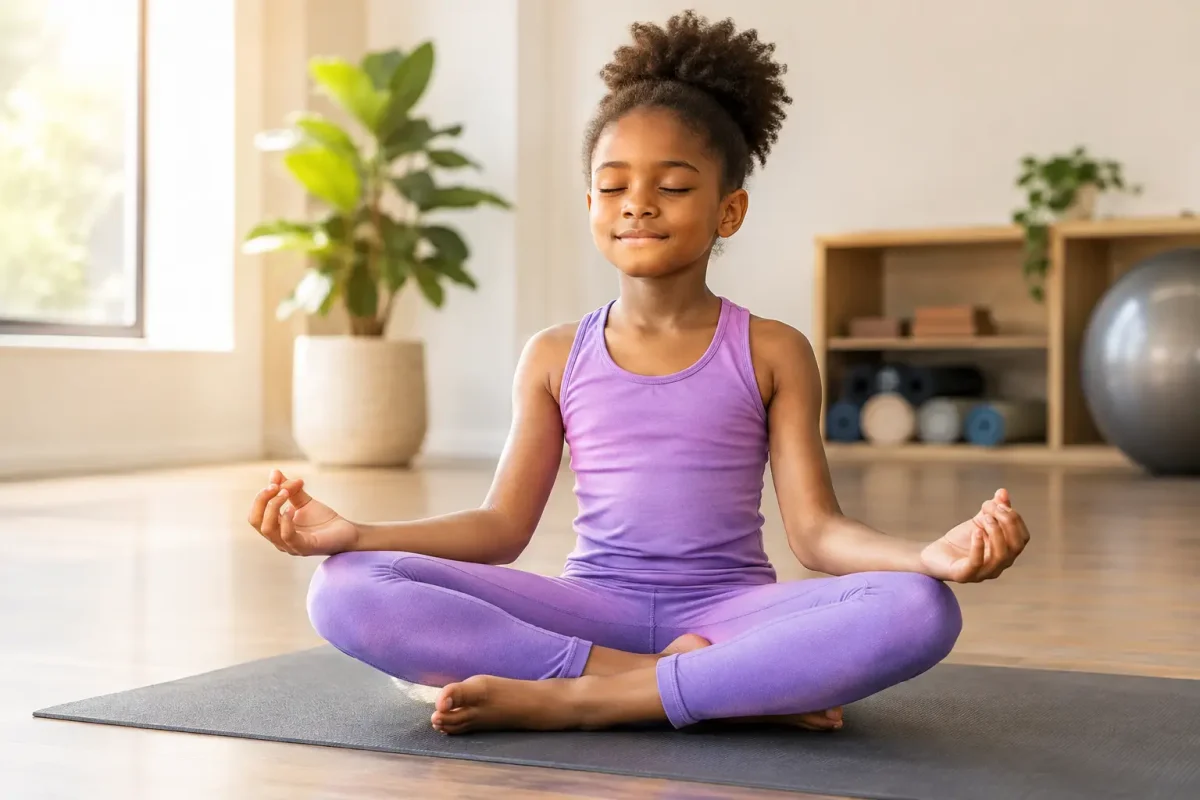
A child who can’t sit still isn’t necessarily being difficult. They may be overstimulated, worried, tired, or still learning how to recognise what their body is asking for. That’s where the top benefits of kids yoga become practical rather than decorative. Yoga gives children a structured way to move, breathe, pause, and return to themselves.
For parents, the goal isn’t to create a tiny adult who can hold a perfect pose. The goal is to help a child build body awareness, emotional control, confidence, and the ability to focus when life feels loud. Those skills support school, sport, friendships, and family life.
The top benefits of kids yoga reach beyond flexibility
Yoga is often reduced to stretching. Flexibility is useful, but it’s only one part of the picture. A well-coached children’s yoga class combines movement, balance, breathwork, attention, and rest. Each element asks the child to notice what’s happening inside their body and make a deliberate response.
That practice matters. Children spend much of their day being directed by adults, bells, screens, schedules, and social expectations. Yoga creates a short period where they learn to recognise their own breathing, posture, energy level, and emotions. This isn’t indulgence. It’s a foundation for self-management.
For children who are naturally energetic, yoga can channel movement into control. For children who are hesitant or anxious, it can provide a low-pressure way to participate and succeed. The experience depends on coaching, class structure, and the child’s needs, but the principle remains the same: discipline begins with awareness.
Better focus through controlled movement
Children are often told to concentrate without being shown how. “Pay attention” isn’t a strategy. Yoga offers one by linking attention to a physical task: hold a position, feel both feet on the floor, breathe slowly, or move only when the instructor gives the next cue.
Balancing poses are especially useful because they require full presence. A child can’t think about ten different things while steadying themselves in tree pose or moving carefully from one shape to another. They’ve to organise their posture, visual attention, and breathing. Over time, that repeated practice can help them tolerate stillness and recover their attention after distraction.
This doesn’t mean yoga replaces professional support for ADHD or learning difficulties. Nor should it be used to demand that a child suppress their natural energy. A neurodiversity-friendly class makes room for movement breaks, clear demonstrations, predictable routines, and different ways to take part. The aim is regulation, not compliance for its own sake.
A calmer nervous system is a trainable skill
When a child is upset, their body often reacts before they can explain what’s wrong. Their breathing may become shallow, their muscles tense, their voice rise, or their impulse control disappear. They aren’t choosing every part of that response. Their nervous system has moved into a protective state.
Simple breathing exercises and slower movement can give children a way back. A long exhale, a grounded seated position, or a familiar sequence of poses may help create enough space between feeling and reaction. That space is where better choices become possible.
The key is repetition outside moments of crisis. Teaching a child to breathe slowly only when they’re already overwhelmed is like teaching a swimming stroke during a storm. Regular yoga gives them a familiar tool before they need it most. With practice, they may begin to recognise, “My body feels fast. I need to slow down.”
Confidence built through effort, not praise alone
Real confidence isn’t simply being told, “You’re amazing.” It grows when children meet a challenge, stay with it, and see evidence that they can improve. Yoga is full of these manageable challenges.
A child may wobble in a balance pose, struggle to coordinate a sequence, or find it hard to remain quiet during rest. None of that’s failure. It’s feedback. When a coach responds with clear instruction and calm encouragement, the child learns a more useful belief: “I can practise this.”
That mindset carries into other areas of life. A child who understands that progress comes from repetition is less likely to quit when schoolwork, sport, or social situations feel uncomfortable. They learn that capability is built, not handed over.
Yoga can also be a powerful entry point for children who don’t feel at home in highly competitive activities. There’s still structure and accountability, but success isn’t limited to being the fastest or strongest person in the room. A child can measure progress through steadier balance, better posture, calmer breathing, or greater willingness to try.
Stronger bodies and safer movement habits
Children need opportunities to develop coordination, mobility, balance, and basic strength. Yoga develops all four without requiring heavy equipment or high-impact drills. Weight-bearing positions can strengthen the shoulders, arms, legs, and trunk, while controlled transitions teach children how to move with intention.
This is especially valuable alongside martial arts and other sports. Good posture, hip mobility, core control, and body awareness can support kicking, running, jumping, throwing, and safe landing mechanics. Yoga shouldn’t be presented as a cure-all for injury prevention, but it can help children notice tightness, fatigue, and poor alignment before these patterns become habitual.
Children are still growing, so coaching matters. Forcing a stretch, chasing advanced poses, or comparing bodies isn’t productive. A sensible class prioritises form, breath, gradual progress, and the child’s individual range of motion. Discipline isn’t punishment. It’s learning to respect the process and the body doing the work.
Emotional vocabulary without a lecture
Many children feel big emotions but lack the words to describe them. They may say they’re “fine” while their behaviour tells a different story. Yoga creates natural openings for emotional vocabulary without turning every class into therapy.
A coach can ask simple, concrete questions: Does your body feel busy or calm? Where do you feel tension? Did that pose make you feel steady, frustrated, proud, or tired? These prompts help children connect physical sensations to emotional states.
That connection is useful at home too. Instead of asking only, “Why are you acting like this?”, a parent can begin with, “Your body looks like it needs a reset.” A few slow breaths, a stretch, or a quiet pose won’t solve every conflict. But they can reduce the intensity enough for a real conversation to happen.
Routine gives children a reliable reset point
Children thrive when expectations are clear. A consistent yoga class offers a predictable rhythm: arrive, settle, warm up, practise, breathe, rest, and leave with purpose. For children managing anxiety, autism, ADHD, or simply a demanding school schedule, that rhythm can feel reassuring.
Consistency also teaches a lesson that lasts. Motivation changes from day to day. Discipline is showing up with a willingness to practise, even when the pose is difficult or the mind feels scattered. Children don’t need harsh pressure to learn this. They need standards, patience, and adults who model calm persistence.
At Edson Breedy Athletics, movement is treated as more than exercise. It’s a way to develop focus, emotional regulation, resilience, and respect for the self and others. For a child, these aren’t abstract goals. They’re skills they can use when a classroom feels overwhelming, a match becomes stressful, or a hard day follows them home.
How parents can make yoga support, not another pressure
The best results come when yoga feels purposeful but not punitive. Avoid using it as a consequence for misbehaviour or expecting a child to become calm immediately after one class. Some children will love the quiet elements; others will engage first through animal poses, games, balance challenges, or the physical satisfaction of getting stronger.
Look for instruction that’s age-appropriate, clear, and adaptable. Younger children usually need shorter activities and imagination. Older children may respond well to learning how breathing affects performance, stress, and recovery. If your child has sensory needs, anxiety, an injury, or a diagnosis, speak with the instructor so reasonable adjustments can be considered.
Most of all, keep the focus on practice. A child doesn’t need perfect stillness to benefit from yoga. They need a safe place to learn that they can notice their body, guide their breath, and try again. Give them that experience consistently, and they gain something far more valuable than a flexible hamstring: a steadier way to meet the world.
Train your mind. Build your body.
Your first week is just TTD $50, every discipline, every class, no experience needed. Come find out what training with EBA feels like.