What’s Sensory Friendly Training and Who Is It For?
October 30, 2026
Top Benefits of Kids Yoga for Focus and Confidence
November 3, 2026
A child who struggles to sit still isn’t necessarily lazy. A child who quits when something feels difficult isn’t broken. Often, they need a structured place to practise effort, recover from frustration, and learn that progress comes through repetition. That’s what meaningful kids fitness Trinidad should provide: more than exercise, and far more than somewhere to burn energy.
The right training environment helps children build physical capability alongside emotional control. They learn how to listen, try again, manage their body in space, and remain respectful when they win or lose. Those aren’t small lessons. They shape how a child handles school, friendships, pressure and the growing responsibilities of life.
Kids Fitness Trinidad Should Build More Than Stamina
Children need movement. But movement without direction doesn’t automatically create discipline, confidence or focus. A good programme has a clear structure: warm-up, skill development, coached practice, physical conditioning and a calm finish. Every part gives children a predictable framework in which to learn.
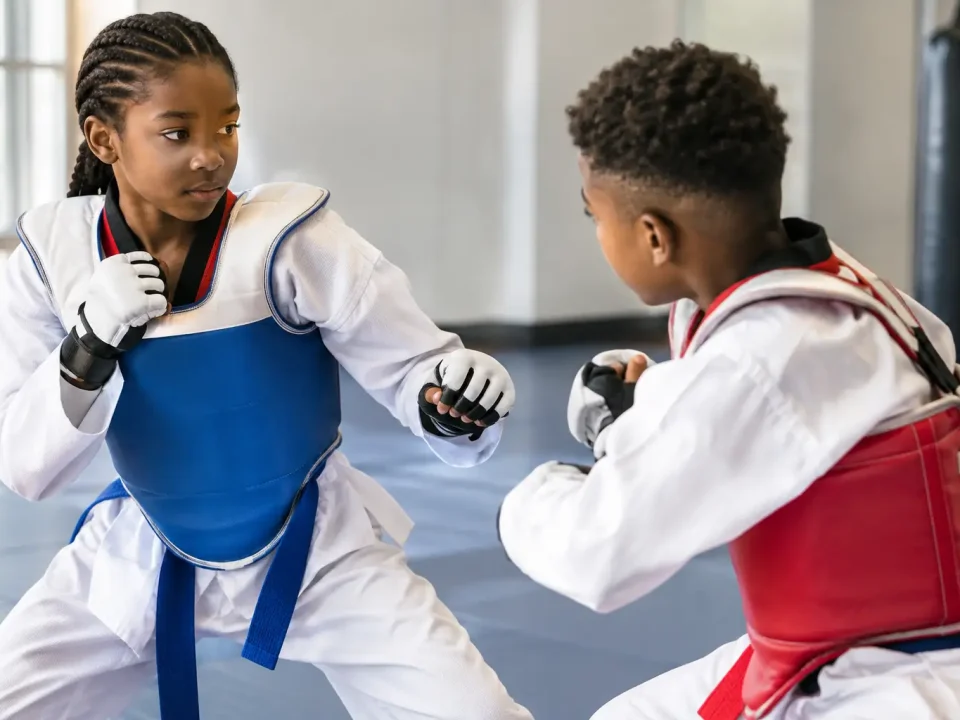
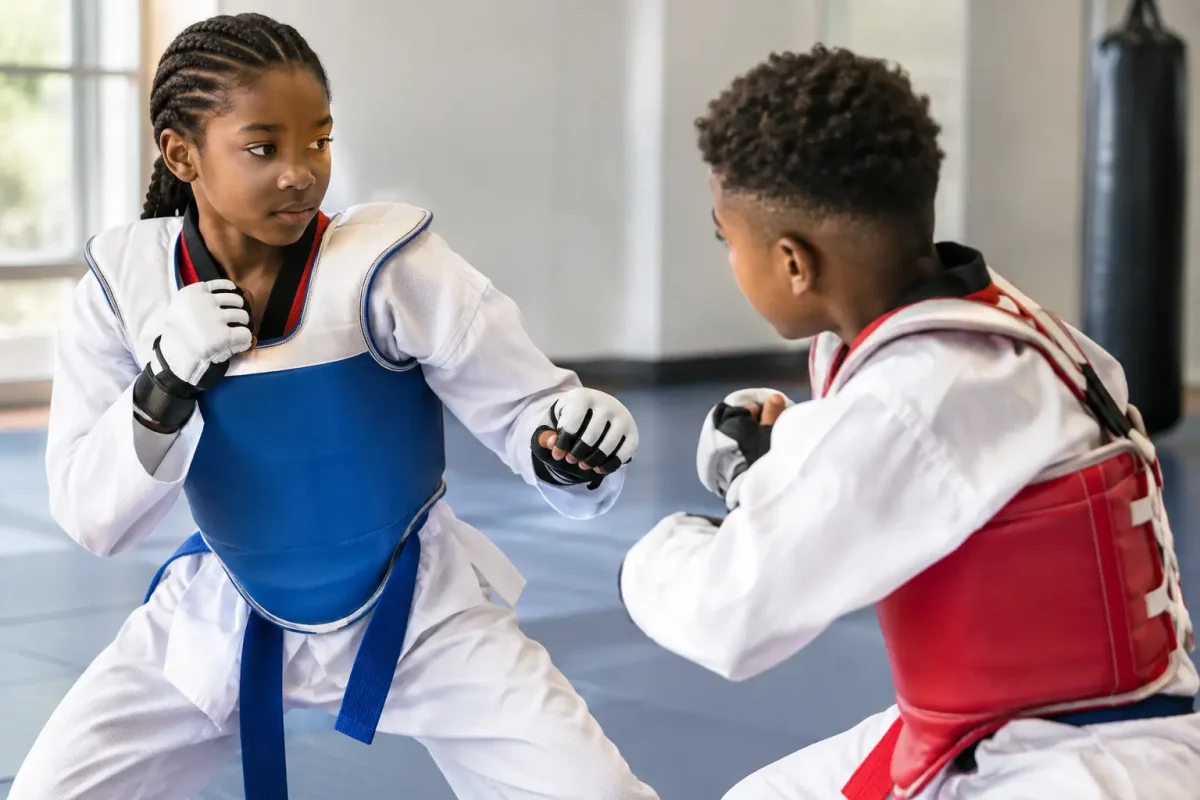
Martial arts and skill-based fitness are particularly powerful because progress is visible. A child learns a stance, a sequence, a controlled strike or a safe fall. At first, it may feel awkward. With coaching and repetition, it becomes familiar. That experience teaches a lesson that no motivational speech can replace: ability is built.
For many parents, the greatest change isn’t simply that their child becomes fitter. It’s that they begin carrying themselves differently. They stand taller. They speak more clearly. They understand that being challenged isn’t the same as failing.
Physical activity can also support nervous system regulation. Intense movement, balanced with breathing, pauses and clear boundaries, gives children an appropriate outlet for stress and restless energy. This is especially valuable after long school days, academic demands and the constant stimulation of screens.
Why Structure Matters for Children
Children don’t need a coach who constantly entertains them. They need an adult who sets a standard, explains it clearly and follows through with care. Structure creates safety because children know what’s expected and what happens next.
In a well-run class, rules aren’t punishment. They’re a shared agreement. Wait your turn. Respect your training partner. Keep your hands safe. Finish the drill. Ask for help when you need it. These expectations allow children with different confidence levels and abilities to train together without chaos taking over.
That doesn’t mean every child responds in the same way. Some thrive with direct instruction. Others need a little more time to observe before joining in. A child with ADHD may benefit from short, purposeful drills and regular movement. An autistic child may feel more settled when class routines are consistent and transitions are explained. A child with anxiety may need reassurance that beginners are expected to make mistakes.
The answer isn’t lowering the standard. The answer is coaching with awareness. Clear instructions, predictable routines and patient correction can make high-quality training accessible without removing challenge.
Confidence Is Earned Through Evidence
Praise matters, but empty praise doesn’t build lasting confidence. Children know when they haven’t yet done the work. Real confidence comes from evidence: they completed the warm-up when they wanted to stop, learned a new technique, returned after a difficult class, or showed self-control during sparring.
This is why disciplined training is so valuable. It gives a child repeated proof that they can do hard things safely. Over time, that proof becomes part of their identity.
Instead of saying, “I can’t,” they begin to say, “I’m still learning.” Instead of melting down at the first obstacle, they’ve a familiar process: breathe, listen, reset, try again. That’s resilience in practice.
Choosing the Right Fitness Programme for Your Child
Not every activity suits every child, and not every class is designed with child development in mind. Before enrolling, parents should look beyond flashy drills or promises of instant confidence. Watch how the coach communicates. Notice whether children are corrected with respect. See if beginners receive guidance rather than being left behind.
The best fit depends on your child’s needs. A highly social child may enjoy partner drills and team challenges. A child who needs focus may respond well to the routines of Taekwondo or jiu-jitsu. Boxing and kickboxing can offer a disciplined outlet for older children and teens, provided technique, control and safety are always prioritised. Yoga and mobility work may be an excellent complement for children who need to slow down, improve body awareness or recover from high activity.
Ask whether the programme is age-specific. A seven-year-old shouldn’t train exactly like a teenager, and neither should be treated like a miniature adult. Younger children need simple instructions, engaging repetition and plenty of positive direction. Older children can take greater ownership of goals, conditioning, accountability and technical progress.
A quality programme should also be transparent about contact, supervision and progression. Children need to be challenged, but they don’t need to be overwhelmed. Tough coaching isn’t shouting for the sake of it. It’s maintaining standards while teaching a child how to meet them.
The Parent’s Role Starts Outside the Class
Training can be a powerful tool, but it works best when parents support the process without turning every session into a performance review. Ask your child what felt challenging, what they enjoyed, and what they want to improve next time. Resist the urge to measure every class by whether they came home smiling.
Some sessions will feel difficult. That can be healthy. The goal isn’t to make children comfortable every moment. The goal is to help them become capable of moving through discomfort with guidance and self-respect.
Consistency matters more than intensity. One excellent class followed by weeks away rarely builds momentum. A regular schedule helps children form habits, develop trust in their coaches and see their own progress over time. Stop negotiating with yourself each week. Choose the days, protect the routine and let the process work.
At Edson Breedy Athletics, training is approached as mind-body development, not simply a collection of exercises. Children are coached to build skill, discipline and confidence in an environment that recognises the connection between movement, focus and emotional regulation.
Signs Training Is Making a Difference
Progress doesn’t always arrive as a medal or a new belt. Often, it appears quietly at home or school. Your child may be quicker to get ready for class, more willing to try unfamiliar tasks, or better able to settle after becoming upset. They may begin using the language of effort and improvement instead of avoiding anything that feels hard.
There will still be challenging days. Fitness training isn’t a cure-all for anxiety, attention difficulties or behavioural concerns, and it shouldn’t replace appropriate medical, educational or therapeutic support where that’s needed. But a structured physical practice can become one valuable part of a child’s wider support system.
Build a Stronger Routine, Not a Busier Childhood
Children in Trinidad and Tobago already have full lives: schoolwork, family commitments, friendships and, for many, a growing amount of screen time. The answer isn’t to fill every afternoon with another activity. It’s to choose activities with purpose.
A good fitness routine teaches children to use their bodies well, respect others, regulate their response to pressure and keep going when motivation fades. Those benefits carry beyond the training floor. They show up in the classroom, on the playing field and at home when life doesn’t go their way.
Start with a setting where your child can be a beginner without judgement, where effort is noticed, and where discipline is taught as a form of self-respect. The strongest children aren’t the ones who never struggle. They’re the ones who learn what to do when they do.
Train your mind. Build your body.
Your first week is just TTD $50, every discipline, every class, no experience needed. Come find out what training with EBA feels like.