Guide to Structured Training for Long Term Consistency
August 23, 2026
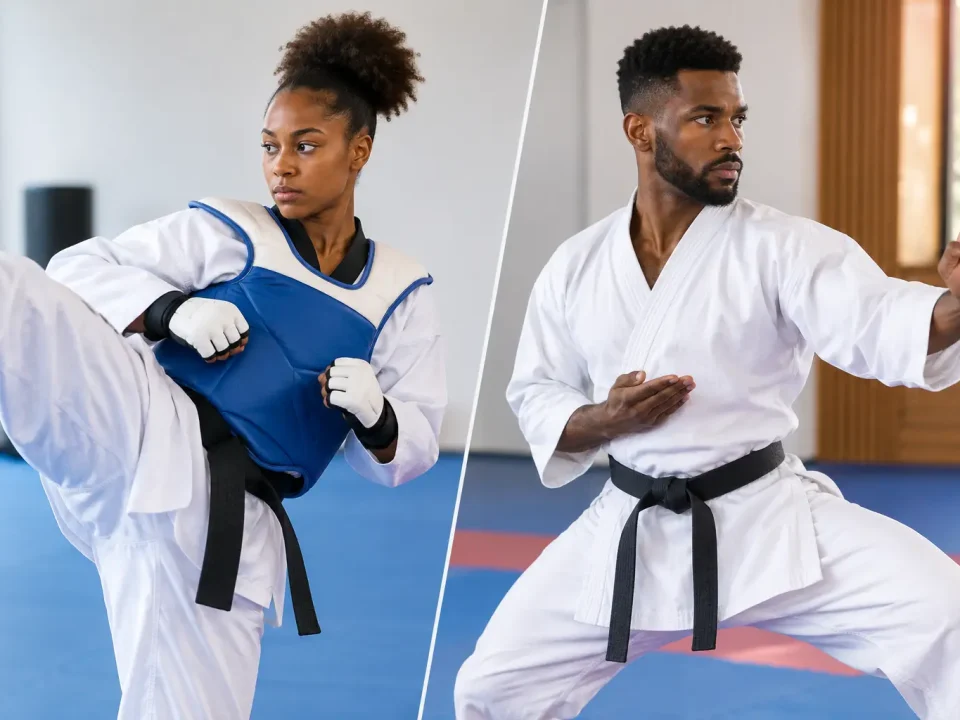
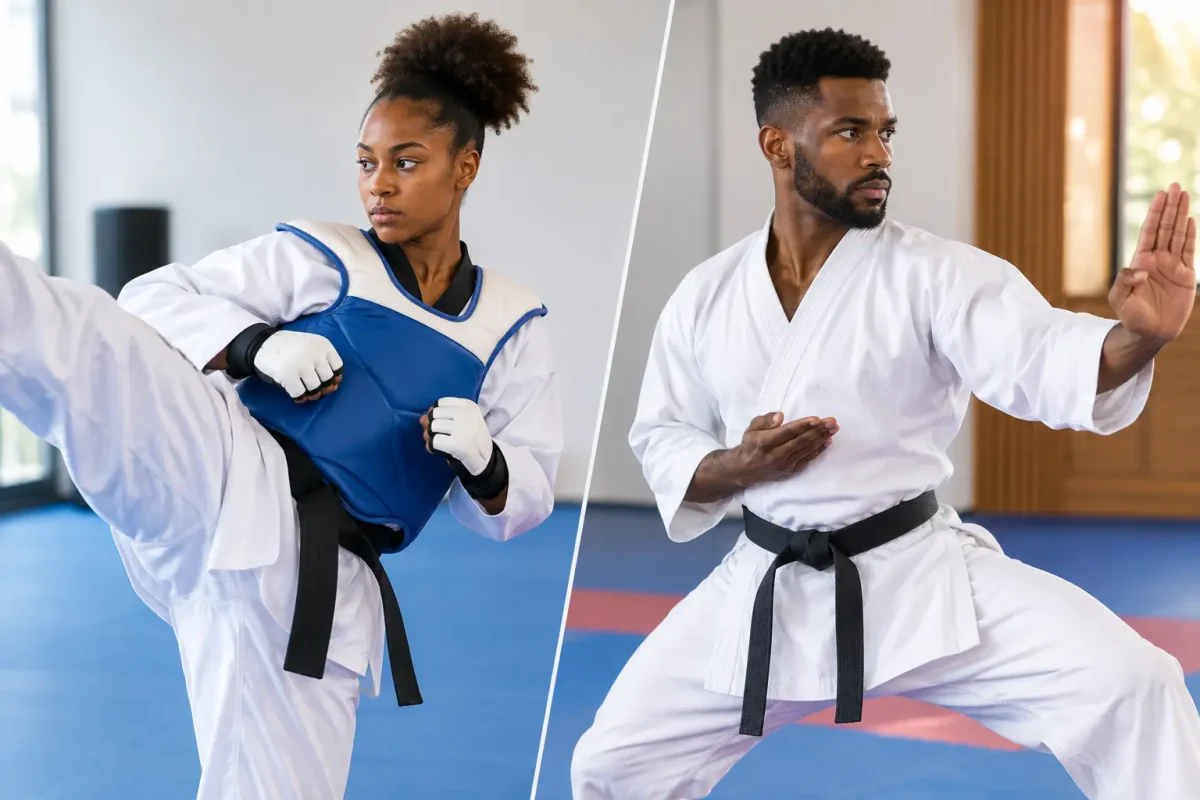
Taekwondo vs Jiu Jitsu for Children Compared
August 27, 2026

The wrong first class can make a beginner feel exposed. The right one gives you a clear job: listen, move, practise, improve. When considering boxing versus kickboxing for beginners, don’t start by asking which is harder. Ask which training structure will help you show up consistently, build confidence safely, and leave with a calmer, stronger mind than the one you arrived with.
Both disciplines develop fitness, coordination, discipline and self-belief. Both can offer a constructive outlet for stress. The better choice depends on what holds your attention, what your body needs, and the quality of coaching around you. You don’t need to arrive fit, tough or naturally coordinated. You need a programme that meets you where you’re and expects progress.
Boxing versus kickboxing for beginners: the core difference
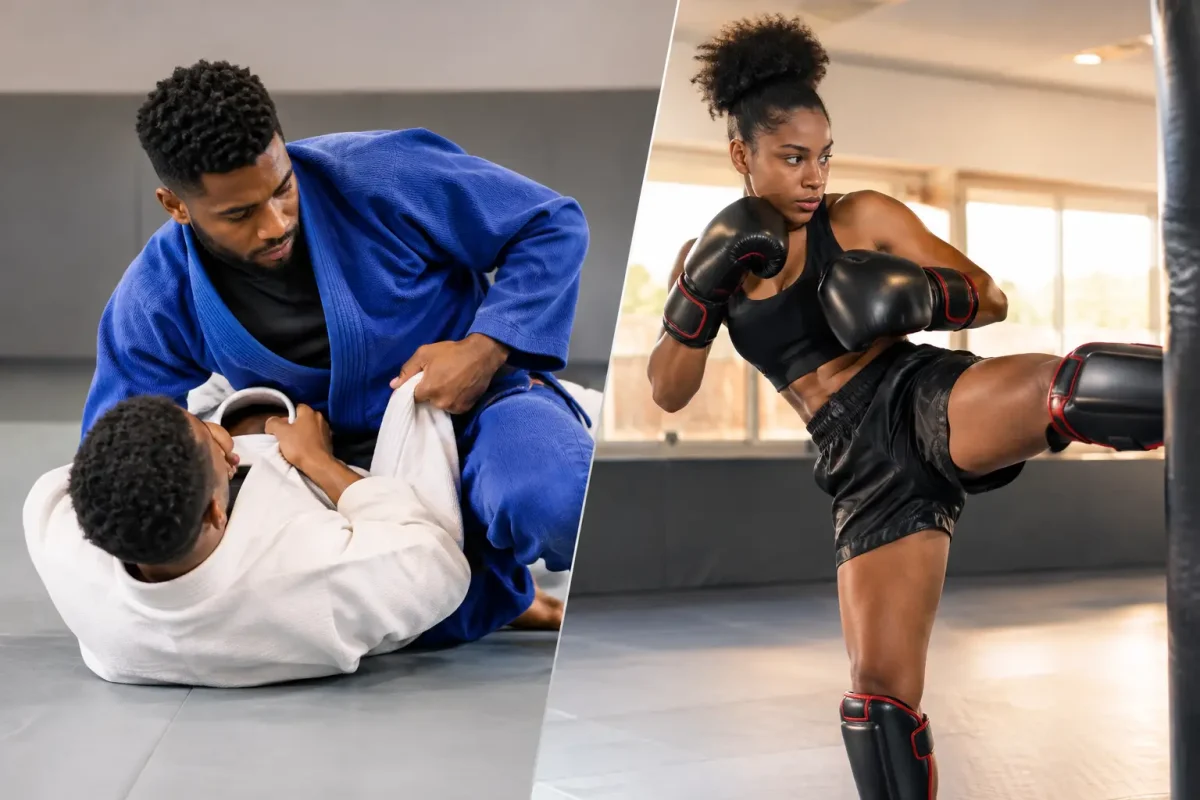
Boxing uses the hands. You learn stance, footwork, defensive movement, punches, timing and distance. A beginner may spend much of the first few weeks developing a stable guard, moving without crossing their feet, and learning how to throw a jab and cross without losing balance. It can look simple from the outside. It isn’t. The detail is the point.
Kickboxing combines punches with kicks and, depending on the class format, may include knees, defensive movement and broader striking combinations. It asks more of the whole body from the beginning. You’ll need to coordinate hands and feet, manage your balance on one leg, and learn when a kick is safe and appropriate to throw.
Neither option is automatically better. Boxing offers a narrower skill set with enormous depth. Kickboxing offers more variety and a fuller striking vocabulary, but more moving parts can feel challenging at first. For some beginners, that variety is energising. For others, it creates unnecessary mental noise before fundamental movement feels settled.
A good coach doesn’t confuse complexity with progress. They teach one useful layer at a time.
What boxing tends to feel like
Boxing is often ideal for people who enjoy repetition, precision and measurable technical improvement. You may spend a session refining a single punch, then practise it on pads, a bag or in controlled partner drills. That repetition builds confidence because you can feel the difference when your feet become quieter, your guard stays up, or your breathing remains controlled under effort.
It’s also highly demanding cardiovascular training. Short rounds of bag work, pad drills and footwork can raise the heart rate quickly. But hard work isn’t the same as chaos. A structured boxing class gives your nervous system a clear sequence: prepare, execute, recover, reset.
What kickboxing tends to feel like
Kickboxing can be especially rewarding for beginners who want a more varied, full-body session. Learning to kick with correct posture and hip movement builds mobility, balance and body awareness alongside conditioning. Combinations can feel dynamic and creative, which helps many people stay engaged.
The trade-off is that kicks require extra patience. Poor balance, rushing, or trying to hit hard too early can lead to sloppy technique and frustration. Beginners need coaching that prioritises stance, range of motion and control rather than asking them to perform advanced combinations before they own the basics.
Choose the discipline that supports consistency
The best martial art isn’t the one that looks most impressive online. It’s the one you’ll practise long enough to become competent.
Choose boxing if you want to sharpen focus through a clear, concentrated technical challenge. It can suit adults who need a direct outlet after a demanding workday, teens who benefit from structure and repetition, or anyone who wants to build confidence through mastering fundamentals. The smaller number of tools can make progress easier to track.
Choose kickboxing if movement variety helps you stay motivated and you want to develop both punching and kicking skills. It can suit people who enjoy a more expressive physical challenge, want greater lower-body involvement, or find that learning combinations keeps their attention anchored in the present.
For children, the decision should be less about labels and more about coaching quality, age-appropriate structure and emotional safety. A child shouldn’t be pushed into contact before they’ve learned control. They should learn to follow instructions, manage space, work with partners respectfully and recover from mistakes without shame. These are martial arts lessons, but they’re also life lessons.
If you’ve ADHD, autism, anxiety or depression, your needs are equally valid in this choice. Some trainees thrive on the predictable rhythm and repetition of boxing. Others regulate better when kickboxing gives them a wider range of movement and a physical way to discharge restless energy. There’s no single neurodivergent experience, so the right answer is individual. Look for instructors who can explain drills clearly, demonstrate them visually, offer sensible progressions and treat breaks as a tool for learning rather than a failure of effort.
Fitness matters, but regulation matters too
People often join a striking class to get fitter. They stay because training changes how they handle pressure.
Boxing and kickboxing both require attention under fatigue. You’ve to notice your stance, protect yourself, hear a coach’s instruction and make decisions while your heart rate rises. Done well, this is more than a calorie-burning workout. It’s practice in staying present when your body is activated.
That doesn’t mean every session should leave you exhausted. Constantly training at maximum intensity can make it harder to recover, especially if life already brings high stress, anxiety, poor sleep or sensory overload. Progress comes from the right dose of challenge, repeated consistently. Technical rounds, controlled bag work, conditioning, mobility and recovery all have a place.
A doctor-designed, mental health-informed academy should understand this distinction. Training can build resilience without turning every class into a test of whether you can endure punishment. Discipline over motivation means showing up, following the process and respecting recovery so you can return tomorrow.
Don’t choose based on fear of contact
Many beginners worry that boxing or kickboxing means being hit on day one. It shouldn’t.
A responsible beginner programme starts with technique, movement, pads, bags and controlled drills. Partner work should be supervised, matched to experience and built around consent and control. Sparring is a training tool, not a rite of passage. It isn’t required for someone to gain fitness, confidence and practical skill.
Ask how a class introduces contact, how coaches protect new members, and whether people are taught to control power before they’re encouraged to use it. The answers reveal more about the academy than a highlight reel ever will.
What your first month should actually build
Your first month isn’t about proving yourself. It’s about creating a base you can trust. In boxing, that means stance, guard, basic punches, footwork, breathing and simple defensive habits. In kickboxing, it includes those same foundations plus controlled kicking mechanics, balance and safe transitions between techniques.
Expect awkward moments. Your feet may not do what your brain asks. You may forget a combination halfway through. You may feel tired sooner than expected. This isn’t evidence that you’re bad at martial arts. It’s your nervous system learning a new language through repetition.
Track smaller wins: arriving on time, remembering your stance, keeping your hands up for one whole round, or returning after a difficult day. Confidence doesn’t usually arrive as a dramatic feeling. It’s built from evidence. Every completed session gives you more of it.
Wear comfortable training clothes, bring water, and arrive ready to learn rather than perform. Let your coach know about injuries, health concerns, sensory needs or goals. Good instruction isn’t one-size-fits-all. It’s structured enough to create standards and attentive enough to help each person meet them.
Give yourself permission to start simply
If you’re in Saint Joseph or elsewhere in Trinidad and Tobago and choosing between boxing and kickboxing, a trial week can answer questions that comparison alone can’t. Notice which class makes you feel focused rather than overwhelmed, challenged rather than dismissed, and motivated to return.
Start with the discipline that gives you a reason to come back next week. Technique can grow. Fitness can improve. Confidence can be earned. The decision that matters most isn’t boxing or kickboxing. It’s the decision to stop negotiating with yourself and begin.
Train your mind. Build your body.
Your first week is just TTD $50, every discipline, every class, no experience needed. Come find out what training with EBA feels like.