Boxing Versus Kickboxing for Beginners Compared
August 25, 2026
Yoga Classes Saint Joseph for Stronger Minds
August 29, 2026
A child who struggles to sit still may thrive in the sharp rhythm of Taekwondo. Another who avoids loud, fast-moving games may become confident through the close, methodical problem-solving of jiu-jitsu. When parents weigh taekwondo vs jiu jitsu for children, the right answer is rarely about which style is “better”. It’s about which training environment gives that particular child structure, safety and a reason to keep showing up.
Both arts can build confidence, physical literacy and self-control. Both can teach a child that progress comes from practice rather than talent. Yet they ask different things of the body, attention and nervous system. Understanding those differences helps parents choose with purpose rather than following the loudest claim about self-defence.
The fundamental difference: striking versus grappling
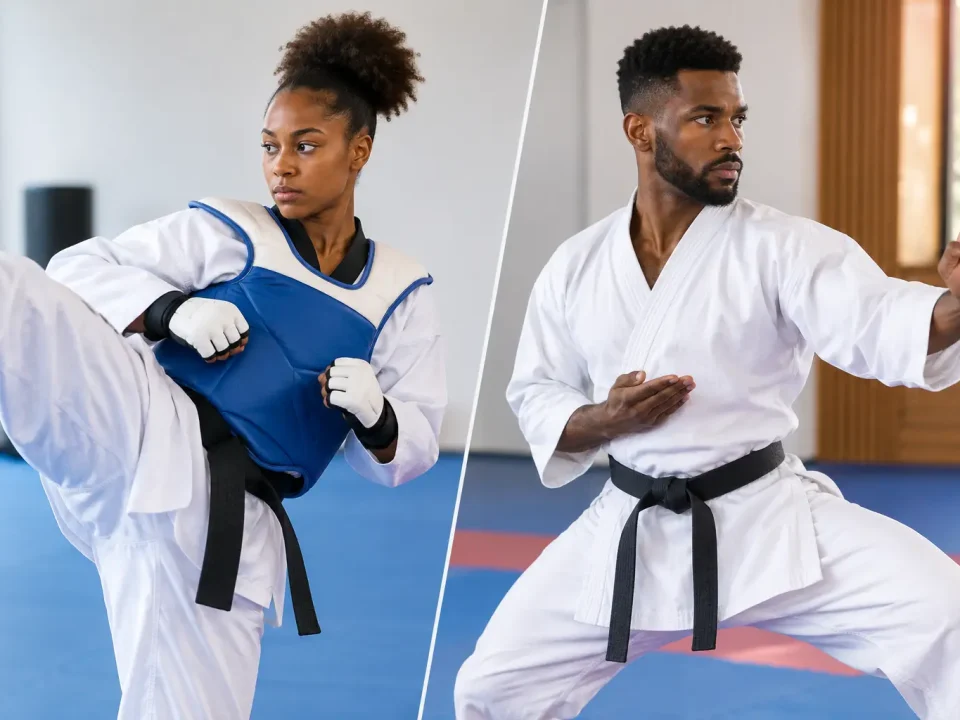
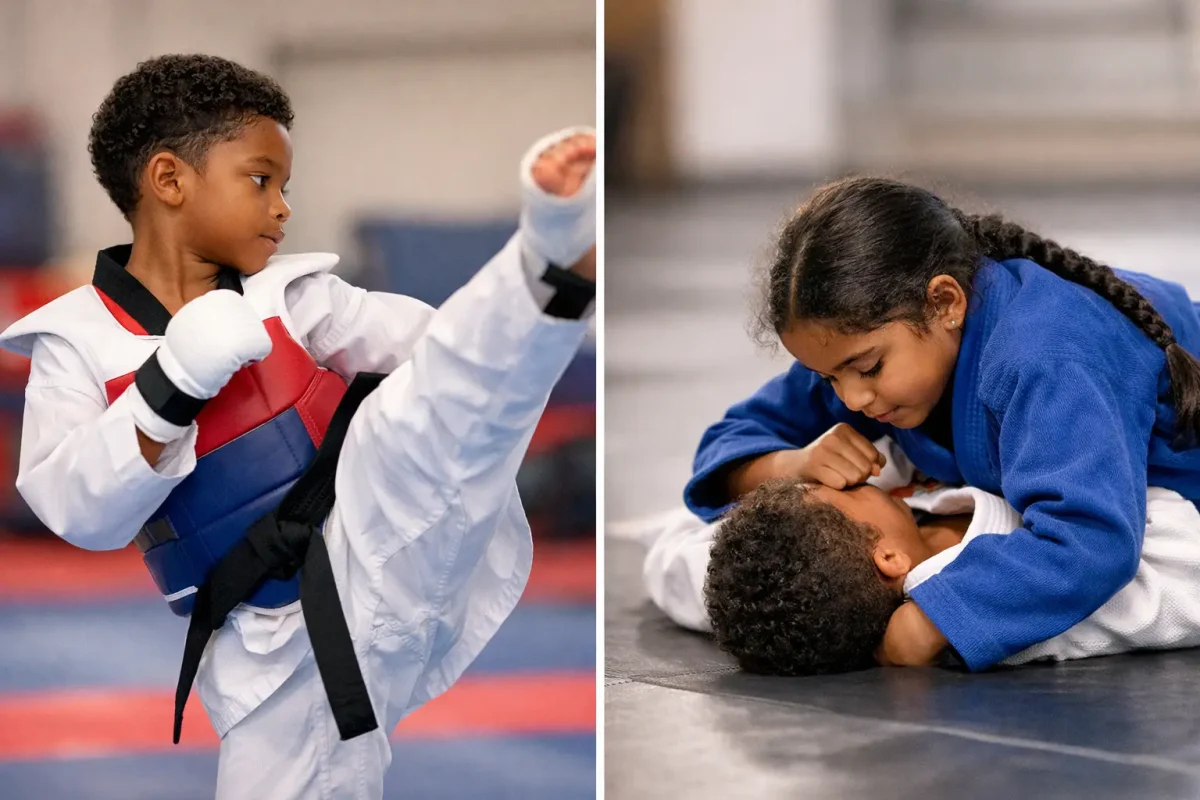
Taekwondo is primarily a striking martial art. Children learn stances, blocks, punches and, most famously, kicks. Classes often include line work, pad drills, forms and controlled sparring as students progress. The training tends to be visually clear: a technique is demonstrated, repeated and refined.
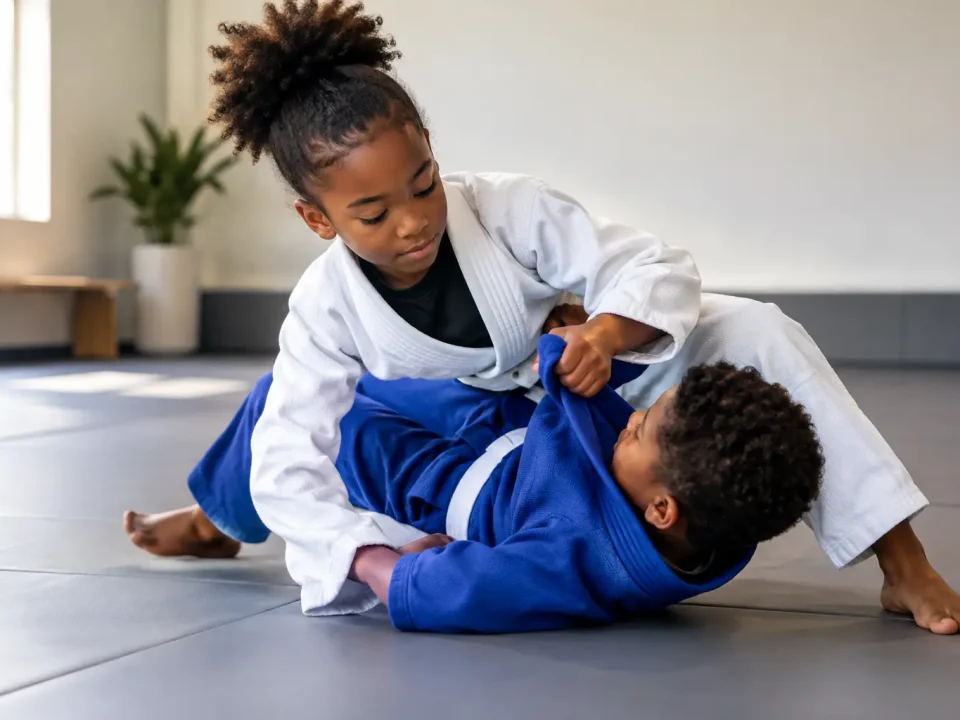
Jiu-jitsu, particularly Brazilian jiu-jitsu, centres on grappling. Children learn how to control position, escape holds, maintain balance and apply submissions in a supervised setting. Much of the work happens on the mat, often with a partner, where the child must respond to pressure and solve a physical puzzle in real time.
Neither approach is automatically safer, tougher or more useful. A well-coached class matters more than a label. Still, the difference between standing striking and close-contact grappling has practical implications for personality, learning needs and family goals.
When Taekwondo may suit your child
Taekwondo often suits children who benefit from visible structure. There’s a clear beginning and end to a drill, a defined stance to hold and a sequence to remember. For many children, especially those who need external structure to organise their attention, that predictability can be grounding.
The art also offers quick, observable wins. A child may improve the height of a kick, learn a new pattern or earn a belt after demonstrating consistent effort. These milestones should never be treated as empty rewards, but they can give children concrete evidence that discipline produces progress.
The distance involved in much Taekwondo training can also feel more comfortable for children who aren’t ready for prolonged physical contact. They can develop assertiveness, coordination and body awareness without beginning every exercise chest-to-chest with a partner.
Taekwondo can be particularly valuable for a child who needs to build posture, balance and controlled energy. A strong kick requires more than enthusiasm. It asks for stability, hip control, timing and restraint. The lesson carries beyond the mat: power without control isn’t confidence.
The limits to consider
A child who learns best through free-form problem-solving may find highly repetitive drills frustrating if the class is too rigid. Some children also need more time to develop flexibility or coordination before kicking techniques feel natural. That isn’t failure. It simply means coaching must meet them at their starting point.
Parents should also ask how sparring is introduced. Good children’s Taekwondo programmes teach distance, control and respect before intensity. Sparring shouldn’t become a contest in who can hit hardest. It should be a supervised way to practise calm decision-making under pressure.
When jiu-jitsu may suit your child
Jiu-jitsu can be an excellent fit for children who enjoy puzzles, close teamwork and learning through movement. Rather than repeating a kick in the air, they may be asked: how do you escape when someone has pinned you? How do you keep your balance? What position gives you the safest options?
This problem-solving element can engage children who switch off when training feels too scripted. They learn that size and force aren’t the only answers. Angles, timing, leverage and patience matter. For a smaller child, that can be a powerful message.
Jiu-jitsu also builds comfort with controlled pressure. Children learn to stay calm when a position feels unfamiliar, to breathe rather than panic and to work methodically towards an escape. This doesn’t mean every child will enjoy grappling immediately. It means a thoughtful programme can help them develop tolerance for challenge without overwhelming them.
For children with anxiety, the predictable rules of a well-run grappling class can be reassuring. They know what the drill is, who their partner is and when to stop. Learning to tap, pause and communicate boundaries is part of the education, not an afterthought.
The limits to consider
Jiu-jitsu involves frequent physical contact, shared mats and changing partners. That can be difficult for children with sensory sensitivities, trauma histories or a strong discomfort with touch. A skilled coach can offer gradual exposure, trusted partners and clear choices, but parents shouldn’t force a child through distress in the name of resilience.
It’s also physically demanding in a different way. Children may become hot, tired and frustrated while working from underneath another person. Hygiene, clean uniforms and careful supervision are essential. So is a culture where tapping is respected immediately and no child is shamed for needing a break.
Taekwondo vs jiu-jitsu for children: confidence is built differently
Parents often ask which art builds confidence faster. The better question is: what kind of confidence does your child need?
Taekwondo can build confident presence. A child stands tall, gives a clear response, learns to move with intent and sees their technique become sharper over time. This may help the hesitant child who needs to occupy space more comfortably.
Jiu-jitsu can build confidence in uncertainty. A child learns that being in a difficult position doesn’t mean they’re helpless. They can pause, assess, use a technique and try again. This may help the child who becomes distressed when a game doesn’t go their way or when they feel physically overpowered.
Both forms of confidence are valuable. Neither should look like aggression. Real confidence is the ability to regulate yourself, respect others and act decisively when needed.
Consider attention, sensory needs and emotional regulation
Children aren’t problems to be fixed through exercise. They’re individuals whose bodies and brains respond differently to sound, touch, speed, correction and competition. This is especially relevant for children with ADHD, autism, anxiety or depression.
A child with ADHD may enjoy Taekwondo’s fast pad drills and clear commands, or may become more engaged by jiu-jitsu’s constant partner-based problem-solving. A child with autism may prefer the repetition and defined personal space of Taekwondo, or may flourish in jiu-jitsu once routines, consent and partner expectations are carefully established. Diagnosis alone can’t choose the art.
Watch the child, not just the brochure. Do they leave class settled or overstimulated? Do they feel challenged in a manageable way? Are corrections delivered clearly and respectfully? Can they take a break without embarrassment? These questions reveal far more than a belt display ever will.
At Edson Breedy Athletics, training is approached as more than physical activity. The goal isn’t simply to make children tired. It’s to help them practise focus, emotional regulation and disciplined effort in an environment where they can be coached without being diminished.
What parents should look for in either class
The quality of coaching decides whether Taekwondo or jiu-jitsu becomes a positive force in a child’s life. Visit or trial the class before committing. Notice whether instructors know children’s names, correct behaviour without humiliation and explain why rules exist.
Ask how the programme handles sparring, bullying, injuries and sensory or learning differences. A good academy won’t promise that martial arts solves every challenge. It’ll explain its safety procedures, welcome questions and set realistic expectations.
Also pay attention to the culture among students. Children should be encouraged to work hard, but they shouldn’t be rewarded for roughness, mockery or ignoring a partner’s discomfort. Discipline isn’t fear. It’s the repeated practice of doing what’s right, even when excitement rises.
Let consistency make the decision
The best martial art is usually the one your child can attend consistently, enjoy enough to persist with and learn within safely. A child who loves Taekwondo will gain little from being pushed into jiu-jitsu because an adult thinks grappling is more practical. The reverse is equally true.
Give them a genuine trial period. Look beyond the first class nerves and the first burst of excitement. After several sessions, ask simple questions: What did you enjoy? What felt hard? Do you feel safe with the coach? Would you like to return?
Choose the class that helps your child become more steady, respectful and willing to practise. The right art isn’t the one that makes the biggest promise. It’s the one that teaches them, week after week, that they can meet difficulty without backing away.
Train your mind. Build your body.
Your first week is just TTD $50, every discipline, every class, no experience needed. Come find out what training with EBA feels like.