Taekwondo for Discipline Builds Stronger Habits
July 11, 2026
Kickboxing Classes for Adults Build Discipline
July 13, 2026
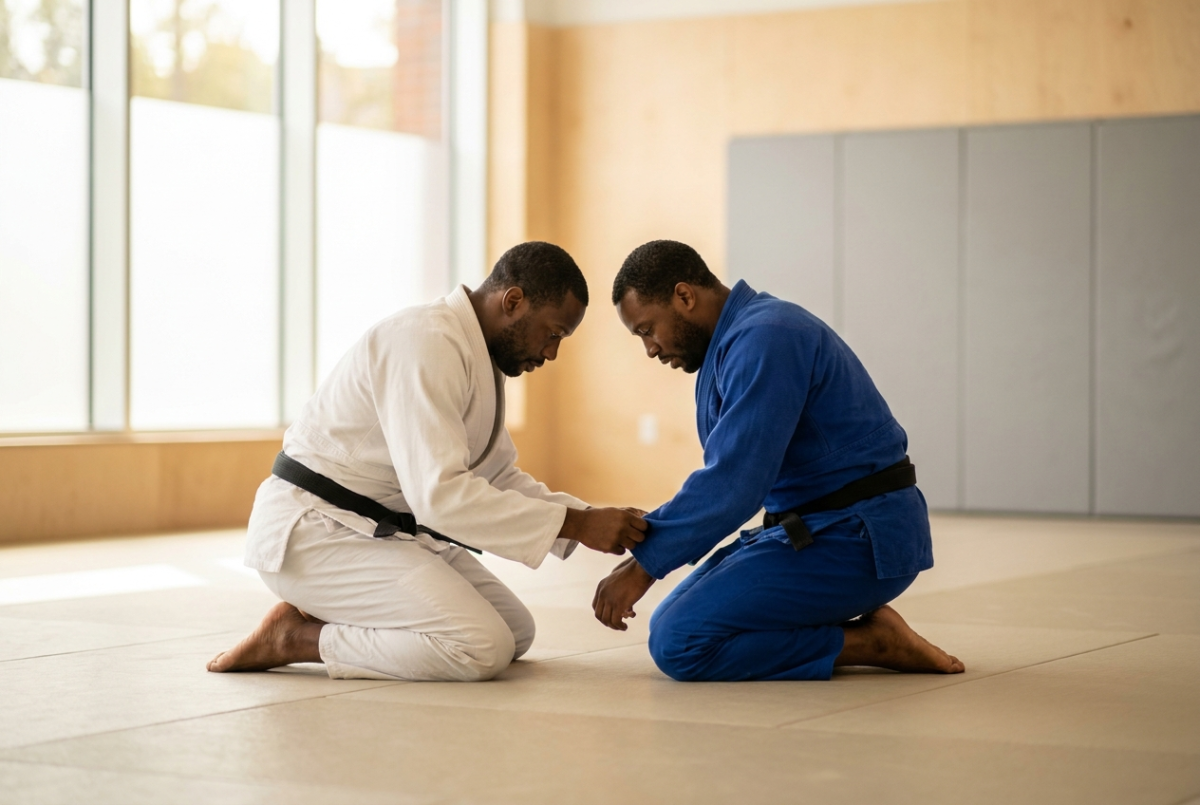
Walking into your first class can feel like a test before the training has even begun. You may be worried about fitness, contact, not knowing the names of positions, or being the only person who is new. Jiu jitsu for beginners isn’t about proving you’re tough on day one. It’s about learning to stay present, follow structure and make steady decisions under pressure.
That process matters far beyond the mat. A well-coached class gives the body a productive challenge while teaching the nervous system that effort, uncertainty and controlled discomfort can be handled. You don’t need to arrive confident. You build confidence by showing up, learning safely and returning.
What Jiu Jitsu for Beginners Actually Teaches
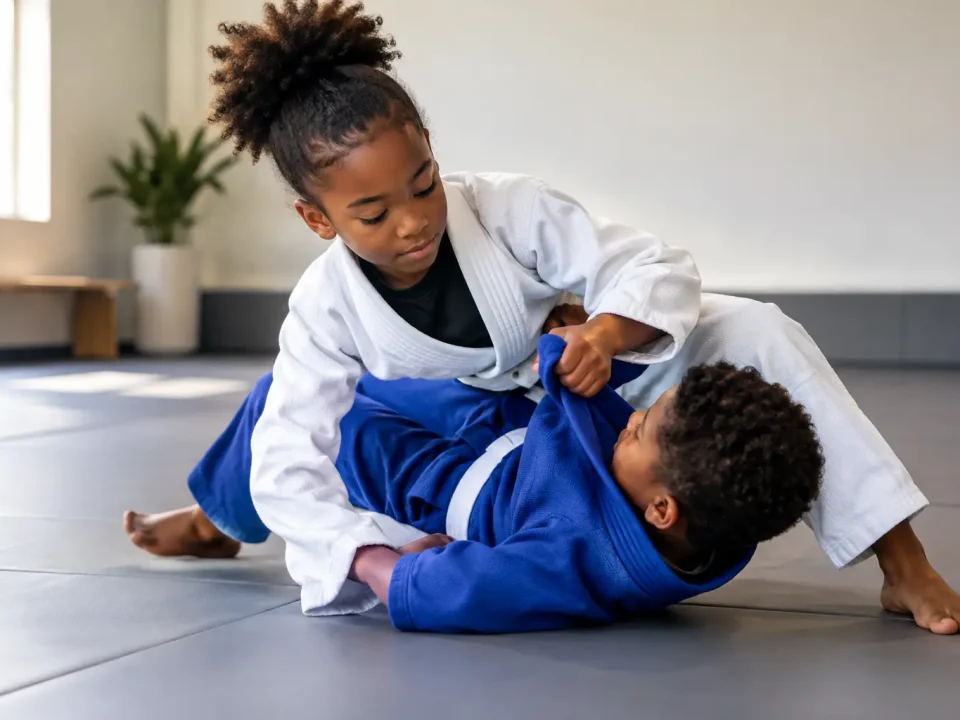
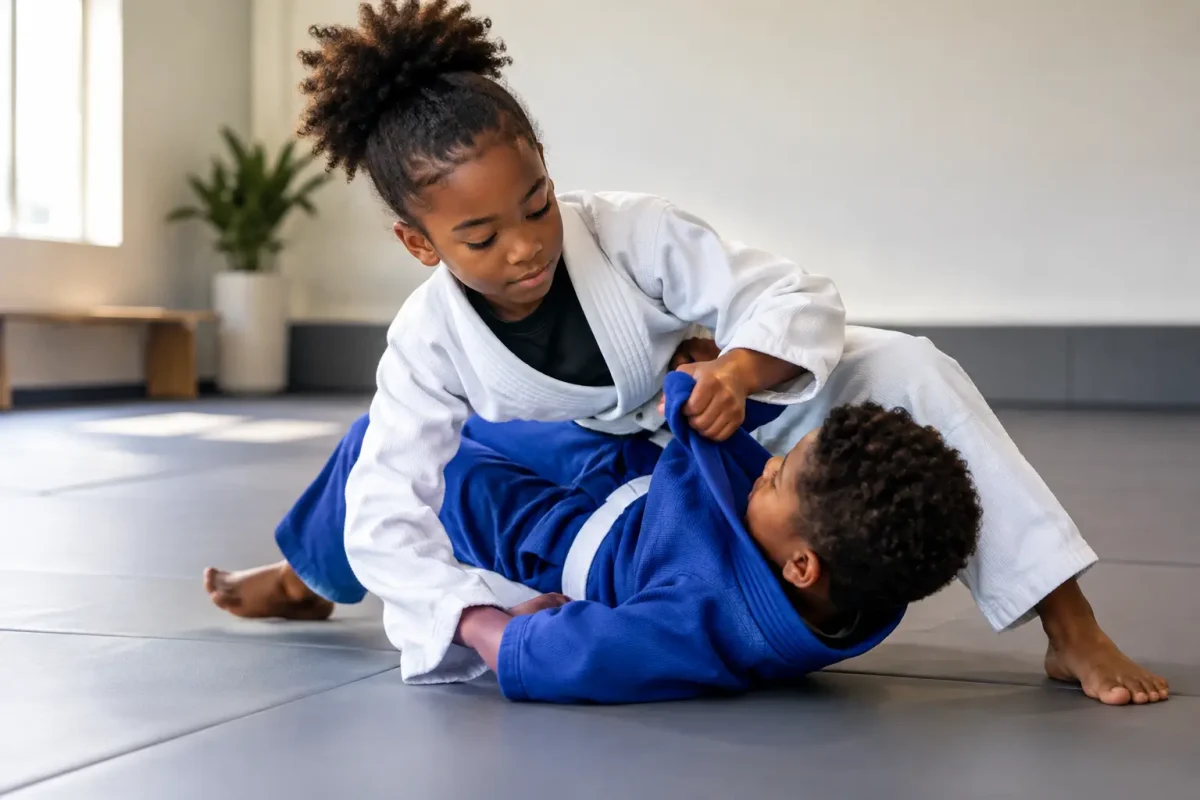
Jiu-jitsu is a grappling martial art centred on position, leverage, control and submission. Unlike training that relies mainly on striking, it teaches you how to manage close contact, escape difficult positions and use technique rather than panic or brute strength.
For a beginner, the first lessons are usually simple: how to fall safely, how to move on the ground, how to maintain balance, how to protect your posture and how to recognise when to tap. Tapping isn’t failure. It’s a clear safety signal that says, “I have reached my limit in this exchange.” Learning to use it without ego is one of the first disciplines of the art.
You’ll also begin to understand that being physically strong is useful, but it isn’t the whole answer. Good positioning can make a significant difference. Timing, breathing and patience often matter more than forcing a movement. That’s why jiu-jitsu can be deeply rewarding for adults who think they’re “not sporty”, as well as for young people still developing coordination and self-belief.
Your First Class Will Be Structured, Not Chaotic
A quality beginner class shouldn’t throw you into hard sparring and hope you cope. It should have a clear progression. You may start with a warm-up that prepares your joints, mobility and movement patterns, followed by a demonstration of one or two techniques. Then you practise with a partner at a controlled pace.
The final portion may involve positional training or light rolling. Rolling is the live practice element of jiu-jitsu, where you try to apply skills against a resisting partner. For new students, this should be supervised and scaled appropriately. The goal isn’t to win a round. The goal is to notice what happens to your breathing, posture and decision-making when there’s pressure, then practise returning to calm.
Expect to feel mentally busy at first. There are grips to remember, directions to follow and a new physical language to understand. That’s normal. Your coach doesn’t expect you to memorise everything in one session. Focus on one instruction at a time. Discipline over overwhelm.
What to wear and bring
Ask the academy whether your first session will use a traditional gi, a training uniform, or comfortable athletic clothing for no-gi jiu-jitsu. Wear clean clothes without zips or sharp accessories, keep fingernails and toenails short, and bring water. Remove jewellery before training.
Good hygiene is part of respect for your training partners. Clean kit, clean skin and prompt attention to any cuts or rashes help keep the training environment safe for everyone. These habits may seem small, but martial arts is built on standards. The way you prepare affects the whole room.
Managing Nerves, Contact and the Fear of Looking New
Most beginners aren’t afraid of the technique itself. They’re afraid of looking lost. That fear can make people hold their breath, rush movements or avoid asking for help. Do the opposite.
Tell the coach you’re new. Tell them if you’ve an injury, asthma, anxiety, sensory sensitivities or any concern about close physical contact. A thoughtful instructor can adjust the pace, pair you appropriately and explain what’s happening before it happens. You deserve coaching that challenges you without treating distress as weakness.
For members with ADHD, autism, anxiety or depression, structure can be especially valuable. Repeated class routines reduce uncertainty. Clear demonstrations give the mind something concrete to focus on. Controlled partner work offers practice in reading cues, communicating boundaries and recovering after a stressful moment. This doesn’t mean jiu-jitsu is a replacement for medical or mental health care. It can, however, be a powerful part of a wider routine that supports regulation, connection and self-trust.
If contact feels overwhelming in your first session, say so. Start slowly. Watch a round before joining it. Practise the movement with low resistance. Progress isn’t measured by how much discomfort you can endure in silence. It’s measured by your ability to engage, communicate and return next time.
Safety Is a Skill You Learn From the Start
Jiu-jitsu is physically demanding, and like any contact sport, it carries some risk. Good training reduces unnecessary risk through coaching, partner selection, controlled intensity and a culture where people respect the tap immediately.
Your responsibility is to train with awareness. Don’t crank a submission. Don’t hold your breath until you feel dizzy. Don’t try to “tough out” joint pressure because you want to impress someone. Tap early, reset and learn the position. The most consistent students aren’t the ones who treat every round like a fight. They’re the ones who protect their bodies well enough to train for years.
It also depends on your starting point. Someone returning to exercise after a long break may need a gentler ramp-up than a fit athlete. A child may need more time to become comfortable with partner drills. An experienced boxer may have strong conditioning but still need to learn how to relax when working from the ground. Comparison is a distraction. Train the body and mind you’ve today.
The First Three Months: What Progress Really Looks Like
In the early weeks, progress is often invisible to everyone except you. You might notice that you no longer freeze when someone is on top of you. You may remember to frame, breathe or turn towards an escape rather than simply pushing. You may recover faster after a difficult round.
These are meaningful wins. Jiu-jitsu develops problem-solving under pressure. At first, every situation feels urgent. With consistent practice, you begin to separate discomfort from danger and action from panic. That capacity has value at work, at school, in family life and during moments when motivation disappears.
Don’t make the mistake of measuring your future by your first session. The person who feels awkward in week one can become composed, capable and technically sharp over time. Talent helps, but attendance changes people. Stop negotiating with yourself every time the class day comes around. Put the session in your routine and let repetition do its work.
Choosing the Right Place to Start
The best academy for a beginner isn’t necessarily the one with the loudest reputation or the hardest rounds. Look for a clean environment, clear coaching, appropriate beginner instruction and a culture where experienced members help newer people learn rather than use them as targets.
For parents, observe how instructors speak to children. Discipline should be firm, consistent and respectful. Young people need boundaries, but they also need to feel safe enough to ask questions and make mistakes. For adults, look for an academy where your goals are taken seriously, whether those goals are self-defence, fitness, confidence, stress management or competition.
At Edson Breedy Athletics, jiu-jitsu sits within a wider mind-body training approach. The standard isn’t simply to work harder. It’s to train with purpose, develop skill and build the emotional control to keep going when training becomes difficult.
Your first class isn’t an audition. It’s a decision to become more teachable, more resilient and more capable. Step on the mat with humility, listen closely and give yourself permission to be a beginner. That’s where disciplined change starts.
Train your mind. Build your body.
Your first week is just TTD $50, every discipline, every class, no experience needed. Come find out what training with EBA feels like.