An Autism Exercise Routine That Builds Confidence
September 6, 2026
How Exercise Improves Focus Under Pressure
September 10, 2026
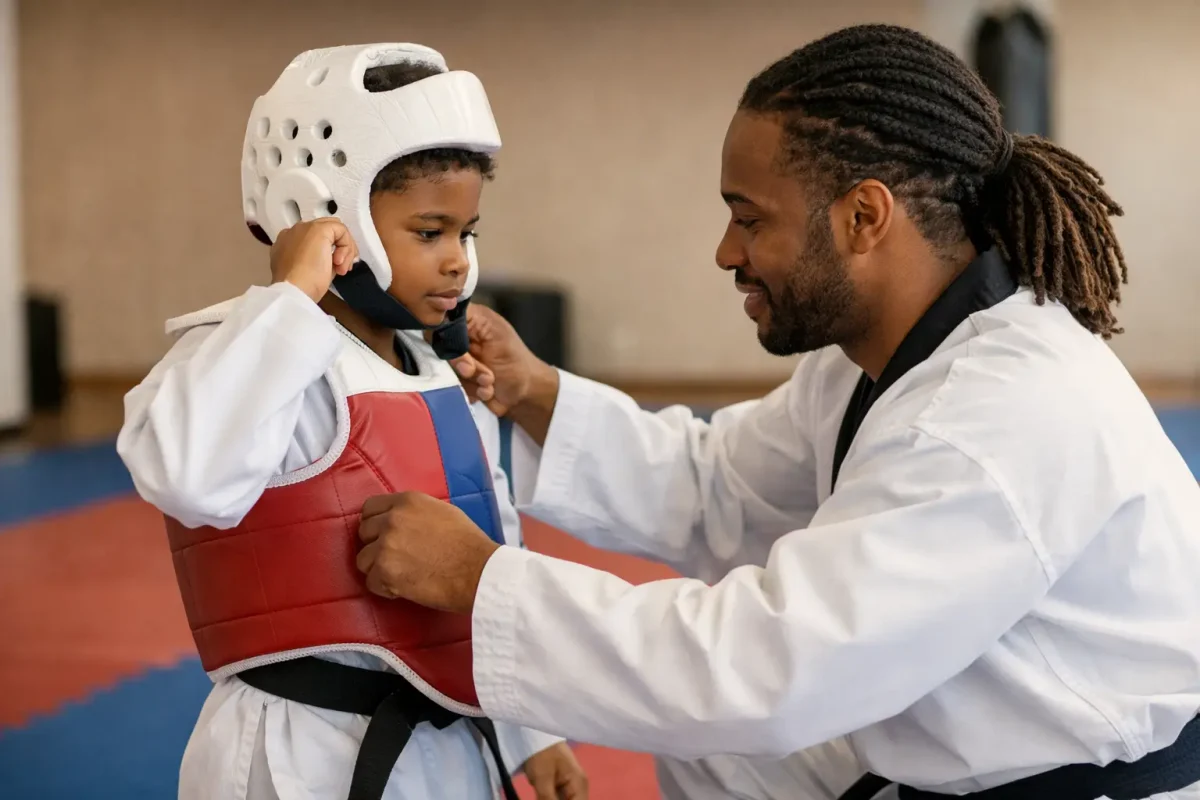
A child who struggles to sit still doesn’t always need to be told to “calm down”. An adult carrying the pressure of work, family and daily life doesn’t always need another exhausting workout. Often, both need structure: a place where the body works hard, the mind has a clear task, and progress is earned one class at a time.
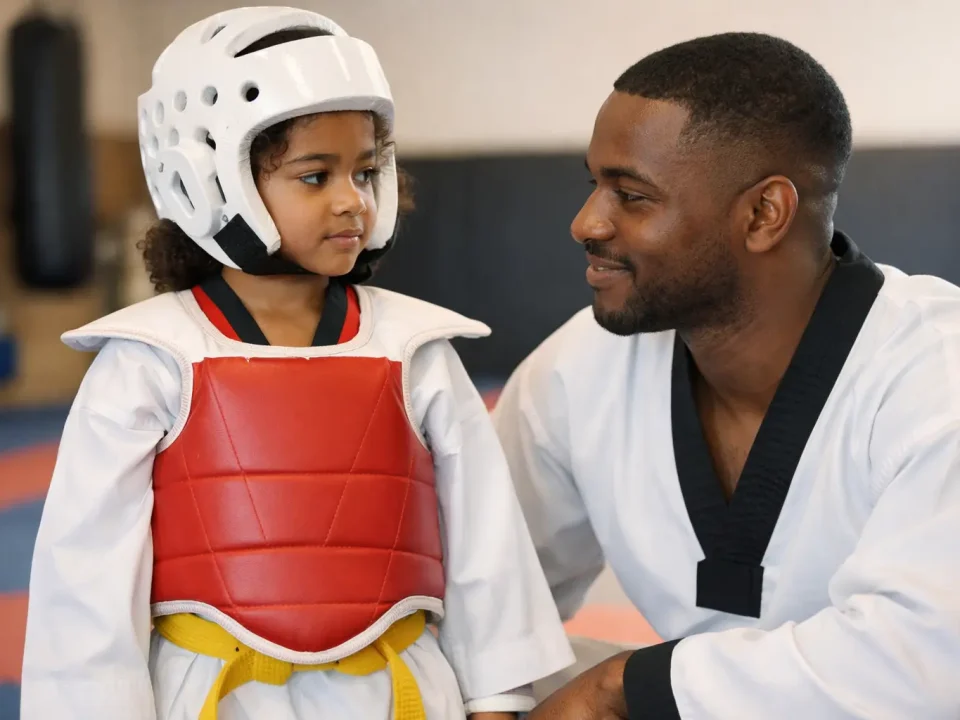
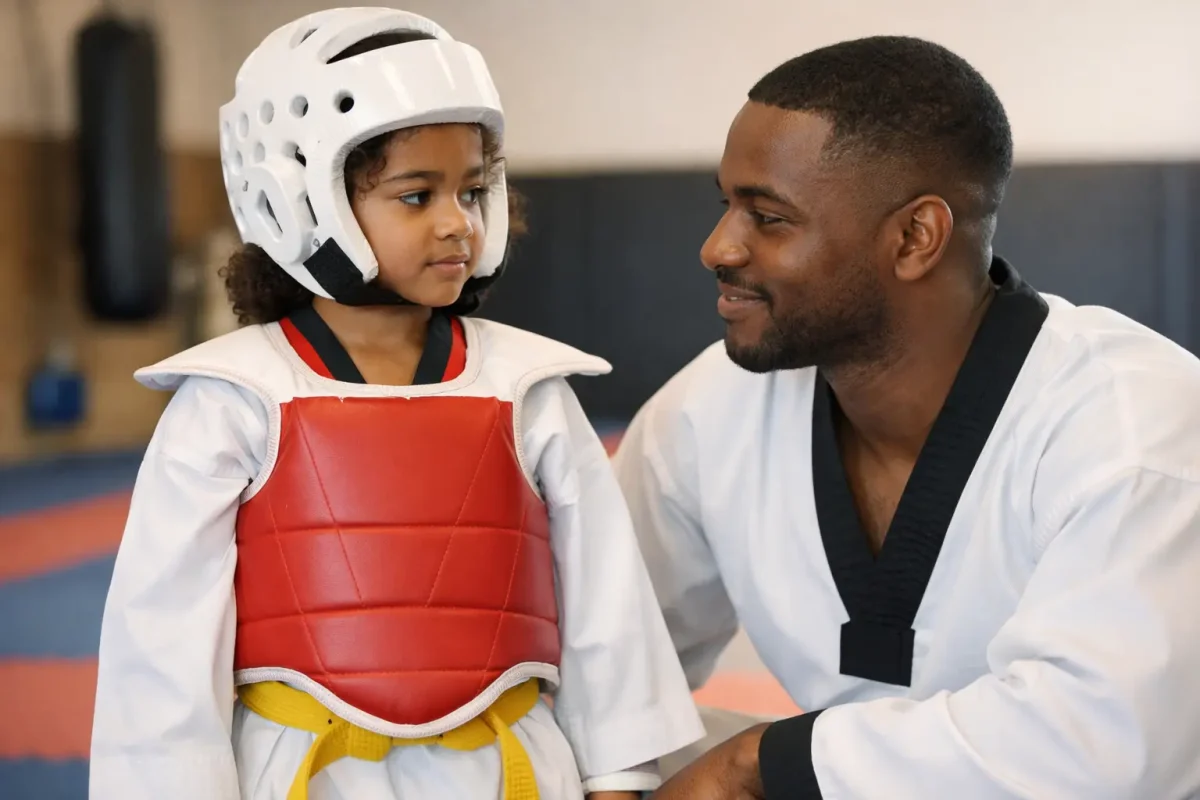
That’s what the right taekwondo classes Trinidad programme should provide. Taekwondo isn’t simply about high kicks, belts or learning to defend yourself. Practised well, it’s a disciplined system for building focus, confidence, self-control and resilience under pressure.
At Edson Breedy Athletics, training is designed with the understanding that the nervous system matters. You aren’t expected to arrive perfectly motivated, naturally coordinated or already confident. You’re expected to show up, follow the structure, practise with intent and keep going.
What Taekwondo Builds Beyond Fitness
Taekwondo develops physical qualities that are easy to see: balance, mobility, coordination, speed, strength and cardiovascular fitness. The deeper changes are often quieter. A student begins standing taller. They become more comfortable making mistakes. They learn that discomfort isn’t danger and that effort doesn’t need to become panic.
Every class creates a useful cycle. Listen to instruction. Attempt a technique. Receive correction. Try again. Over time, this process trains the ability to stay present when something is challenging. That’s a skill children carry into school, teenagers carry into social pressure, and adults carry into demanding work and family responsibilities.
Discipline over motivation isn’t a slogan. Motivation changes with sleep, stress, weather and mood. Discipline is the decision to follow a worthwhile routine even when you don’t feel at your best. Taekwondo gives that decision a practical form: arrive, warm up, train, learn, improve.
Confidence Comes From Evidence
Real confidence isn’t loudness. It’s the knowledge that you can meet a challenge without immediately stepping away from it.
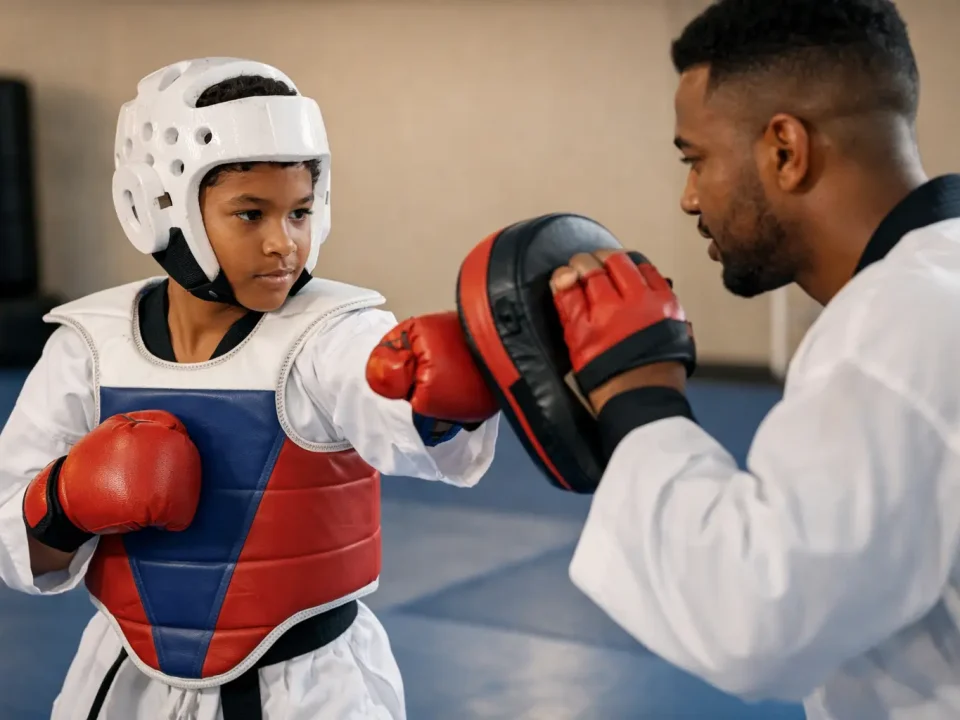
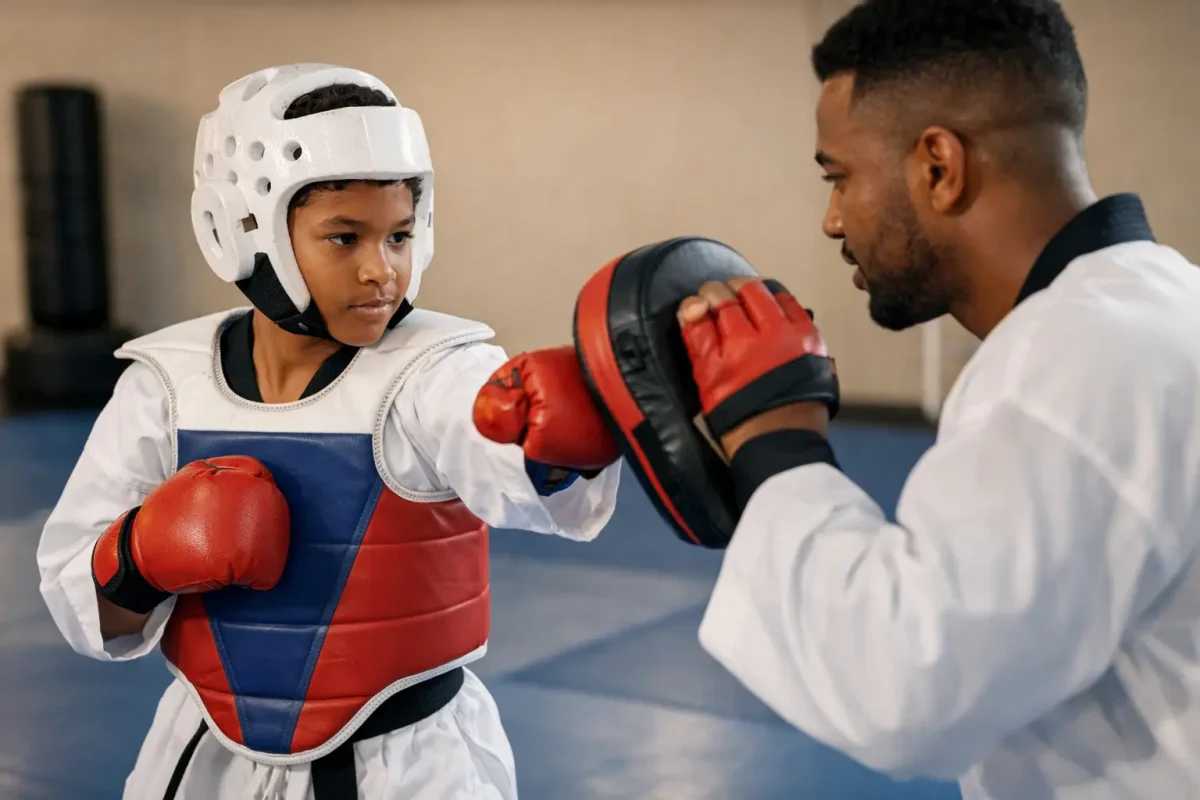
Students build that evidence through repetition. The first time a stance feels awkward, a sequence is forgotten or a pad drill feels tiring, there’s an opportunity to practise persistence. Weeks later, the same student moves with more control because they didn’t quit at the uncomfortable stage.
For parents, this matters. Children don’t need constant praise for doing nothing difficult. They need safe opportunities to work, be corrected respectfully and discover that they’re capable of more than they assumed.
Choosing Taekwondo Classes in Trinidad
Not every martial arts class serves the same purpose. Some are heavily competition-focused. Some prioritise fitness. Some offer a social hobby and little structured progression. None of these approaches is automatically wrong, but the best fit depends on what you or your child needs.
If your goal is stress relief and general fitness, a class should still be physically demanding, but it must be coached in a way that leaves you more regulated rather than constantly overwhelmed. If your child needs confidence and better focus, look for clear routines, patient correction and instructors who understand development, not just technique. If you want serious long-term martial arts progress, look for standards, consistency and a visible pathway for advancement.
A good academy shouldn’t rely on intimidation to create discipline. Fear can produce short-term compliance, but it doesn’t reliably build self-management. Firm expectations, predictable class structure and respectful accountability are more powerful foundations.
Questions Worth Asking Before You Join
Ask how beginners are introduced. A quality programme doesn’t throw newcomers into the deep end simply to prove a point. It teaches fundamentals, explains expectations and gives each person a way to progress.
Ask how instructors manage different learning styles. Some students learn quickly through demonstration. Others need a technique broken into smaller steps, extra repetition or clear visual cues. This is especially valuable for members with ADHD, autism, anxiety or depression, but it improves coaching for everyone.
Also ask what progress means at that academy. Belts can be meaningful markers of development, but they should represent more than attendance. Look for growth in technique, effort, respect, consistency and the ability to stay composed under pressure.
Training That Respects the Nervous System
Martial arts are sometimes presented as pure aggression. That misses the point. Effective Taekwondo requires control. You can’t execute a clean kick, hold a stable stance or respond to a partner safely if your attention is scattered and your body is completely out of control.
Structured training can support nervous system regulation because it pairs physical exertion with attention, breathing, rhythm and predictable rules. A student learns when to increase intensity and when to pause, listen and reset. This isn’t therapy, and martial arts should never be presented as a replacement for clinical care when that care is needed. It can, however, be a powerful supportive practice within a healthy routine.
For someone living with anxiety, the gradual exposure to challenge can be valuable. You learn to feel your heart rate rise during drills without assuming something is wrong. For someone with ADHD, clear movement-based tasks and short feedback loops can make focus feel more accessible. For an autistic student, predictable routines and explicit instruction can create a training environment that feels safer and more understandable.
The approach must remain individual. One person may thrive on a fast-paced session; another may need more time to settle into the environment. Good coaching doesn’t lower standards. It finds the route that allows the student to meet them.
A Strong Start for Children and Teenagers
Children need more than activities that simply occupy an afternoon. They need environments that help shape identity. A child who repeatedly practises respect, self-control and perseverance begins to see themselves as a person who can handle responsibility.
Taekwondo gives young people clear boundaries without stripping away enjoyment. They can work hard, make noise on the pads, learn exciting skills and still understand that safety, listening and respect are non-negotiable. That combination is especially useful for children with a lot of energy or difficulty transitioning between tasks.
Teenagers benefit differently. They’re often navigating comparison, academic stress and the need to belong. Martial arts offers a measurable personal standard. Progress isn’t based on being the loudest, the most naturally talented or the most popular. It comes from consistent work.
Parents should expect a settling-in period. A child may be shy, distracted or resistant during the first few sessions. That doesn’t mean the programme is a poor fit. It may mean they’re adjusting to new expectations. Give the process enough time, while paying attention to whether the coaching remains supportive, structured and appropriate.
Adults: Train for Capability, Not Punishment
Many adults return to exercise only after stress, weight gain, low energy or a loss of confidence has become impossible to ignore. They begin with the wrong mindset: punish the body until it changes. That approach rarely lasts.
Taekwondo offers a better reason to train. You’re developing capability. You’re improving how you move, how you manage exertion and how you respond when something feels difficult. Fitness becomes a by-product of learning a real skill.
There are trade-offs. Taekwondo requires patience. Flexibility and technique develop over time, and progress can’t be rushed by attending one brutal session. It also asks for consistency, particularly if your work schedule is busy. But that’s precisely why it works. The routine becomes an anchor rather than another short-lived burst of motivation.
Beginners don’t need to “get fit first”. Start where you’re. Learn the basics properly. Let your conditioning improve through training, rather than delaying the first step until you feel ready.
The Standard Is Showing Up
The best Taekwondo classes aren’t built around spectacle. They’re built around standards: how you enter the room, how you treat training partners, how you respond to correction and what you do when a drill becomes difficult.
A trial week is a useful way to assess whether an academy’s culture matches its promises. Notice whether coaches know how to challenge people without humiliating them. Notice whether students of different ages and abilities are treated with respect. Notice how you feel after class: tired, certainly, but clearer and more capable.
Stop negotiating with yourself about whether you’re ready. Readiness is often built after you begin. Find the structure, take the first class and give yourself the chance to become someone who keeps their word to themselves.
Train your mind. Build your body.
Your first week is just TTD $50, every discipline, every class, no experience needed. Come find out what training with EBA feels like.