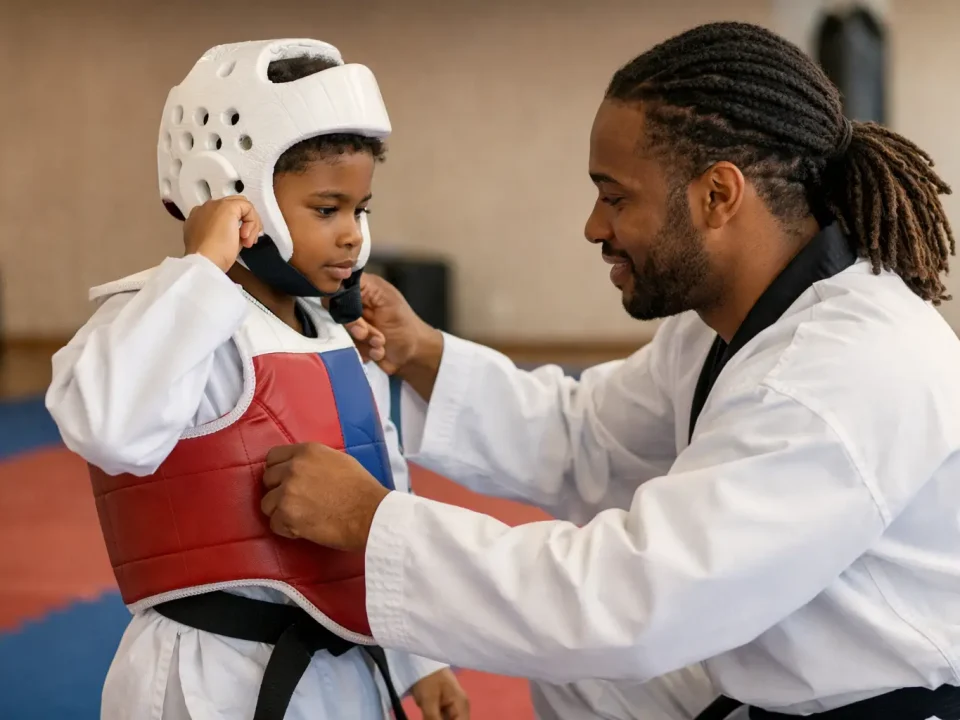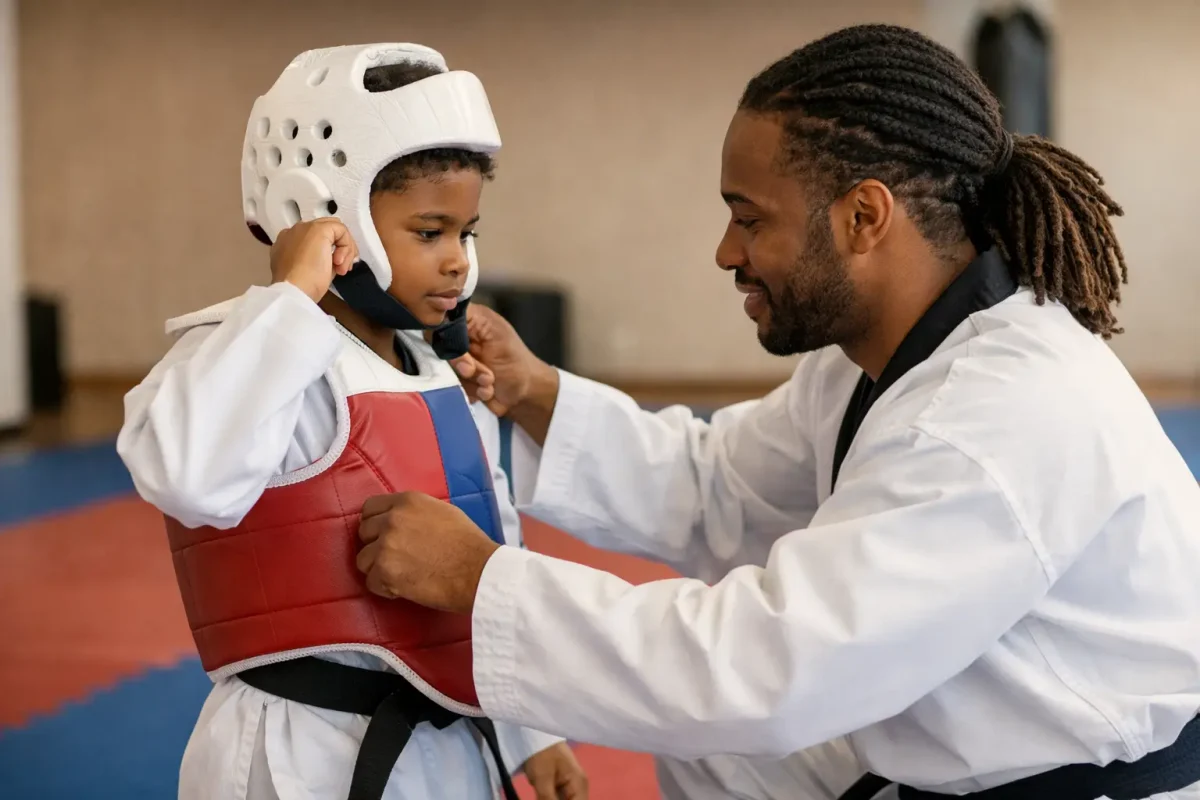
Taekwondo Classes Trinidad Families Can Trust
September 8, 2026
What Age Should a Child Start Taekwondo?
September 12, 2026

A child who can’t settle into homework, a teenager overwhelmed before exams, or an adult staring at a growing to-do list may appear to have a motivation problem. Often, the problem begins earlier: the body is carrying too much stress, too little movement, or no reliable outlet for its energy. Understanding how exercise improves focus changes the question from “Why can’t I concentrate?” to “What does my nervous system need to concentrate?”
Focus isn’t simply a personality trait. It’s a trainable capacity, supported by sleep, nutrition, emotional safety, purposeful challenge and regular movement. You can’t always think your way out of a dysregulated state. Sometimes you need to move first.
How Exercise Improves Focus in the Brain and Body
Exercise asks the brain to do several useful things at once. It must monitor the body, manage effort, respond to cues, coordinate movement and recover after exertion. Over time, this gives attention a job to do. Rather than trying to force stillness onto a restless mind, physical training channels that restlessness into structured action.
Movement also changes arousal. When stress is too high, attention becomes narrow, reactive and easily interrupted. When arousal is too low, the mind drifts. The aim isn’t to feel calm every second. The aim is to reach a state where you’re alert enough to engage and steady enough to choose what deserves your attention.
A brisk walk, a technical boxing drill or a focused Taekwondo pattern can help create that state. Heart rate rises, breathing becomes more deliberate, and the body receives a clear signal: there’s a task to complete. After training, many people experience less mental noise and a greater ability to return to work, school or family responsibilities.
This doesn’t mean every workout produces instant concentration. Extremely hard training can leave someone temporarily fatigued, especially if they’re under-slept, dehydrated or already carrying significant stress. The right dose matters. Focus improves when training builds capacity rather than simply draining it.
Focus Is Built Through Repetition, Not Motivation
Motivation is unreliable. It rises when life feels easy and disappears when pressure arrives. A training routine teaches a more dependable lesson: show up, follow the structure, do the next repetition.
That habit carries beyond the training floor. In martial arts, students learn to listen for instruction, remember sequences, control their pace and reset after mistakes. In boxing or kickboxing, they must read distance, protect themselves and make decisions without panic. In jiu-jitsu, they learn patience under pressure, because rushing often creates the opening an opponent needs.
These are attention skills, not just sporting skills. They develop the ability to stay with a task when it’s uncomfortable, return after distraction and respond deliberately instead of impulsively.
For children, this can look like sitting with a school task for longer before giving up. For teenagers, it may mean recovering more quickly after a poor result or difficult social interaction. For adults, it can mean answering the difficult email, completing a report or remaining present in a demanding conversation rather than avoiding it.
Discipline over motivation. That principle matters because focus is rarely won through one heroic effort. It’s built through repeated, manageable acts of control.
Stress Regulation Comes Before Sustained Attention
A brain scanning for threat will struggle to study, plan or listen. This isn’t laziness. It’s biology.
Anxiety, frustration, sensory overload and poor sleep can all make concentration feel impossible. For people with ADHD, autism, depression or high levels of stress, the relationship between movement and attention may be particularly noticeable. Structured activity can provide sensory input, predictable rules and a clear beginning and end - all of which can make the nervous system feel more organised.
The key word is structured. Random exertion has value, but a coached environment adds rhythm and containment. You arrive, warm up, learn a skill, practise it, work hard, recover and leave. That sequence gives the brain an experience of order.
Breathing matters here too. During quality training, people learn that effort doesn’t require panic. They can move powerfully while maintaining posture, exhale under pressure and recover between rounds. This is a practical form of emotional regulation. The body learns, through repetition, that discomfort can be managed.
Exercise isn’t a replacement for medical care, therapy, medication or educational support where those are needed. It can, however, be a powerful part of a wider plan. A doctor or qualified professional can help when concentration problems are persistent, severe or accompanied by significant changes in mood, sleep or functioning.
Why Martial Arts Can Be Especially Effective for Focus
Not all exercise challenges attention in the same way. A long run may clear the mind. Strength training can build confidence and resilience. Yoga can improve body awareness and breath control. Each has a place.
Martial arts add a further demand: you must stay mentally present. A technique has details. A partner gives feedback. Timing changes. Your stance, guard, balance and breathing all matter. If your attention wanders, the movement immediately tells you.
That feedback is useful because it’s honest but not judgmental. You don’t need to be naturally focused to begin. You practise focus in small pieces: hold the stance, listen to the count, complete the combination, reset your guard. Gradually, those pieces become a stronger attentional habit.
For some people, the social element is equally important. Training alongside others creates accountability without requiring constant conversation. You’re part of a group working towards progress. That can be particularly helpful for beginners who find conventional gyms intimidating or who struggle to train alone.
At Edson Breedy Athletics, training is designed as more than a calorie-burning session. Technical development, physical conditioning and mental regulation are treated as connected parts of the same process. The goal isn’t to create a temporary burst of energy. It’s to develop a person who can direct that energy.
Choosing the Right Type and Dose of Exercise
The best activity for focus is the one you can do consistently and safely. Intensity has benefits, but more isn’t always better. A person who is highly anxious may initially benefit more from a steady walk, beginner yoga or controlled technical drilling than from an all-out session. Someone feeling flat and unmotivated may need a sharper challenge to feel awake and engaged.
Start by observing what happens before and after movement. Do you feel clearer after twenty minutes of walking? More settled after a class? Overstimulated after late-evening high-intensity training? Your response is useful information, not a failure.
A practical routine might include purposeful exercise three to five times each week, with lighter movement on other days. Consistency matters more than perfection. A child may benefit from regular classes that create a weekly rhythm. A busy adult may use a lunchtime session to break up desk work. A student may train after school before beginning revision, rather than waiting until concentration has already collapsed.
Timing matters as well. Short bouts of movement can be valuable before tasks that require attention. A few minutes of skipping, mobility work, shadowboxing or a brisk walk may help shift the brain out of passive distraction. For deeper focus, follow movement with a simple transition: water, a shower if needed, a protein-rich meal or snack, then one clearly defined task.
Don’t sabotage the benefit by immediately opening every notification on your mobile phone. Train the body, then protect the attention you’ve created.
Turn Training Into a Focus Practice
The difference between exercise and focus training often lies in intention. Before a session, choose one mental skill to practise. It might be listening fully to coaching, returning to the drill after a mistake, controlling your breathing when tired or finishing the final round with good form.
Afterwards, take one minute to notice the result. Are your thoughts slower? Is your body less tense? Can you identify the next priority without feeling overwhelmed? This reflection helps connect physical effort to real life.
Parents can support this without turning exercise into another source of pressure. Ask children what they noticed about their body after class. Praise effort, recovery and listening, not only performance. For neurodivergent children and adults, clear expectations, predictable routines and permission to progress at an appropriate pace can make all the difference.
Focus isn’t the ability to sit perfectly still for hours. It’s the ability to return to what matters, again and again. Train your body with purpose, and give your mind a stronger place to stand when life gets loud.
Train your mind. Build your body.
Your first week is just TTD $50, every discipline, every class, no experience needed. Come find out what training with EBA feels like.