What Age Should a Child Start Taekwondo?
September 12, 2026
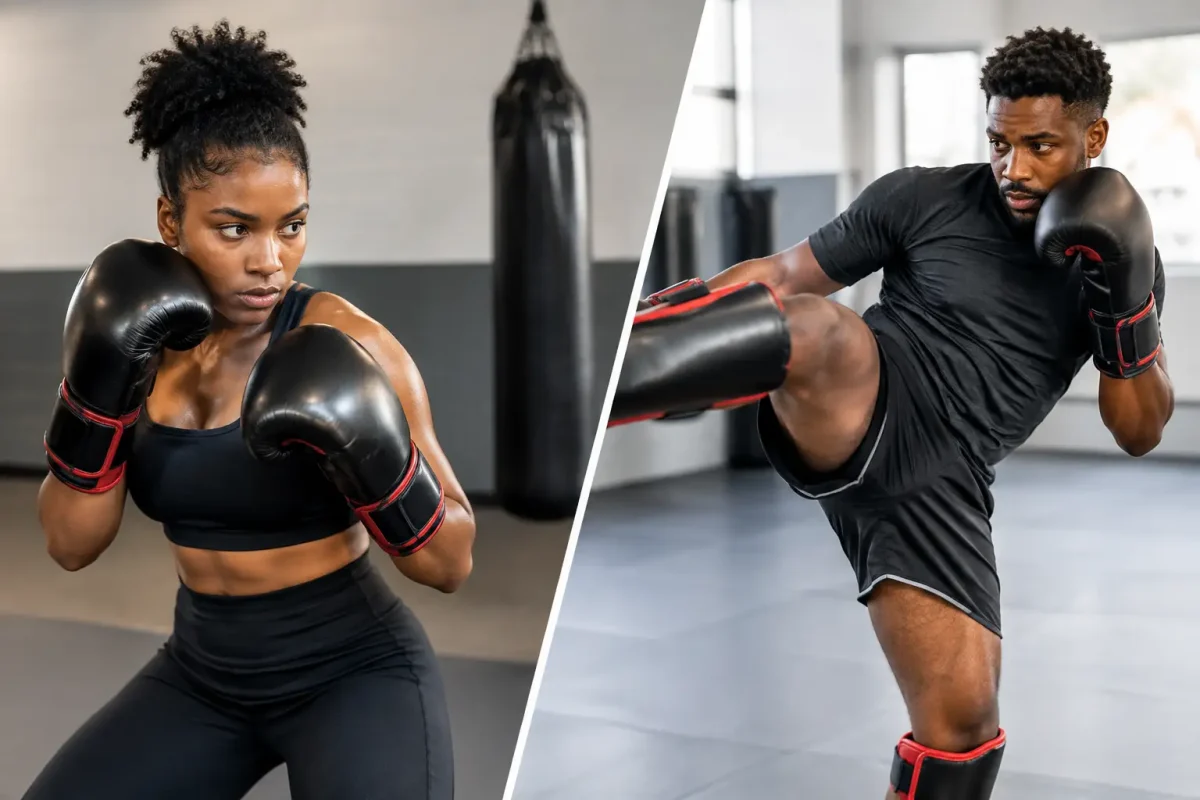
The bag doesn’t care whether you had a difficult day, poor sleep, or a mind full of noise. It responds to what you practise: your stance, your breathing, your timing and your willingness to keep going. That’s why boxing versus kickboxing training isn’t simply a question of punches versus kicks. It’s a decision about the kind of challenge that will help you build discipline, regulate stress and stay committed long enough to change.
Both disciplines can make you fitter, stronger and more confident. Both demand focus under pressure. Yet they ask different things of your body and nervous system. The right choice is the one you can train consistently, safely and with purpose.
Boxing versus kickboxing training: the core difference
Boxing is built around the hands. You learn how to stand, move, defend, create angles and deliver punches with control. The jab, cross, hook and uppercut may look simple from the outside, but effective boxing relies on precise footwork, head movement, distance management and timing. A good boxer learns to stay calm while reading another person’s movement at close range.
Kickboxing adds kicks, knees and, depending on the programme, other striking tools. Your stance must support both punching and kicking. You need balance on one leg, hip mobility, core control and awareness of a wider range of attacks. The physical vocabulary is broader, and the pace can feel more demanding because the whole body is involved.
Neither is automatically harder. Boxing often becomes intensely technical because there’s nowhere to hide poor movement or weak defence. Kickboxing can feel more complex at the beginning because you’re learning to coordinate hands, feet and body position at once. Your experience will depend on your current fitness, mobility, confidence and coaching environment.
Choose the discipline that serves your goal
If you want to develop sharp hand skills, fast reactions and close-range confidence, boxing is an excellent fit. It creates a strong connection between footwork and focus. Every punch should begin from the ground, travel through a stable body and return you to a position where you can move again. This makes boxing especially valuable for people who want to feel more coordinated rather than merely exhausted after training.
Boxing can also be a powerful outlet for stress. Pad work and bag rounds give emotion a structure: breathe, move, strike, reset. The goal isn’t to swing wildly until you’re empty. It’s to practise control when your heart rate rises. For adults carrying work pressure, family responsibilities or anxiety, that distinction matters.
Kickboxing may suit you if you want a more full-body striking discipline. Kicks demand mobility, balance and leg conditioning, while combinations build cardiovascular endurance quickly. A well-designed kickboxing class can improve body awareness from shoulders to ankles, especially for trainees who enjoy variety and want to use more of their body in each session.
For some people, the appeal is practical: kickboxing offers more tools at different distances. For others, it’s emotional. Learning to throw a controlled kick can make a beginner feel powerful in a new way. But power without control isn’t the objective. Good kickboxing training teaches you to generate force without losing posture, awareness or respect for your partner.
If fat loss is your only goal, either discipline can help, but neither should be treated as a punishment session. Results come from regular attendance, sensible nutrition, recovery and progressive training. Choose the class you’ll return to after the excitement of week one has faded. Discipline over motivation.
What each style asks of your body
Boxing places a repeated demand on the shoulders, arms, trunk and legs. Strong technique protects the wrists, elbows and shoulders, but bag work and repeated punching can expose poor mechanics quickly. Beginners benefit from learning how to wrap their hands, align the wrist and avoid loading every punch with maximum force. More effort isn’t always better effort.
Kickboxing asks more from the hips, hamstrings, calves and ankles. You don’t need to arrive flexible enough to kick at head height. In fact, forcing range before you’ve control is one of the fastest ways to irritate a hip, groin or lower back. Start with technically sound low and middle kicks. Mobility develops through patient practice, not ego.
Height, age and starting fitness don’t decide whether you can do either discipline. A shorter trainee can become an excellent boxer or kickboxer. A person with limited mobility can build range steadily. A beginner who feels unfit can still start. The key is coaching that scales drills to the person in front of it rather than making every body follow the same standard from day one.
Training your nervous system, not just your muscles
Striking training is useful because it gives the brain a clear job under manageable stress. Listen for a cue. Set your stance. See the target. Breathe out. Respond, then recover. Repeated over time, this process can strengthen attention, body awareness and emotional control.
That doesn’t mean a boxing or kickboxing class is a replacement for medical or mental health care. It can, however, become a reliable part of a wider wellbeing plan. For people managing anxiety, depression, ADHD or autism, predictable routines and clear expectations can make movement feel safer and more rewarding. The best programme offers structure without shame and challenge without chaos.
Boxing may feel easier to process for someone who prefers a narrower set of movements and clear hand combinations. Kickboxing may be engaging for someone who benefits from variety, rhythm and full-body movement. These are tendencies, not rules. A trial class is more useful than a guess made from a screen.
Pay attention to how you feel after training. Tired is normal. Grounded, clearer and proud of following through are good signs. Constantly overwhelmed, pressured to spar before you’re ready, or ignored when you say something hurts aren’t signs that you need to toughen up. They’re signs that the training environment may not be right for you.
Do you need to spar?
No. Sparring is a training tool, not an entry fee. You can build meaningful skill, fitness and confidence through technique drills, pads, bags, conditioning and controlled partner work. When sparring is introduced, it should be progressive, supervised and based on consent.
For committed combat sport athletes, sparring develops timing, composure and decision-making that can’t be fully copied on a bag. But hard sparring isn’t required to gain the mental and physical benefits of either discipline. Beginners, children and adults returning after a long break need a foundation first.
At Edson Breedy Athletics, the standard is purposeful progression. You should understand what you’re doing, why you’re doing it and how it connects to your next stage of development. That approach matters whether your aim is competition, stress relief, self-confidence or a healthier routine for your family.
A practical way to decide
Start by being honest about what will hold your attention. If the detail of footwork, punching combinations and defensive movement excites you, choose boxing. If you want the variety of punches and kicks and enjoy a broader physical challenge, try kickboxing. If both appeal, train both initially and let consistent experience make the decision.
Your first month should focus on attendance, safe technique and recovery rather than proving how tough you’re. Arrive hydrated, wear comfortable training clothes, tell your coach about old injuries or relevant health concerns, and ask questions early. Keep the intensity appropriate enough that you can return for the next session.
Don’t negotiate with yourself every time training day arrives. Put it in your week as an appointment with the person you’re becoming. The stronger choice is rarely the one that looks impressive on day one. It’s the one that teaches you to show up, breathe under pressure and carry that discipline into the rest of your life.
Train your mind. Build your body.
Your first week is just TTD $50, every discipline, every class, no experience needed. Come find out what training with EBA feels like.