How Exercise Improves Focus Under Pressure
September 10, 2026
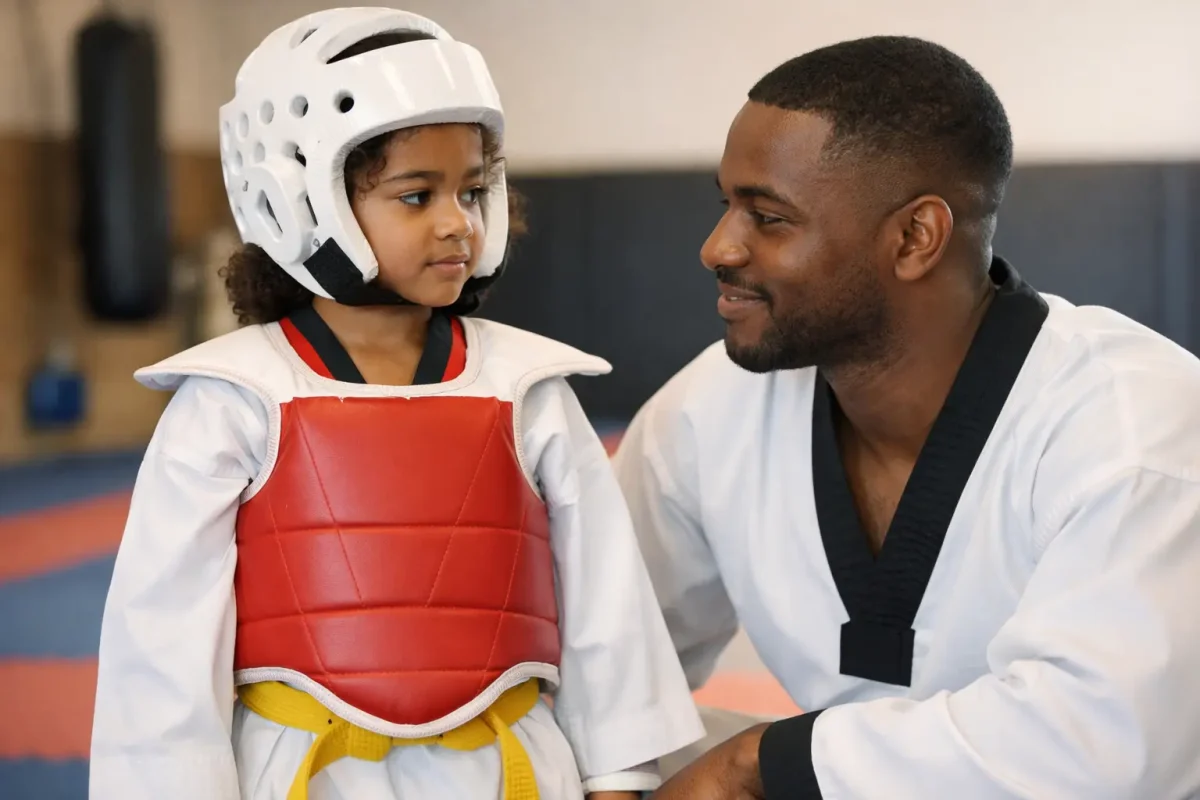
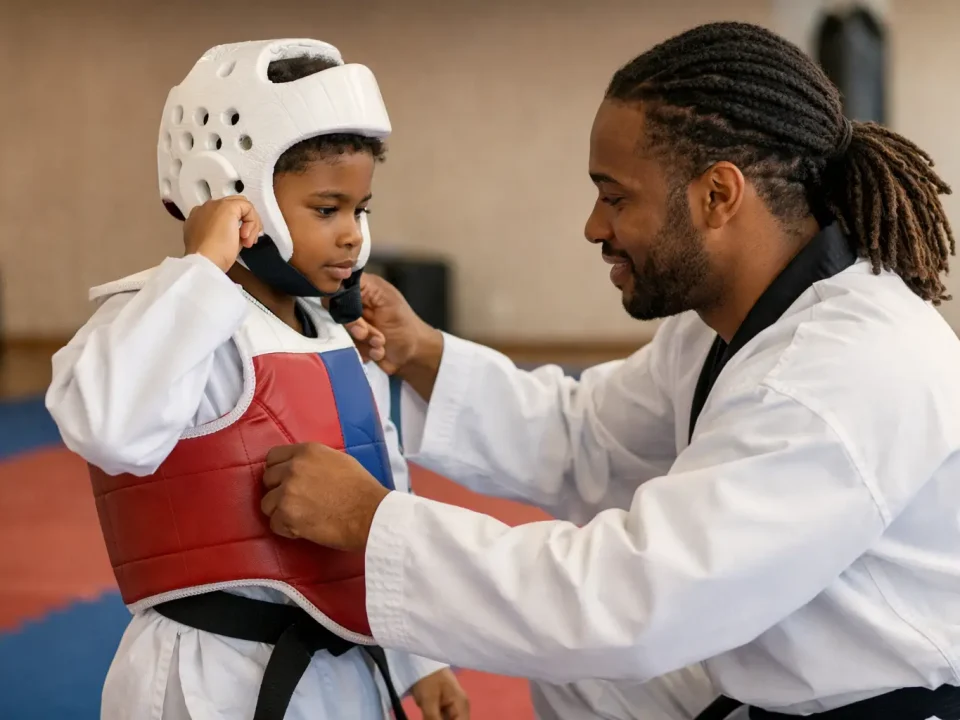
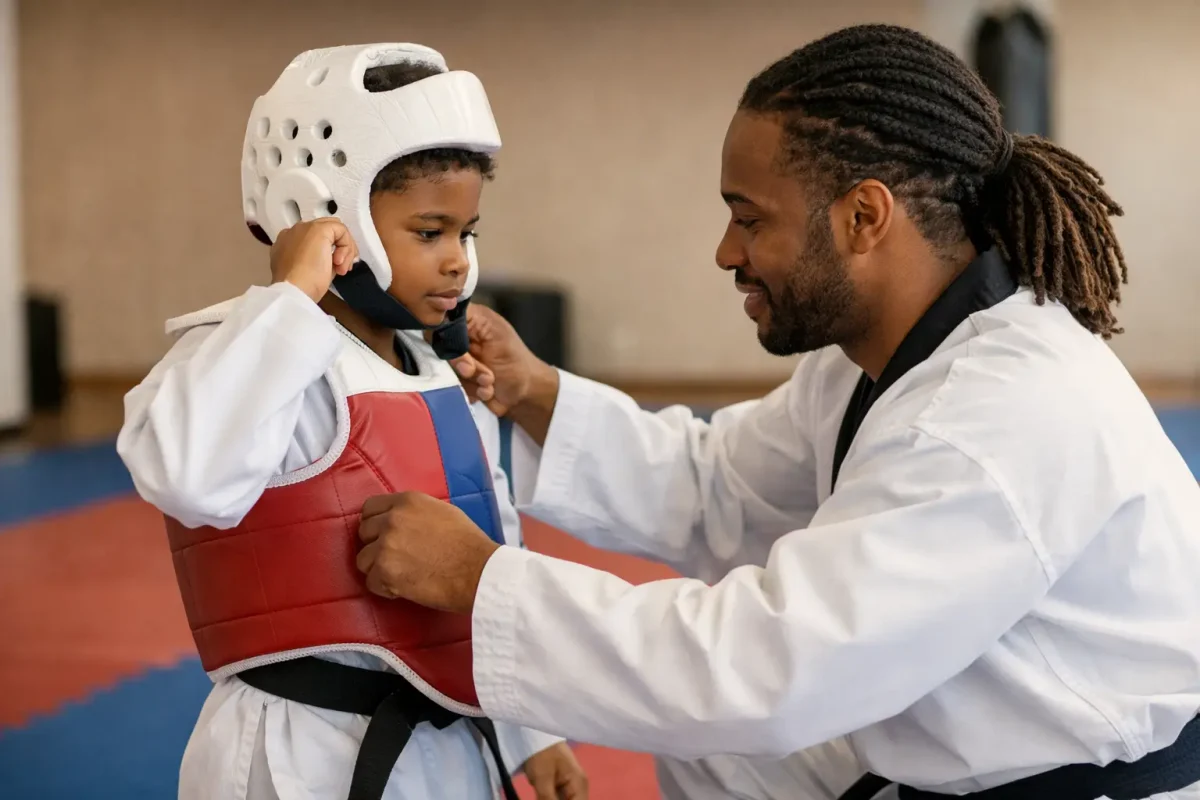
A four-year-old doesn’t need to throw a perfect kick to benefit from Taekwondo. They need to practise listening, moving with control, waiting for a turn, and recovering when something feels difficult. So, what age should a child start taekwondo? For many children, age four to six is a strong starting point, provided the class is designed for their developmental stage.
The better question isn’t simply, “Is my child old enough?” It’s, “Is this the right environment for my child to build safely?” A good junior programme meets children where they’re, then gives them a clear path forwards. Discipline isn’t forced through shouting. It’s built through repetition, boundaries, encouragement, and coaches who understand how children learn.
What age should a child start Taekwondo?
Most children can begin an age-appropriate Taekwondo programme between four and six years old. At this stage, training should look different from an adult class. Children are learning through movement, games with purpose, simple routines, balance drills, basic strikes, and clear instructions. The objective isn’t competition or technical perfection. It’s body awareness, self-control, confidence, and a positive relationship with challenge.
From around six or seven, many children are ready for more structured technical training. They can usually follow multi-step instructions, practise patterns with greater consistency, understand basic partner safety, and work towards belts with clearer ownership of their progress.
Older children and teenagers can start at any point. In fact, starting later can be powerful for a child who needs an outlet for stress, a healthier peer group, or a routine that doesn’t depend on being naturally sporty. Taekwondo isn’t reserved for the child who has been kicking since preschool. Beginners belong in the room.
Readiness matters more than a birthday
Age is a useful guide, not a pass-or-fail test. Two five-year-olds can arrive with very different levels of confidence, coordination, communication, and tolerance for group activity. One may be eager to join in; another may need time to watch, settle, and build trust with the coach.
A child is generally ready to try Taekwondo when they can spend part of a class in a group setting, respond to simple safety instructions, and cope reasonably well with brief moments of correction or waiting. They don’t need to be calm all the time. They don’t need flawless focus. Training is one place where focus is developed.
For children with ADHD, autism, anxiety, sensory sensitivities, or emotional regulation challenges, readiness should be assessed with care rather than assumptions. Some children thrive with the predictability of bows, warm-ups, stations, and repeated class routines. Others may need a gentler introduction, clearer visual demonstrations, extra processing time, or permission to step out briefly when overwhelmed.
The goal isn’t to make a child fit a rigid system. The goal is to provide enough structure that their nervous system can learn to feel safe, capable, and engaged. That’s why the coach and class culture matter as much as the child’s age.
What a good beginner class should teach
For young children, Taekwondo should teach far more than punches and kicks. The first lessons are often about posture, personal space, controlled energy, and respectful attention. A child learns that power without control isn’t skill. They learn to stop when told, keep their hands and feet to themselves, and try again after a mistake.
This is where martial arts can become a practical training ground for life at home and school. A child who repeatedly practises standing still before moving, breathing before reacting, and listening before acting is building habits of self-regulation. Those habits won’t appear perfectly after one class. Progress comes from consistent exposure to a clear standard.
At Edson Breedy Athletics, this principle sits at the centre of training. Physical effort is paired with coaching that respects the mind-body connection. Children are challenged, but they aren’t shamed for being beginners. They’re taught that discipline is a skill they can practise.
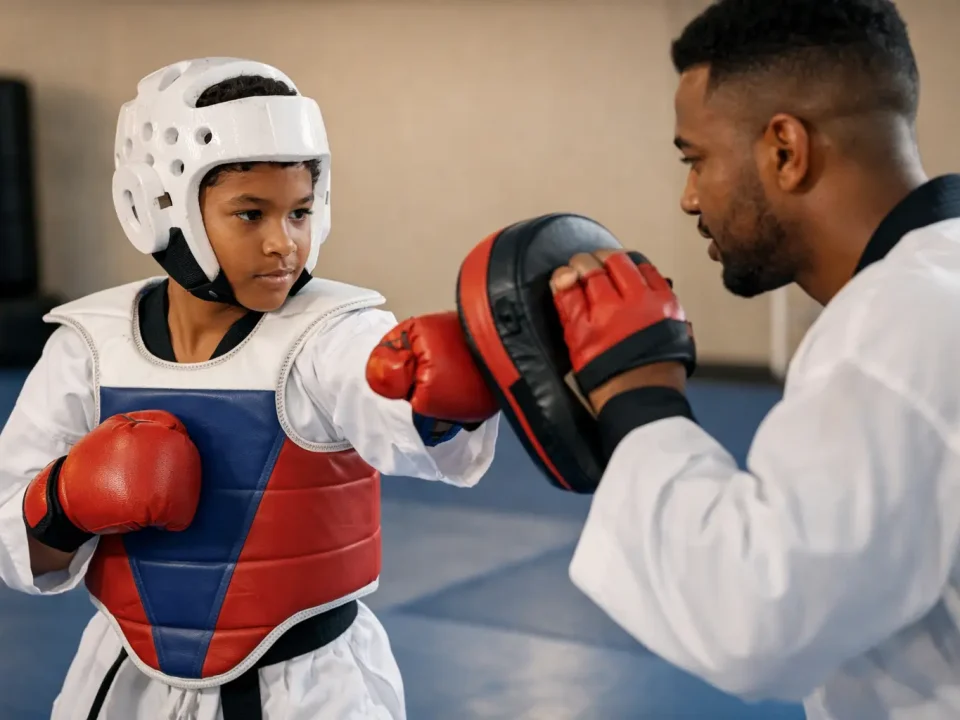
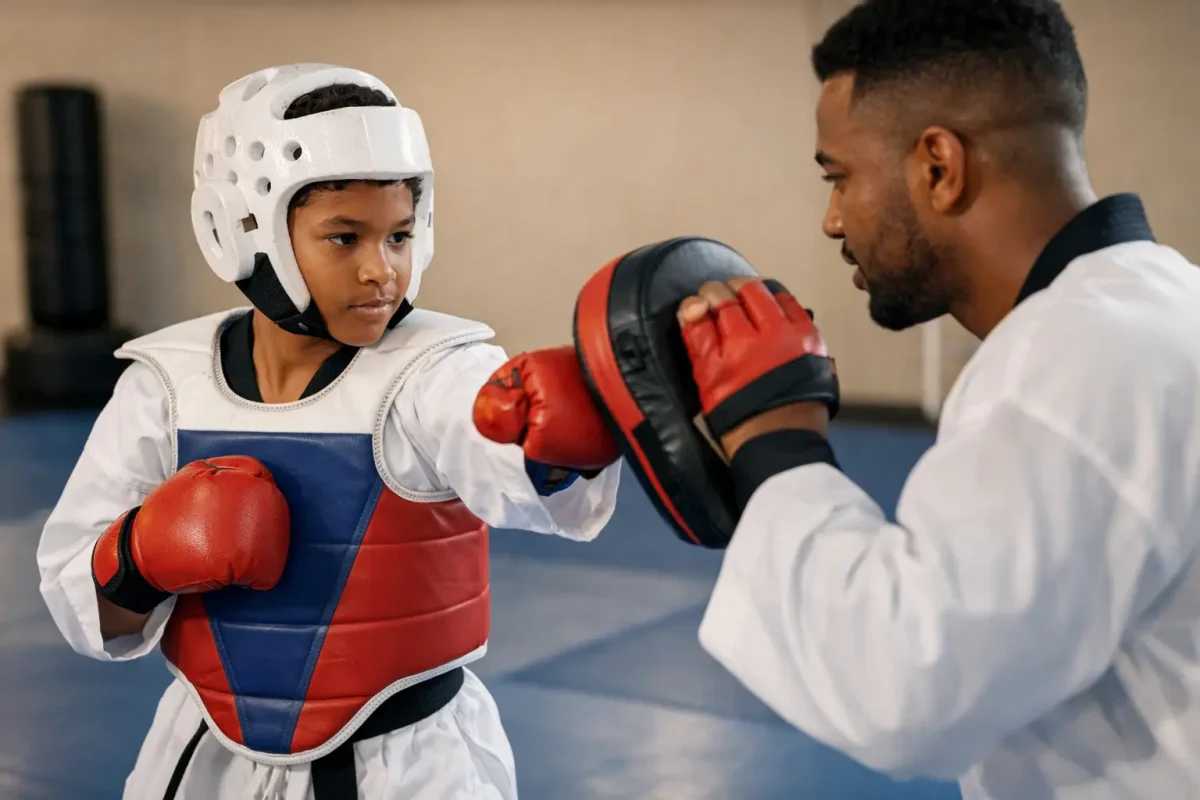
A suitable class should also be physically safe. Young beginners need proper warm-ups, supervised movement, age-appropriate contact rules, and instruction that prioritises control over force. Sparring, where offered, should be introduced gradually and only when a child has the maturity and foundational skills to participate safely.
The benefits change as children grow
A child who begins at four may gain coordination, social confidence, and familiarity with routine. At seven, they may begin to take pride in mastering patterns and earning new belts. At eleven or twelve, Taekwondo can provide a constructive place to work through frustration, build fitness, and develop resilience during a period when self-consciousness often grows.
Teenagers may benefit differently again. Martial arts can offer an identity beyond screens, school pressure, or social comparison. It gives them a measurable process: turn up, practise, receive feedback, improve. That process matters. Motivation rises and falls, particularly in adolescence. Discipline gives a young person something steadier to rely on.
There are trade-offs, of course. A very young child may enjoy the energy of class but have little interest in formal grading for several years. An older beginner may progress through foundational skills quickly but feel awkward beside students with more experience. Neither situation is a problem when expectations are managed well. The right programme allows each child to develop without being rushed or compared.
Signs the timing may not be right yet
Sometimes waiting a few months is the wise decision. If a child becomes highly distressed in group settings, can’t yet follow essential safety directions, or is dealing with a major change such as a new school, family disruption, or intense anxiety, a full class may feel like too much at first.
That doesn’t mean Taekwondo is unsuitable. It may simply mean the entry point needs adjustment. A trial class, a quieter session, a conversation with the instructor, or a short period of observation can help a parent make a better decision than age alone ever could.
Avoid treating martial arts as punishment for behaviour. Sending a child to class because they’re “out of control” places an unfair burden on both the child and the coach. Instead, frame training as an opportunity: a place to learn control, confidence, respect, and strength. The language adults use shapes whether a child sees discipline as rejection or as care.
How parents can support a strong start
The first few weeks are about consistency, not performance. Arrive with enough time for your child to settle. Keep pre-class routines simple. Make sure they’ve water, comfortable training clothes, and a clear expectation that they’ll listen, try, and be respectful.
After class, resist the urge to interrogate them about every detail. Ask what felt fun, what felt difficult, or what they would like to practise again. Praise effort, courage, and respectful behaviour more than natural talent. “You kept trying when the pattern was confusing” is more useful than “You’re the best kicker there.”
It also helps to expect uneven progress. Children may love class one week and resist it the next. They may earn a belt quickly, then struggle with a new skill. This isn’t a sign that the programme is failing. It’s the reality of learning. Stay calm, keep the routine, and let the coach handle coaching.
Choosing the right Taekwondo school
Before enrolling, watch how instructors speak to children. Are expectations clear? Is correction firm but respectful? Do beginners receive guidance, or are they left behind? Does the class have enough structure to hold a child’s attention without becoming chaotic?
Ask how the school groups children by age and ability, how it introduces contact training, and how it supports children who learn or regulate differently. A worthwhile academy will answer directly. It won’t promise instant confidence or perfect behaviour. It’ll explain the process.
The best age to start is the age when a child can enter a safe, well-coached environment and begin practising. For some, that’s four. For others, it’s eight, twelve, or later. Don’t wait for a child to become perfectly focused, coordinated, or confident before giving them the chance to train. Give them the right structure, and let training help build the child they’re becoming.
Train your mind. Build your body.
Your first week is just TTD $50, every discipline, every class, no experience needed. Come find out what training with EBA feels like.