Martial Arts vs Gym Training for Confidence
August 15, 2026
Is Boxing Intimidating for Adult Beginners?
August 19, 2026
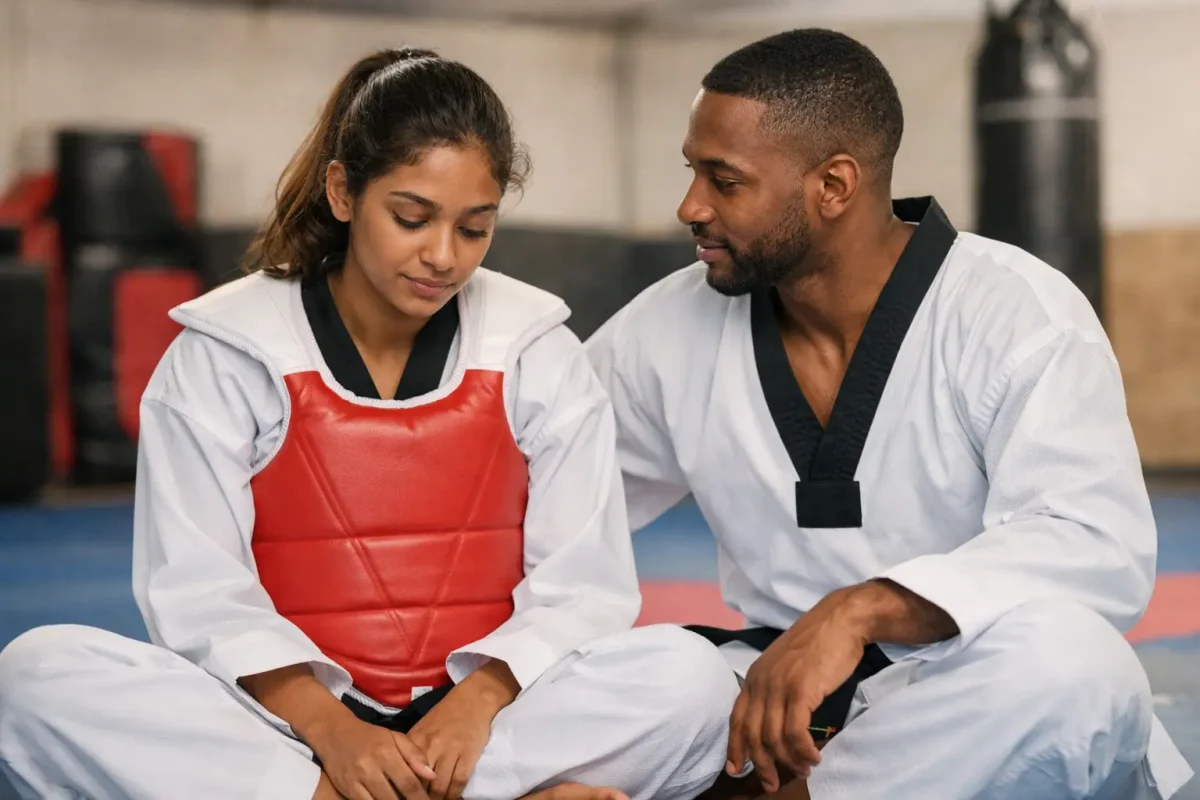
The hardest part of a first class is often not the warm-up, the technique, or the fitness level. It’s the moment before you walk through the door. If you want to calm first class nerves, don’t wait until you feel fully confident. Give your nervous system clear evidence that you’re safe, prepared, and capable of taking one small step.
Many adults worry that they’ll be unfit, awkward, or behind everyone else. Parents may worry that their child will struggle to settle, follow instructions, or cope with a new group. These concerns are common. They aren’t proof that training is a bad fit. They’re often a sign that the brain is treating uncertainty as a possible threat.
The goal isn’t to eliminate every nervous feeling. The goal is to train your response to it.
Why first class nerves feel so intense
Your brain is designed to notice unfamiliar environments. New faces, unfamiliar movements, physical effort, noise, expectations, and the possibility of being watched can all activate the stress response. For someone managing anxiety, ADHD, autism, depression, or a difficult past experience with sport, that response may arrive quickly and strongly.
This isn’t weakness. It’s nervous system protection.
The problem begins when the mind interprets normal activation as danger. Your heart beats faster, your stomach tightens, and suddenly the thought becomes: “I can’t do this.” In reality, the body may simply be preparing for action. The same physical sensations can appear before a competition, a presentation, or an important conversation.
Martial arts and structured fitness provide a healthy place to practise this distinction. You learn that discomfort isn’t automatically danger. You can feel nervous, follow instruction, breathe, move your body, and finish the session. That experience builds confidence that’s earned rather than imagined.
Calm first class nerves before you arrive
Preparation reduces uncertainty, and uncertainty is fuel for anxiety. Don’t leave every decision until the last minute. Choose comfortable training clothes, pack water, confirm the class time, and aim to arrive a few minutes early. Small acts of organisation tell the brain: “We’ve a plan.”
Avoid treating the first session as a test. You aren’t attending to prove that you’re tough, talented, flexible, or naturally athletic. You’re attending to gather information. Does the coaching feel clear? Can you picture yourself improving here? Does your child respond well to the structure? That’s the only standard that matters on day one.
Before leaving home, use a simple breathing pattern: inhale gently through your nose for four counts, exhale slowly for six counts. Repeat for one or two minutes. A longer exhale can help signal to the body that immediate danger has passed. Keep it comfortable. Forcing huge breaths can make some people feel light-headed, so calm and steady is better than dramatic.
It also helps to name what you’re feeling accurately. Instead of saying, “I’m panicking,” try, “I’m nervous because this is new, and I can still attend.” This isn’t empty positive thinking. It’s a more precise instruction. Your feelings are acknowledged, but they don’t get to make every decision.
Make the goal smaller than your fear
Anxiety often creates an all-or-nothing demand: perform well or avoid the situation completely. Discipline creates a better target: show up and complete the next instruction.
For your first class, your goal might be to enter the building, introduce yourself, listen to the coach, and try the beginner version of each drill. You don’t need to throw the sharpest punches or remember every movement. You don’t need to keep pace with someone who has trained for years. You need to be present.
This approach matters for children too. A child who watches quietly for the first few minutes may still be succeeding. A neurodivergent child may need time to understand the room, the sounds, and the routine before joining in. Good structure doesn’t mean forcing instant compliance. It means providing clear boundaries, predictable expectations, and a calm route into participation.
Parents can help by avoiding pressure-heavy language on the way to class. Rather than saying, “You’ve to be brave” or “Don’t embarrass me”, say, “You only need to try one instruction at a time. Your coach will help you.” Confidence grows better in an environment where effort is noticed and mistakes are expected.
Tell the coach what would help
You don’t need to disclose every personal detail. But a short, direct conversation can make a meaningful difference. Let the coach know that you’re new, returning after a long break, managing an injury, or feeling particularly anxious. If your child has ADHD, autism, sensory sensitivities, or difficulty with transitions, sharing the practical information helps the coach provide better support.
Useful information is specific. For example: “He may need a moment before joining a group drill,” or “I may need a lower-impact option today.” This creates a plan without turning the person into a diagnosis.
A disciplined training environment should be demanding without being humiliating. You should be challenged, corrected, and held accountable. You shouldn’t be mocked for being a beginner. The right coach understands that progress requires enough pressure to grow, alongside enough safety to keep learning possible.
Use your body to change the message
When nerves rise, thinking harder isn’t always the answer. The body needs an action it can understand.
Start with posture. Place both feet firmly on the ground. Let your shoulders drop. Look ahead rather than down. You aren’t pretending to be fearless. You’re giving your body a stable position from which to act.
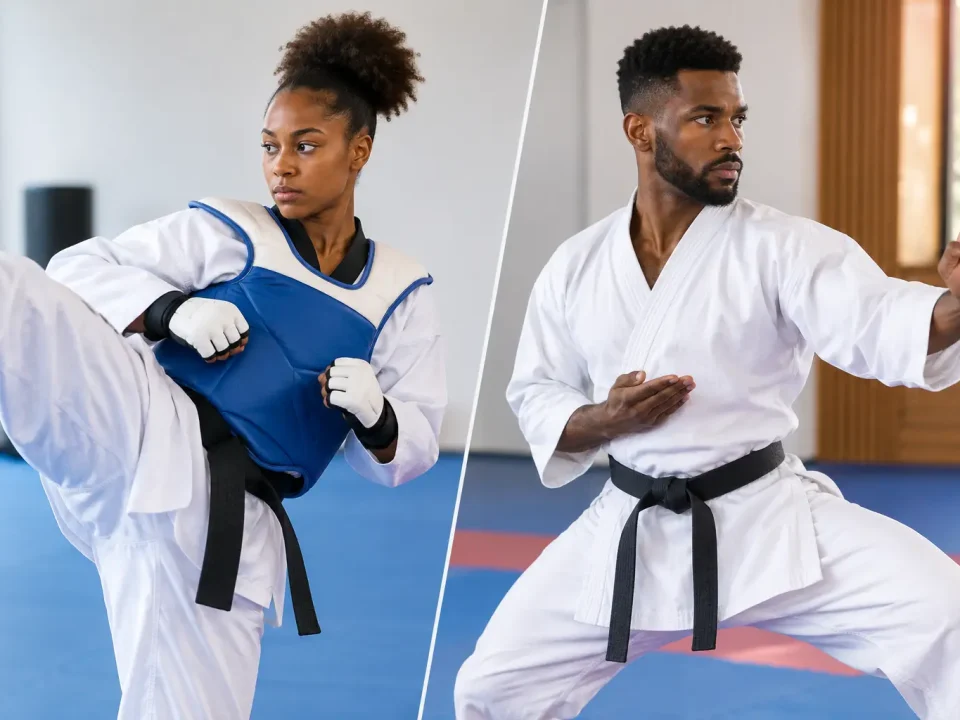
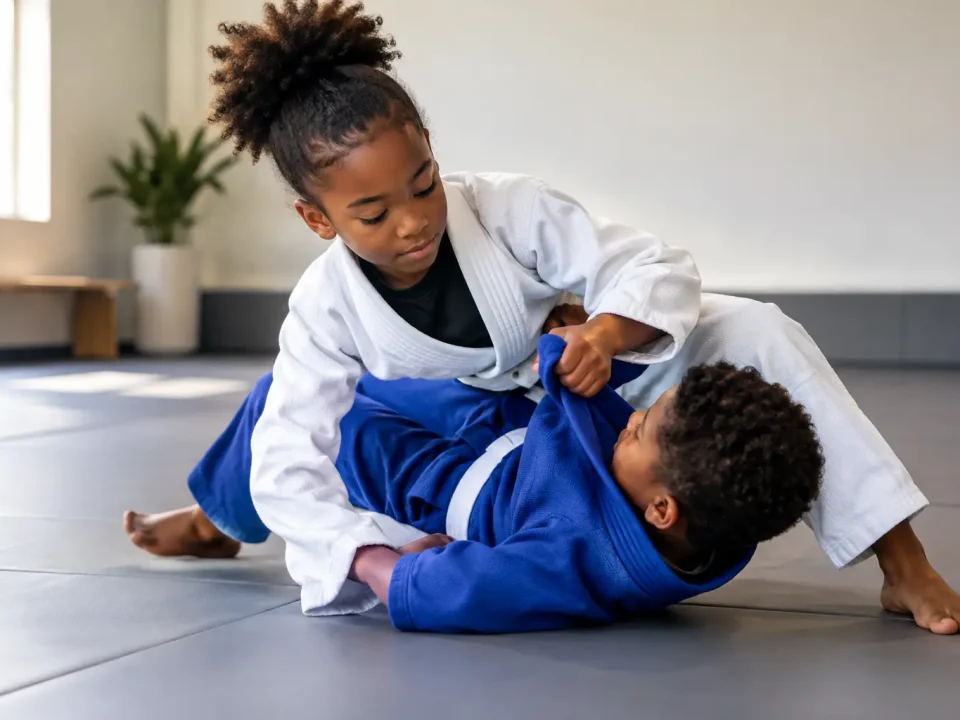
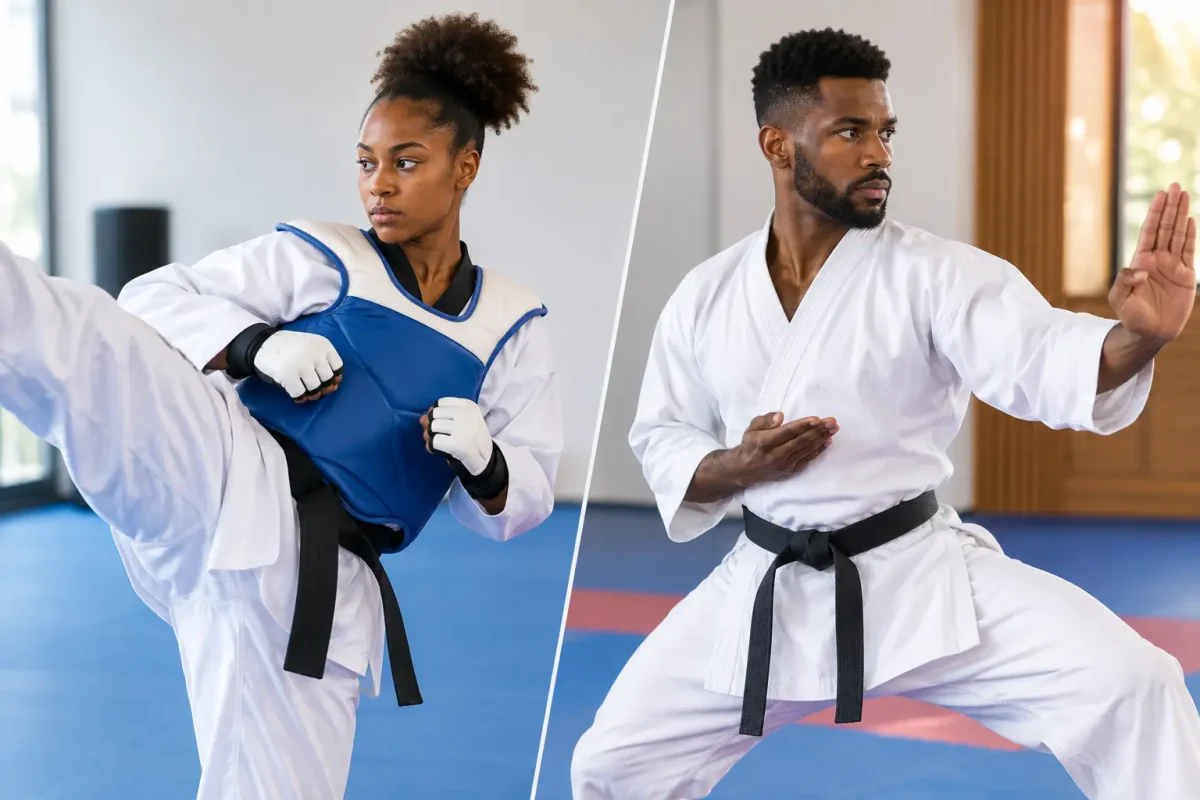
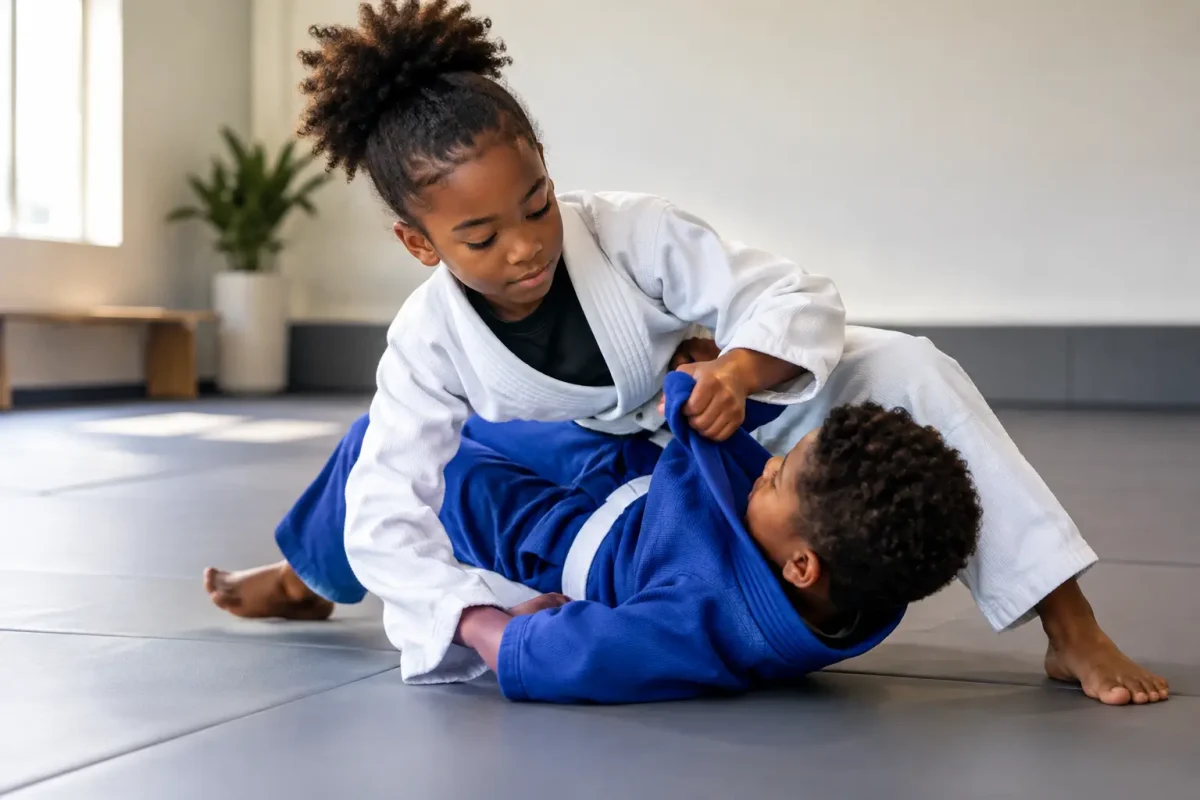
Then focus on one physical cue at a time. During boxing, it may be your stance and guard. During Taekwondo, it may be balance through the standing foot. In yoga, it may be the contact between your hands and the mat. In jiu-jitsu, it may be breathing while learning a controlled position. Attention has limits. When you direct it towards a clear task, there’s less room for catastrophic predictions.
Don’t chase perfection in the first class. Chasing perfection raises tension, and tension makes learning harder. Controlled repetition is more useful. Listen. Try. Reset. Try again.
Expect an adjustment period
Some people leave their first session feeling energised and immediately want more. Others feel relieved but tired, uncertain, or emotionally exposed. Both responses can be normal. New training asks the nervous system to process movement, social contact, instruction, and effort at once.
Give yourself twenty-four hours before making a final judgement. Notice how you feel after rest. Did you do something you had been avoiding? Did your child take even one step towards participating? Did the structure feel different from a conventional gym? These are meaningful signals.
There’s also a trade-off to understand. Avoidance provides short-term relief, but it teaches the brain that the feared situation must have been dangerous. Showing up may feel uncomfortable in the moment, but it gives the brain new evidence: “I can enter a new environment and cope.” Repeated evidence is how resilience is built.
That doesn’t mean pushing through every warning sign. Pain, dizziness, unsafe coaching, or overwhelming distress deserve attention. Discipline isn’t ignoring your body. It’s learning the difference between discomfort that supports growth and signals that require care.
Let the first class be the first rep
Nobody becomes confident by waiting for nerves to disappear. Confidence comes after action, especially when the action is repeated. The first class isn’t a verdict on your ability. It’s the first rep of a new identity: someone who keeps commitments, learns under pressure, and gives themselves the chance to improve.
At Edson Breedy Athletics, training isn’t only about learning to strike, grapple, stretch, or get fitter. It’s a structured practice in focus, self-regulation, and resilience. Beginners are welcome because every skilled practitioner began as one.
Arrive nervous if you need to. Breathe. Listen. Take the next instruction. Then let your actions show your nervous system what you’re capable of.
Train your mind. Build your body.
Your first week is just TTD $50, every discipline, every class, no experience needed. Come find out what training with EBA feels like.