How to Regulate Stress With Boxing Drills
August 13, 2026
How to Calm First Class Nerves Before Training
August 17, 2026
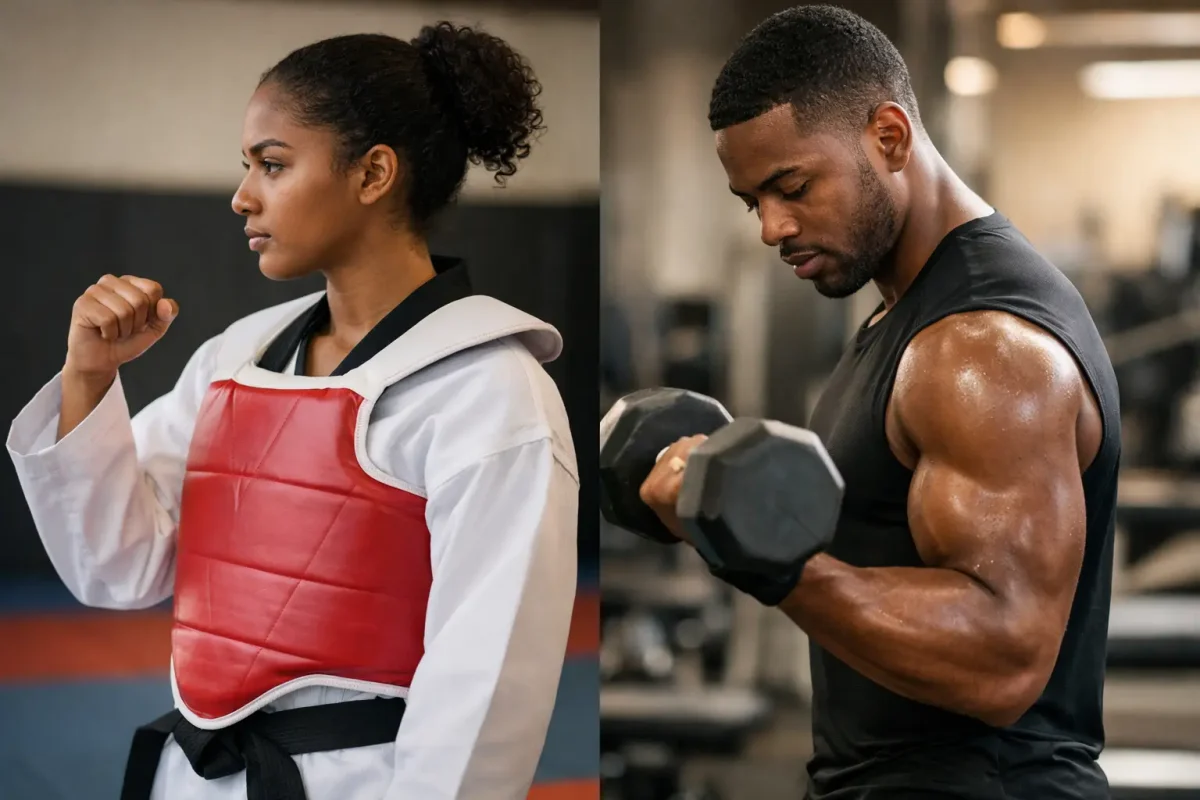
Confidence rarely arrives because someone tells you to believe in yourself. It’s built when you repeatedly do difficult things, regulate the discomfort, and see evidence that you can cope. That’s why the question of martial arts vs gym training for confidence matters. Both can strengthen the body. But they don’t ask the same things of your mind.
A gym can help you feel stronger, healthier and more comfortable in your body. Martial arts can do that too, while adding skill, boundaries, controlled pressure and a clear progression system. Neither path is automatically better. The right choice depends on what’s currently holding your confidence back and what kind of structure will keep you training when motivation fades.
Confidence is evidence, not hype
Real confidence isn’t loudness. It isn’t pretending that you’re never anxious, uncertain or tired. It’s the quieter knowledge that you can follow instructions, recover from mistakes and stay present when something feels challenging.
For some people, the missing evidence is physical. They’ve never felt strong, coordinated or capable in their own body. For others, the problem is behavioural. They start programmes enthusiastically, then disappear after two weeks because nobody expects them back. Others are dealing with stress, anxiety, ADHD, autism, low mood or a history of being criticised in physical environments. They don’t need more pressure. They need clear expectations, coaching and a place where progress is visible.
Training works when it gives your nervous system a new message: discomfort can be managed. Effort doesn’t mean danger. Mistakes don’t mean failure. You can begin again.
What gym training does well for confidence
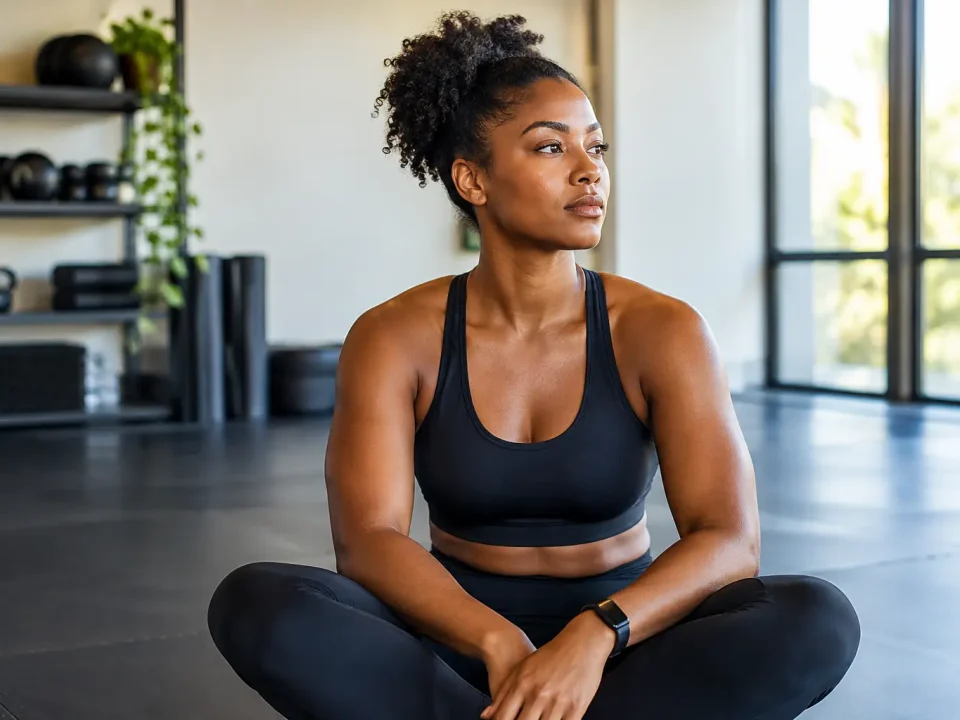
Gym training is exceptionally useful when your main goal is improving general strength, fitness or body composition. Learning to squat with good form, gradually increasing a deadlift, completing a difficult interval session or staying consistent for three months gives you measurable proof of progress.
There’s also freedom in the gym. You can train alone, listen to music, follow your own plan and work at a pace that suits your schedule. For an experienced trainee with a clear programme, this autonomy can feel empowering. If crowded classes or partner work feel overwhelming, a quieter gym session may be the right first step.
Strength training has a particularly direct effect on self-trust. You learn that your body can produce force. You stand differently when everyday tasks feel easier. You may sleep better, have more energy and feel less intimidated by physical challenges.
But freedom can become a weakness when you’re a beginner or when confidence is already low. Many people walk into a gym without knowing what to do, worry about being watched, then spend forty minutes moving between machines without a plan. There’s no shame in that. It simply means confidence can’t be built on vague effort alone.
A good gym programme needs progression, sound coaching and accountability. Without them, the gym can become another place where you negotiate with yourself: tomorrow, next week, after work becomes less stressful. Stop negotiating with yourself. Put training into a structure that asks you to show up.
Martial arts vs gym training for confidence under pressure
Martial arts develop confidence through a different mechanism. You aren’t only lifting a weight or completing a workout. You’re learning a skill that demands attention, timing, posture, breathing and self-control.
At first, a basic stance may feel awkward. A punch combination may require more coordination than expected. Partner drills can reveal hesitation. This is useful information, not a verdict on your ability. A well-run class turns that uncertainty into a sequence: learn the movement, practise it slowly, repeat it with guidance, then apply it with increasing control.
That process matters because confidence grows in context. A person who can lift a heavy barbell may still freeze during confrontation, struggle to set boundaries or panic when plans change. Martial arts training introduces manageable pressure in a supervised setting. You learn to breathe while someone steps towards you. You learn that intensity can be controlled. You learn that power without discipline isn’t strength.
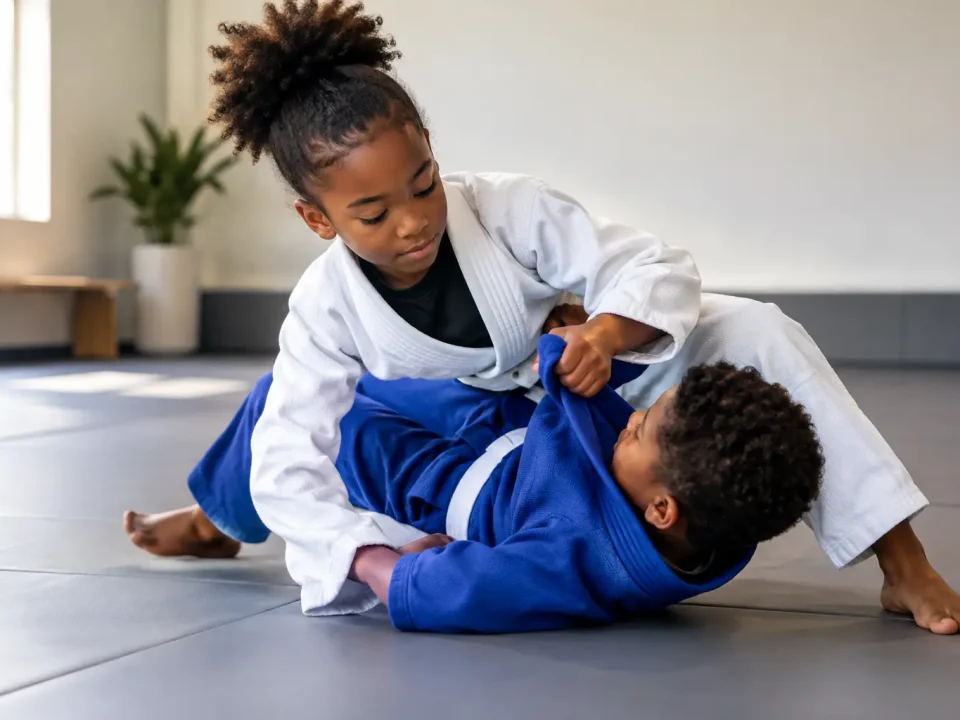
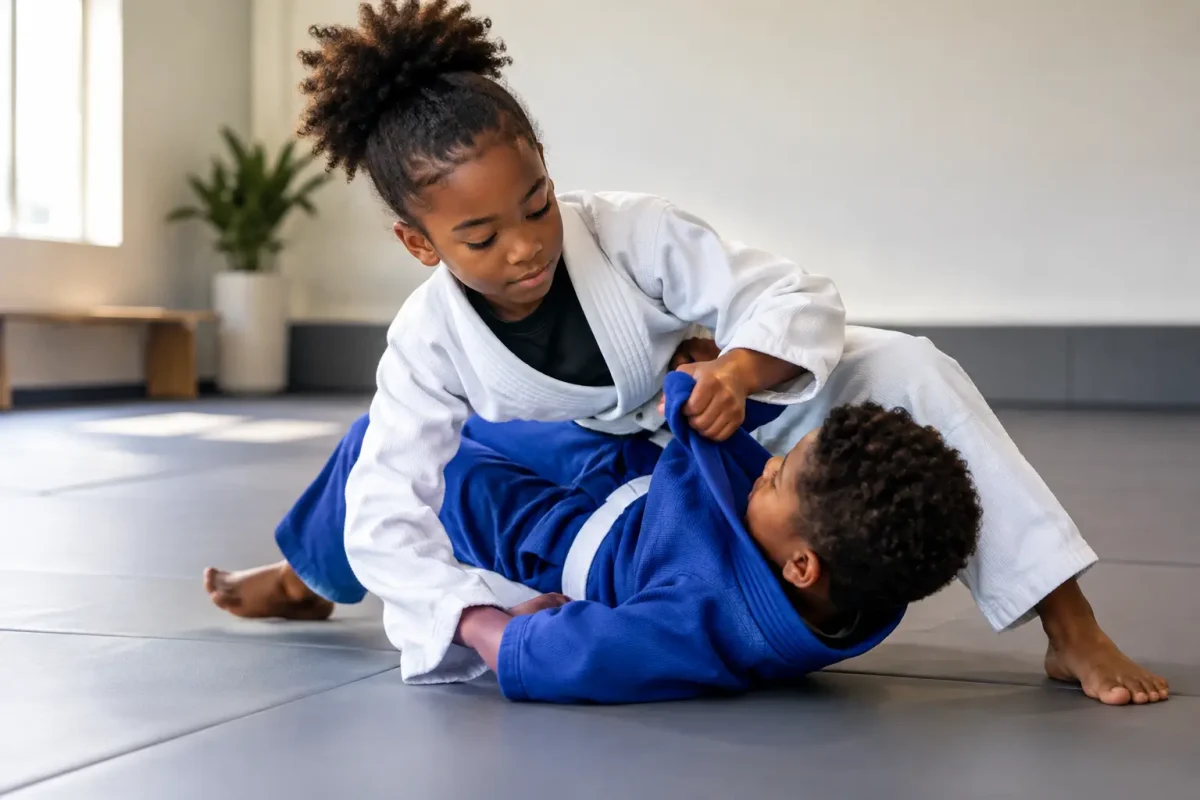
For children and teenagers, this can be especially valuable. They aren’t simply burning energy after school. They’re practising listening, waiting, respecting space, handling correction and returning to the task after an error. A belt, level or technical milestone gives them a visible record that steady effort leads somewhere.
For adults, martial arts can restore a sense of agency that work stress and daily responsibility often drain away. For one hour, you aren’t reacting to messages, deadlines or everyone else’s needs. You’re learning to direct your body and attention with purpose.
The confidence advantage of skill-based progression
A mirror can show physical change, but skill gives a different kind of proof. You can remember when a technique felt impossible, then notice that it has become automatic. You can compare your first class with your fiftieth. You can spar or drill at an appropriate level and recognise that you remain composed more often than before.
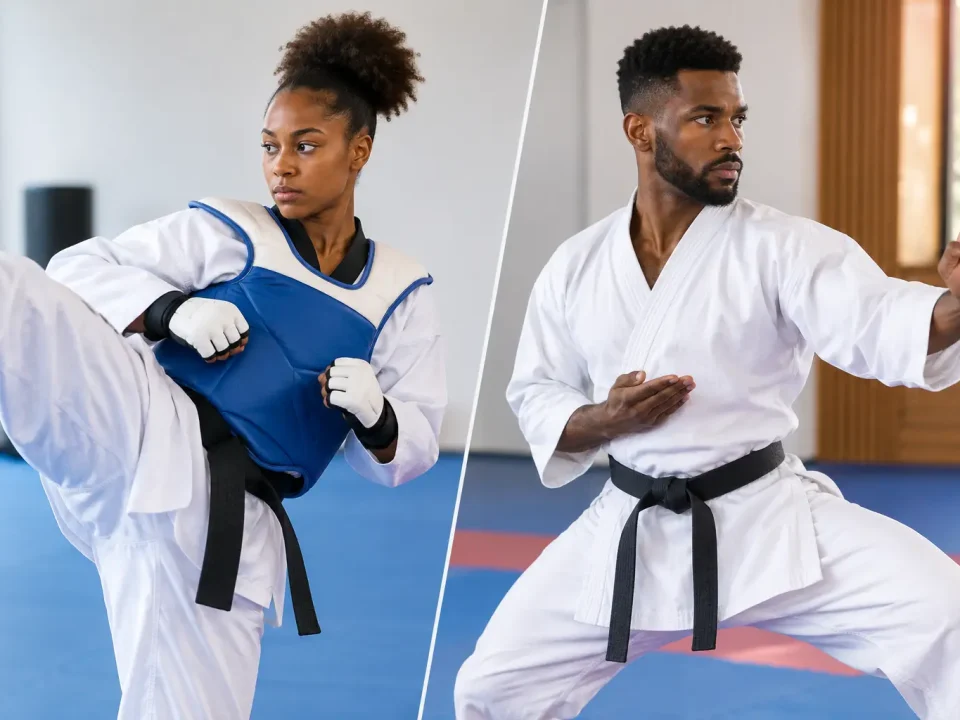
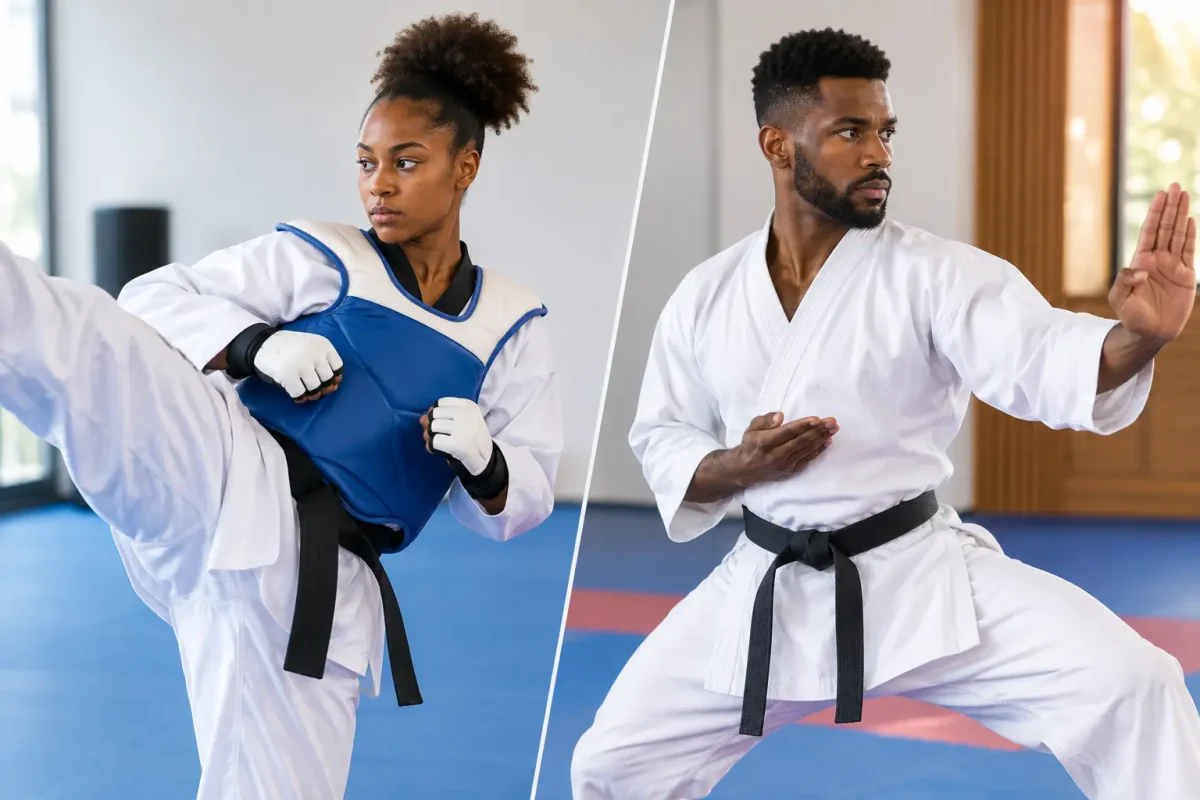
This doesn’t mean martial arts are about fighting. Proper training teaches restraint, awareness and respect. Boxing, kickboxing, Taekwondo and jiu-jitsu all involve different forms of challenge, but the deeper lesson is similar: remain calm enough to make good decisions.
That lesson transfers. A child who learns to reset after missing a technique may be better equipped to handle correction in school. An adult who learns to breathe through a demanding round may find it easier to pause before reacting in an argument. The aim isn’t to become aggressive. The aim is to become harder to destabilise.
The trade-offs: choose honestly
Martial arts aren’t always the best answer. If you need straightforward strength development, rehabilitation-focused movement, or total control over your session time, gym training may be more efficient. It can also be easier to fit around an unpredictable work schedule.
Martial arts require regular attendance and a willingness to be corrected. Some people initially find the social element intimidating. Contact-based classes aren’t suitable for every person at every stage, particularly if anxiety is high or past experiences make close physical interaction difficult. A responsible academy should offer gradual exposure, clear consent, adaptable drills and coaching that never confuses intimidation with discipline.
Gym training has its own trade-off. It can improve how you feel in your body without necessarily training you to communicate, stay composed with another person, or respond under pressure. If your confidence challenge is social avoidance, fear of judgment or a tendency to quit when things become uncomfortable, a class environment may provide what solo training can’t.
The strongest option for many people isn’t either-or. Two strength sessions can support better martial arts performance. One or two martial arts classes can give purpose and accountability to a fitness routine. The question isn’t which training style wins. The question is which combination helps you become more consistent, capable and regulated.
What psychologically informed coaching changes
Confidence can be damaged quickly in environments built on humiliation, comparison or confusion. Some trainees respond to shouting and competition. Many don’t. Children, beginners and neurodivergent trainees often benefit from predictable routines, direct instructions and coaches who understand that overwhelm can look like disengagement.
Psychologically informed coaching doesn’t lower the standard. It makes the path to the standard clearer. It recognises when a person needs a technical correction, when they need a smaller first step, and when they need to learn how to settle their breathing before trying again.
At Edson Breedy Athletics, the goal isn’t simply to make people tired. Training is designed to build discipline alongside focus, stress regulation and long-term resilience. That distinction matters. Exercise can exhaust you. Purposeful coaching can change the way you respond to challenge.
How to make your choice without overthinking it
Start with the obstacle, not the image you’ve of a confident person. If you want to feel physically stronger and prefer independent training, begin with a structured gym plan and proper coaching. If you want confidence in your body, clearer boundaries, better focus and a disciplined community, try a martial arts class.
Give yourself enough time to judge fairly. One uncomfortable session isn’t proof that a programme is wrong for you. Confidence often begins after the awkward stage, when you realise you came back despite not feeling ready. Commit to a short, realistic period of consistent attendance, track what changes, and adjust from evidence rather than mood.
Choose the environment that makes you practise courage in manageable doses. The right training will challenge you, but it should also teach you how to meet that challenge with control. Show up, learn the next skill, and let your confidence become something you’ve earned.
Train your mind. Build your body.
Your first week is just TTD $50, every discipline, every class, no experience needed. Come find out what training with EBA feels like.