Best Martial Arts for Emotional Regulation
July 26, 2026
Can Boxing Help With Anger Management Safely?
July 30, 2026
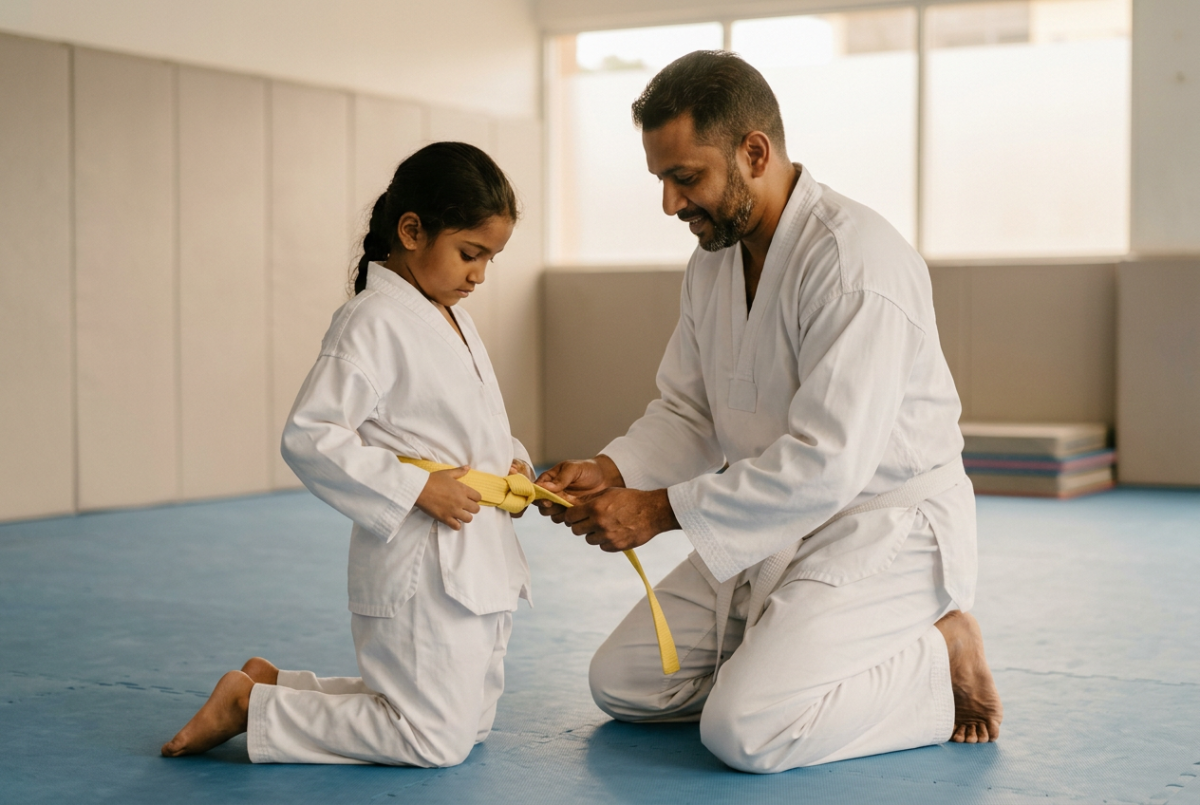
A child is having a difficult afternoon. A parent has carried work pressure, traffic and household responsibilities all day. Neither needs another screen, another errand or another hour spent apart. Family martial arts classes create a different kind of space: one where both can move, learn, regulate and improve under the same roof.
This isn’t about asking parents to train exactly like their children, or expecting children to keep up with adults. It’s about building a household culture around effort, respect and consistency. When training becomes part of family life, discipline stops being a lecture. It becomes something everyone practises.
Family martial arts classes create shared standards
Children learn quickly from what adults repeatedly do. A parent who talks about confidence but avoids challenge sends one message. A parent who attends training, listens to coaching, makes mistakes and returns the following week sends another.
Martial arts make those standards visible. You arrive on time. You warm up properly. You focus when instruction is being given. You control your body around others. You continue when the technique feels awkward. These aren’t abstract values. They’re behaviours practised week after week.
For a child, seeing a parent work through a difficult drill can be powerful. It normalises being a beginner. It shows that progress doesn’t require perfection and that capability is earned through repetition. For adults, watching a child persist can be an equally useful reminder: growth is rarely dramatic at first. It’s built in small, often unglamorous decisions.
The goal isn’t to turn every family into competitive fighters. The goal is to create people who can meet discomfort with structure rather than avoidance.
The real benefit is nervous system regulation
Many people think martial arts are only about kicks, punches, throws or self-defence. Those skills matter. But a well-coached class also teaches the nervous system how to respond under pressure.
Training requires attention to breath, posture, timing and distance. A student may feel frustrated after missing a combination, nervous before partner work or overstimulated in a busy class. With clear coaching and a predictable structure, they learn to pause, reset and try again. That’s emotional regulation in action.
This matters for children managing big feelings, school stress or difficulty concentrating. It matters for adults carrying anxiety, low mood or the physical effects of chronic stress. Movement doesn’t replace clinical care where it’s needed, but it can become a dependable part of a wider mental health plan. Consistent physical challenge gives stress an outlet and gives the mind a task it can complete.
For neurodivergent trainees, the environment matters as much as the activity. Some people with ADHD benefit from a class that gives their energy a clear direction. Some autistic students respond well to routine, direct instruction and known expectations. Others may need time to settle, additional demonstration or a gradual introduction to partner drills. Good coaching doesn’t lower standards. It makes the path to those standards clearer.
Different ages need different challenges
A genuine family training culture shouldn’t mean putting everyone into one class and hoping for the best. Children, teenagers and adults have different developmental needs, attention spans and physical capacities. Age-specific coaching is part of responsible coaching.
Young children need clear boundaries, movement games with purpose and simple instructions they can act on immediately. They’re developing balance, coordination, listening skills and confidence in their own bodies. The best sessions feel energetic, but they’re never chaotic.
School-age children can begin to understand technique, controlled contact, goal-setting and the connection between practice and improvement. They benefit from learning that effort has a process. You don’t earn confidence by being told you’re brilliant. You earn it by doing difficult things safely and seeing yourself improve.
Teenagers often need a place where expectations are firm without being dismissive. Martial arts offer a productive response to pressure, anger and self-consciousness. A teenager who learns to hold a stance, maintain composure and work with a partner is developing more than fitness. They’re building self-command.
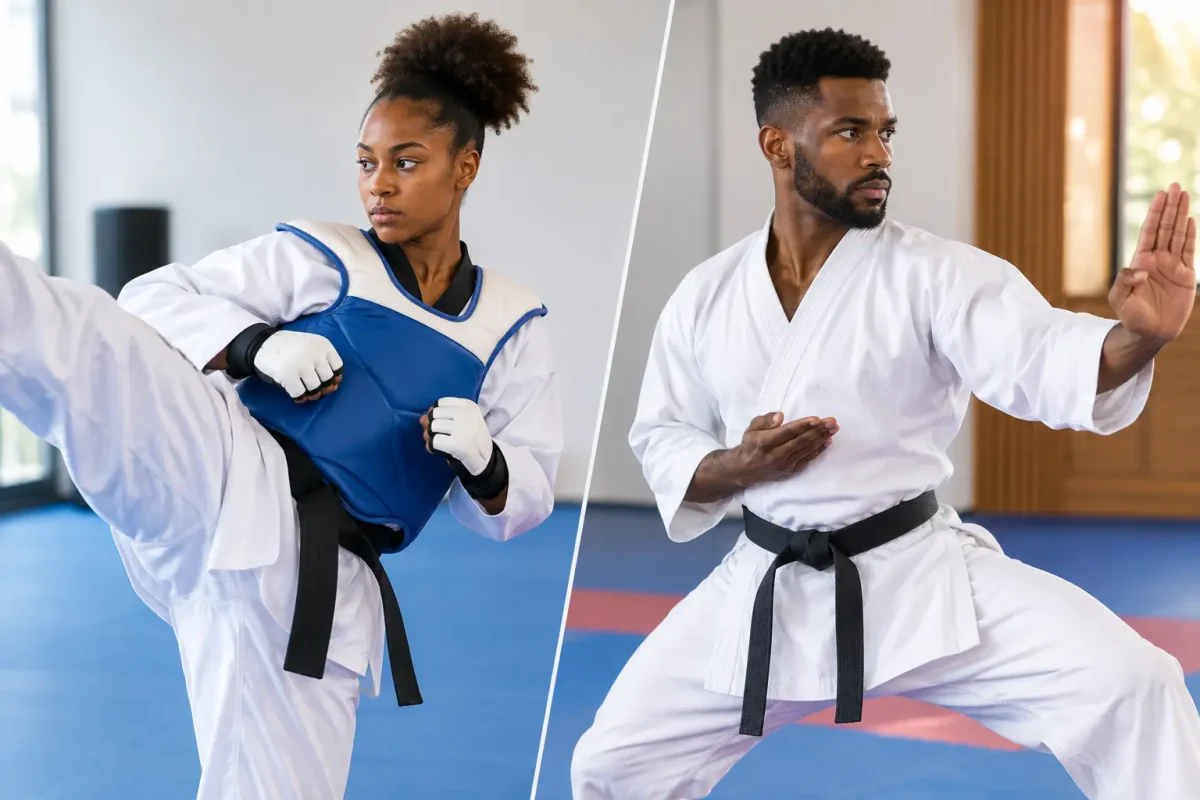
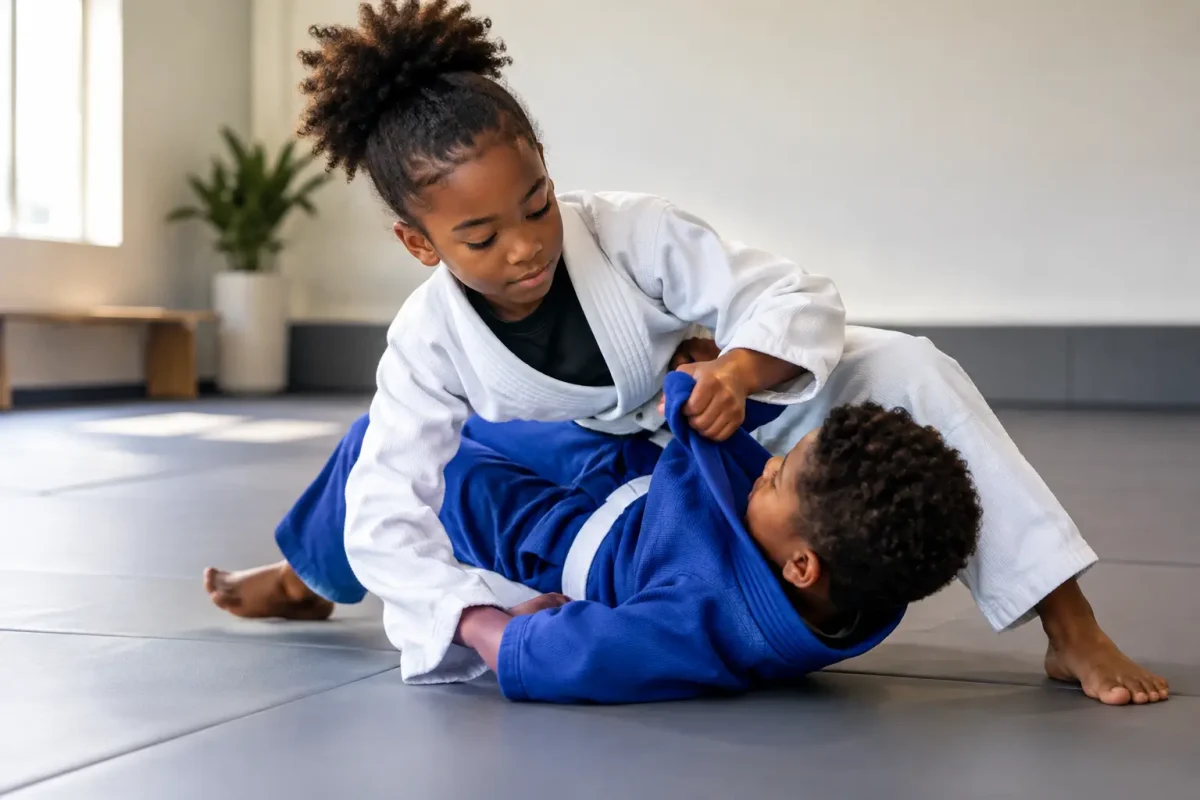
Adults need training that respects real life. Some want boxing or kickboxing to release pressure after work. Some want jiu-jitsu for problem-solving and technical challenge. Others need the mobility, breath control and recovery that yoga can provide. The right programme meets people where they’re, then asks them to move forward.
What families should look for in a martial arts academy
Not every martial arts school is designed for family development. A loud room and a hard workout may be appealing, but intensity alone doesn’t create resilience. Parents should look beyond belts, uniforms and promotional promises.
First, observe the coaching. Are instructions clear? Is correction calm and specific? Do coaches know how to challenge a nervous beginner without humiliating them? A disciplined environment isn’t one where people are shouted into submission. It’s one where expectations are consistent and accountability is fair.
Second, look at how safety is handled. Controlled contact, appropriate pairing, supervision and progression matter. Children shouldn’t be treated as miniature adults, and adults returning to fitness shouldn’t be pushed into injury for the sake of proving toughness.
Third, consider whether the academy understands behaviour as communication. A child who can’t settle may be overwhelmed, unsure of the routine or seeking movement. An adult who withdraws may be anxious or embarrassed. The answer isn’t to excuse every behaviour. It’s to coach with awareness, boundaries and a plan.
Finally, ask whether the programme offers progression. Families stay committed when they can see what they’re working towards. That might be improved fitness, stronger focus, technical milestones, healthier habits or greater confidence in social settings. Progress should be measurable, but it should also be felt.
Training together doesn’t mean training identically
One common concern is that family martial arts classes will become another obligation to coordinate. The reality depends on the academy’s timetable and structure. In many cases, a parent and child can train in separate age-appropriate sessions at similar times, making attendance more practical without compromising the quality of coaching.
You may not share every drill, but you share the commitment. That changes the conversation at home. Instead of telling a child to practise discipline, you can discuss what each of you found challenging in class. Instead of asking whether they behaved well, ask how they reset when something was difficult.
This approach also reduces the pressure on children to perform for their parents. Some children thrive when a parent watches every moment; others become self-conscious. Separate sessions can give each person room to develop their own identity while still belonging to the same training community.
Consistency beats occasional motivation
Motivation is useful, but it’s unreliable. Families are busy. Children have homework, adults have deadlines, and energy can be low. If training only happens when everyone feels inspired, it won’t happen often enough to change anything.
Structure is the answer. Choose realistic class times. Protect them as you would a medical appointment or school commitment. Prepare uniforms and water bottles beforehand. Avoid turning attendance into a nightly debate.
There will be weeks when illness, exams, work travel or family events interrupt the routine. That’s normal. Discipline isn’t rigid perfection. It’s returning without drama after the interruption.
At Edson Breedy Athletics, the focus isn’t simply on making families sweat. It’s on helping people develop the physical skill, emotional control and repeatable habits that support a stronger life outside the academy. A trial week can be a useful way to experience different classes and find the right fit before committing.
The strongest family habit isn’t talking about who you want to become. It’s choosing one purposeful hour, showing up together in your own ways, and letting disciplined practice do its work.
Train your mind. Build your body.
Your first week is just TTD $50, every discipline, every class, no experience needed. Come find out what training with EBA feels like.