Guide to Neurodiversity-Friendly Fitness Classes
August 5, 2026
How to Improve Executive Function With Exercise
August 9, 2026
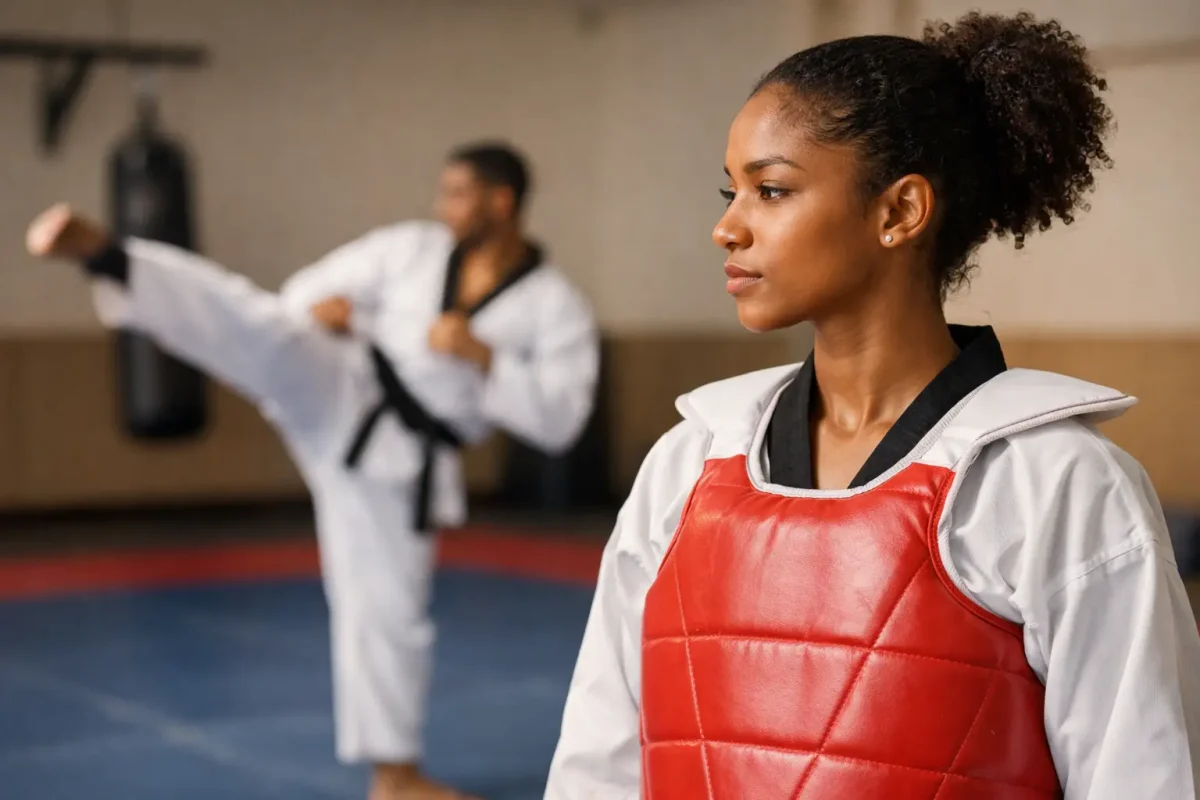
The moment your body wants to stop is often the moment your training begins to shape your character. Learning how to build discipline through martial arts isn’t about becoming harsh, robotic, or obsessed with perfection. It’s about becoming someone who can follow through, regulate pressure, and keep moving when motivation disappears.
Motivation is unreliable. It changes with your sleep, workload, mood, stress level, and the events of the day. Discipline is different. Discipline is the decision to do what supports your long-term goals, even when the short-term feeling is resistance.
Martial arts gives that decision a place to live. You show up. You listen. You practise. You repeat. Over time, those actions become more than training habits. They become evidence that you can trust yourself.
Why martial arts build discipline differently
Many people try to build discipline by relying on willpower alone. They set a strict plan, miss one day, feel disappointed, and abandon the plan altogether. Martial arts replaces that fragile cycle with structure, coaching, progression, and community.
A class begins at a set time. There’s a warm-up whether you feel ready or not. There are techniques to learn, rounds to complete, corrections to accept, and standards to meet. That external structure matters, especially when your internal world feels busy or unsettled.
For children and teenagers, this can mean learning to wait, follow instructions, manage frustration, and return attention to the task. For adults, it may mean putting the mobile phone down, leaving work stress outside the training space, and committing to an hour that serves their health.
The discipline isn’t created by punishment. It’s built through repeated, achievable acts of responsibility.
How to build discipline through martial arts one class at a time
Start by choosing consistency over intensity. You don’t need to train at maximum effort every day to become disciplined. In fact, trying to do too much too quickly is one of the fastest ways to burn out.
Choose a realistic training rhythm and protect it. For one person, that may be two martial arts sessions each week. For another, it may be three. The right number depends on your current fitness, work or school demands, recovery, and family responsibilities. A schedule you can keep is more valuable than an ambitious plan you quit after ten days.
Treat class as an appointment, not a negotiation. Decide in advance when you’ll train, prepare your kit beforehand, and remove small barriers that make skipping easier. When the time comes, your task isn’t to debate whether you feel like going. Your task is to arrive.
Stop negotiating with yourself. Discipline over motivation.
Make the first promise small enough to keep
A black belt isn’t earned in one heroic session. A stronger, calmer, more focused person isn’t built through a single burst of effort either. Progress comes from keeping small promises repeatedly.
Your first promise might be simple: attend every scheduled class for the next four weeks. Don’t make your goal to be the fastest, strongest, or most technically advanced person in the room. Make your goal to be present and coachable.
This is especially useful if anxiety, ADHD, depression, or a history of starting and stopping has made routines difficult. A small commitment gives your nervous system a chance to learn that structure doesn’t have to mean failure or shame. It can mean safety, support, and forward movement.
Learn to act before you feel ready
Martial arts teaches a difficult truth: readiness often follows action. You may feel tired before boxing class, nervous before sparring, or mentally scattered before a Taekwondo session. You can acknowledge that feeling without allowing it to make every decision.
This doesn’t mean ignoring genuine pain, illness, or exhaustion. Good discipline includes knowing when to rest and when to seek guidance. Training through an injury isn’t strength. Listening to your body is part of self-control.
But there’s a difference between a valid recovery need and ordinary resistance. A skilled coach can help you recognise it. On some days, your best session will be a hard technical workout. On others, success may simply be arriving, breathing, moving with control, and staying connected to the process.
Repetition trains the nervous system
Every drill in martial arts has a deeper lesson. A jab repeated correctly teaches precision. A stance held under fatigue teaches patience. A jiu-jitsu escape practised again and again teaches problem-solving under pressure. Yoga and controlled breathing teach the body that it can move from stress towards regulation.
This isn’t just motivational language. Repetition helps make useful responses more familiar. When you practise pausing, breathing, protecting your posture, and responding to a coach’s cue, you’re training attention and emotional control alongside physical skill.
For someone who becomes overwhelmed easily, a structured class can create a predictable pathway through challenge. You know where to stand, what comes next, and who to ask for help. For someone who avoids challenge, the same environment offers a measured way to face discomfort without being left alone inside it.
The goal isn’t to eliminate stress. It’s to become more capable within it.
Use feedback without making it personal
Discipline requires humility. In martial arts, your technique will be corrected. You’ll lose balance, forget combinations, get caught in a position, or struggle with timing. That isn’t proof that you’re failing. It’s the training.
The disciplined response is to listen, adjust, and try again. This habit has value far beyond the mat. It helps children receive correction without a meltdown. It helps teenagers build confidence without needing to be perfect. It helps adults handle feedback at work, at home, and in demanding situations with less defensiveness.
A healthy academy should make correction clear without making students feel small. High standards and psychological safety belong together. You can be challenged firmly and still be treated with respect.
Track proof, not just outcomes
If you only measure progress by belts, body composition, or winning sparring rounds, you’ll miss the most important changes. Discipline becomes visible in quieter ways.
Notice whether you’re arriving on time more often. Notice whether you recover faster after a difficult day. Notice whether you can focus for one more round, stay calm when corrected, or return to class after an imperfect session. These are signs that your identity is changing.
Keep a brief training record if it helps. Write down what you attended, one skill you practised, and one moment you handled better than before. The point isn’t to create another burden. It’s to collect evidence that your effort is building something real.
Let the community hold the standard
Self-discipline is personal, but it doesn’t need to be solitary. Training with others creates healthy accountability. Your coach notices when you improve. Your training partners expect you to be present and respectful. Younger students see what consistency looks like, while experienced students remind you that progress takes time.
For families, shared training can be particularly powerful. A child learns that discipline isn’t something adults demand while avoiding it themselves. They see parents practise, struggle, improve, and return. That example carries weight.
At Edson Breedy Athletics, the aim isn’t simply to make people tougher. It’s to help them become more capable of directing themselves under pressure, with training that respects both physical effort and mental health.
Discipline is an identity built under pressure
The deepest benefit of martial arts isn’t that it gives you a harder punch or a better kick. It gives you repeated opportunities to become the person who follows through.
There will be days when training feels energising and days when it feels inconvenient. Attend wisely. Rest when recovery truly calls for it. Return when resistance is merely trying to keep you comfortable.
Each time you do, you send yourself a clear message: my feelings matter, but they don’t control every action. That’s where discipline begins. Not in perfection, but in the next deliberate step.
Train your mind. Build your body.
Your first week is just TTD $50, every discipline, every class, no experience needed. Come find out what training with EBA feels like.