An ADHD Youth Training Success Story That Works
September 28, 2026
Brain Health Exercise for Focus and Resilience
October 2, 2026

The hours after school can either restore a child’s capacity to learn or quietly drain it. Screens, unstructured boredom and a rushed homework battle can leave the brain overstimulated and the body restless. The best after school activities for focus do something more purposeful: they give children and teens a reliable way to move, regulate stress, practise self-control and return to their responsibilities with a clearer mind.
Focus isn’t a personality trait that some children have and others lack. It’s a trainable skill. For many young people, especially those managing ADHD, anxiety, autism or low confidence, concentration improves when the body has structure before the mind is asked to sit still.
Why focus needs more than extra homework
A child who struggles to begin homework isn’t always being lazy or defiant. They may be mentally fatigued after a full school day, carrying social stress, sensory overload or energy that has had nowhere productive to go. Asking for immediate stillness can create more resistance.
The right activity creates a transition. It tells the nervous system that school has ended, releases physical tension and introduces a new rhythm. This matters because a regulated body is better equipped to listen, plan, remember instructions and manage frustration.
Not every after-school activity serves this purpose equally. The aim isn’t to fill every afternoon. Over-scheduling can create its own stress. The aim is to choose a routine that combines movement, challenge, clear expectations and enough recovery for family life and schoolwork.
7 best after school activities for focus
1. Martial arts
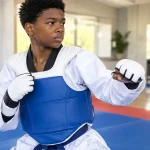
Martial arts is one of the strongest choices for focus because it trains attention under pressure. A student must listen for a sequence, remember technique, control distance, follow safety rules and respond to coaching, all while managing their body in motion.
Taekwondo, boxing, kickboxing and jiu-jitsu each demand a slightly different kind of concentration. Striking arts develop timing, coordination and restraint. Grappling develops patience, problem-solving and composure when a situation feels difficult. In both cases, progress comes from repetition, not from being naturally talented.
For a child who is impulsive, martial arts offers firm boundaries without shaming them. For a child who is anxious, predictable drills and gradual skill-building can make challenge feel manageable. The best programme is structured, age-appropriate and coached by people who understand that behaviour communicates a need, not just a problem.
2. Yoga and guided mobility
Yoga isn’t only about flexibility. It can help children notice their breathing, posture and level of tension, which are practical foundations for emotional regulation. A short, consistent yoga practice after school can be especially helpful for children who arrive home wired, worried or overloaded.
Slow movements, balance work and breathing exercises ask the brain to stay with the present task. That skill carries into reading, revision and conversations. Yoga may not provide the same high-energy outlet as martial arts, so it’s often best for children who need calming, or as part of a balanced weekly schedule.
3. Team sports with clear coaching
Football, netball, basketball and cricket can build focus when the environment values skill, effort and teamwork over constant pressure to win. Players must track rules, make quick decisions, communicate and recover after mistakes. These are real executive-function skills.
There’s a trade-off. A highly chaotic team environment can be difficult for a child who is sensitive to noise, competition or changing instructions. Parents should look beyond the sport itself and assess the coaching culture. Is there structure? Are beginners taught patiently? Does the child leave feeling challenged and supported rather than defeated?
4. Swimming
Swimming gives the body a full workout while requiring rhythmic breathing and technical control. The water can feel regulating for some children, particularly after a loud or demanding day. Learning strokes also offers measurable progress: a stronger kick, cleaner breathing, greater confidence in deeper water.
It’s a useful option for children who don’t enjoy contact sports or who need a lower-impact activity. However, it may involve travel, pool schedules and changing time, so it’s worth considering whether the routine is realistic for your family. Consistency is more valuable than a perfect plan that falls apart after three weeks.
5. Music lessons and group rhythm work
Learning an instrument develops sustained attention in a different way. A child has to listen closely, follow patterns, coordinate both hands and practise a difficult section without quitting at the first error. Group drumming or music ensembles also build timing, listening and social connection.
Music can be a strong choice for children who find direct competition unappealing. It should still include a clear practice structure. Ten focused minutes most days usually develops more discipline than one frustrated hour once a week.
6. Outdoor skill-based activities
Cycling, climbing, skating, athletics and nature-based activities can give restless children a healthier outlet than endless indoor scrolling. Physical risk must be managed properly, but manageable challenge builds judgement. A child learns to look ahead, assess their position, try again and respect limits.
The key word is skill-based. Simply burning energy is helpful, but learning a skill adds concentration, patience and a reason to persist. If formal clubs aren’t accessible every week, a family routine at a park or safe outdoor space can still provide structure.
7. Creative activities with a finish line
Drawing, craft, cooking, coding and building projects can strengthen focus when they’ve a beginning, middle and end. A child follows steps, makes decisions and sees evidence of effort. Completing one small project is often more regulating than being handed unlimited materials with no direction.
This option works well on lower-energy days or alongside a more active programme. It isn’t a replacement for regular physical movement, but it can help children practise calm concentration and pride in their work.
What makes an activity genuinely good for concentration?
The activity matters, but the structure around it matters just as much. Look for a coach or instructor who gives clear directions, sets appropriate standards and corrects without humiliation. Children need to know what’s expected, what progress looks like and that mistakes are part of learning.
A good programme also has a rhythm. There’s a start time, warm-up, skill practice, challenge and finish. This predictability lowers the mental effort required to settle in. Over time, children begin to internalise the routine: arrive, prepare, listen, practise, reset.
Avoid choosing only on the basis of what seems impressive or what other families are doing. The best activity is one your child can attend consistently and engage with enough to tolerate the difficult early stages. Discipline isn’t excitement every day. It’s returning to the work when excitement fades.
Build an after-school routine that doesn’t create more stress
Start with two or three sessions a week rather than filling every afternoon. Allow time for a snack, decompression and travel before training. Some children need ten quiet minutes after school; others need movement immediately. Observe the pattern rather than forcing a one-size-fits-all routine.
Keep the sequence simple: school, snack, activity or recovery time, homework, evening wind-down. If homework must happen first, use a short timed block and a clear break rather than demanding a full evening of concentration from an exhausted child.
Parents should also protect sleep. A late training session may be worthwhile for an older teenager who sleeps well and values the routine. For a younger child already struggling with tiredness, an earlier class or fewer sessions may produce better results. More activity isn’t always better. The right dose is the one that helps your child become steadier, not more depleted.
Focus grows when children practise keeping promises to themselves
Confidence doesn’t come from repeatedly being told, “You can do anything.” It grows when a child experiences evidence: they attended, they listened, they struggled, they improved. That’s why structured movement is so powerful. It makes discipline visible.
At Edson Breedy Athletics, training is approached as mind-body development, not simply exercise. Children and teens need standards, but they also need coaching that understands stress regulation, neurodiversity and the courage it takes to begin.
Choose an activity that gives your child a place to work hard, reset and belong. Then give it enough time to become a habit. Focus is built one repeated decision at a time.
Train your mind. Build your body.
Your first week is just TTD $50, every discipline, every class, no experience needed. Come find out what training with EBA feels like.