A Teen Resilience Example: Progress Under Pressure
October 6, 2026
Is Jiu Jitsu Safe for Beginners? What to Expect
October 10, 2026
Walking into your first combat sports class can feel intimidating. You may be worried about being unfit, getting hit, looking foolish, or being surrounded by people who already know what they’re doing. The best beginner combat sports for adults aren’t necessarily the ones that look most impressive online. They’re the ones you can attend consistently, learn safely, and use to build a stronger body and steadier mind.
Combat training isn’t about proving you’re tough on day one. It’s about showing up, following structure, and developing control under pressure. For adults managing work stress, anxiety, low confidence, ADHD, depression, or simply a lack of routine, the right class can become more than exercise. It can become a reliable practice of nervous system regulation, focus, discipline, and self-respect.
What makes a combat sport beginner-friendly?
A beginner-friendly programme has less to do with the sport itself and more to do with the coaching environment. Boxing can be an excellent first choice in a structured gym, while it can be a poor fit in a culture that pushes inexperienced people into hard sparring. The same is true of jiu-jitsu, kickboxing, and Taekwondo.
Look for clear instruction, gradual progression, and coaches who teach control before intensity. You should be shown how to stand, breathe, fall, defend yourself, and work with a partner before being expected to perform under pressure. A good academy doesn’t confuse fear with progress.
The best training environments also understand that adults arrive with different histories. Some are returning to exercise after years away. Some are carrying injuries. Others are high-functioning at work but feel overwhelmed in social settings. Structure helps. Predictable routines, clear boundaries, and supportive coaching make it easier to stay present and keep coming back.
The best beginner combat sports for adults
There’s no single winner for every person. Your best option depends on whether you want striking, self-defence, fitness, competition, stress relief, or a technical challenge that keeps your mind engaged.
Boxing: direct, conditioning-focused, and mentally clarifying
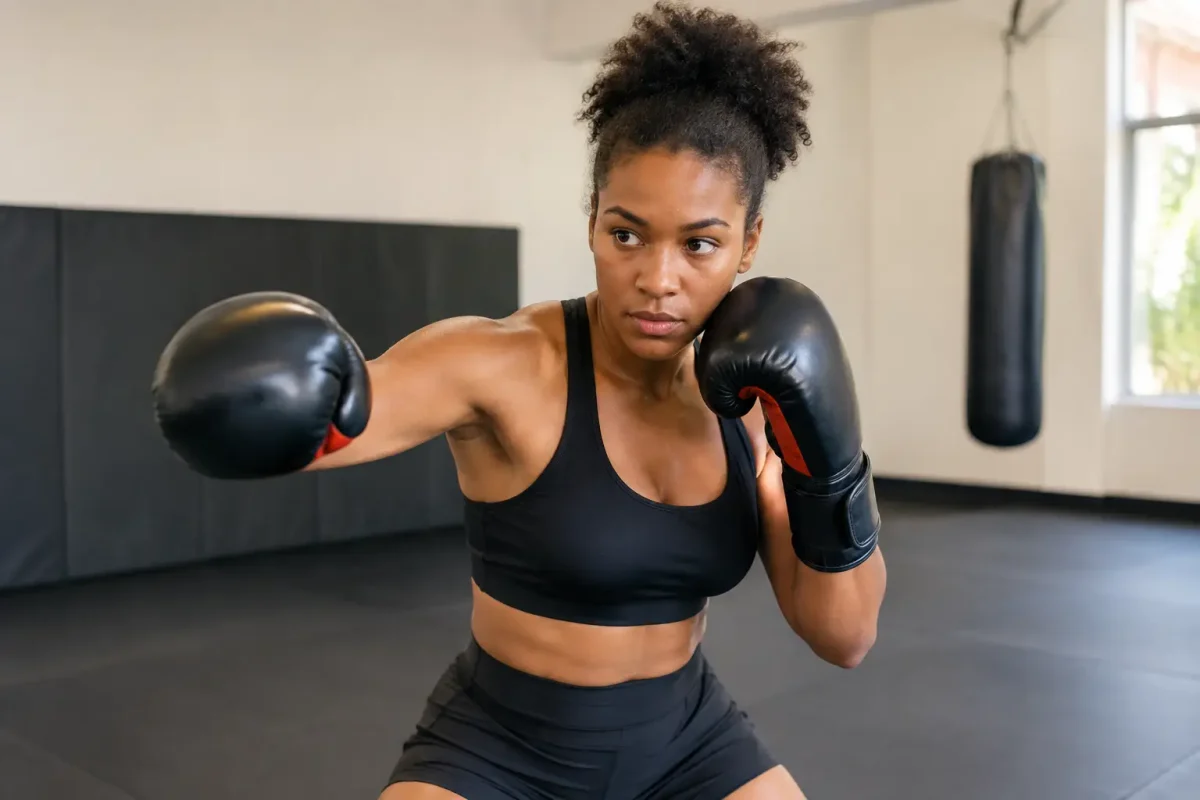
Boxing is often one of the easiest combat sports to understand at the beginning. You learn a fighting stance, basic punches, footwork, defence, and bag or pad work. The early feedback is immediate: your coordination improves, your heart rate rises, and you leave knowing you’ve worked.
For adults who carry stress in their body, boxing can be powerfully clarifying. It requires attention to breath, rhythm, posture, and timing. You can’t fully rehearse tomorrow’s meeting or replay a difficult conversation while trying to move, guard, and punch with control.
The trade-off is impact. Good boxing programmes don’t require beginners to spar straight away, and many adults never need to spar hard to gain the physical and mental benefits. If you’ve concerns about headaches, previous concussion, or joint issues, speak honestly with the coach and your healthcare professional. Technical drilling, conditioning, and controlled pad work can still offer a demanding path forward.
Brazilian jiu-jitsu: problem-solving under pressure
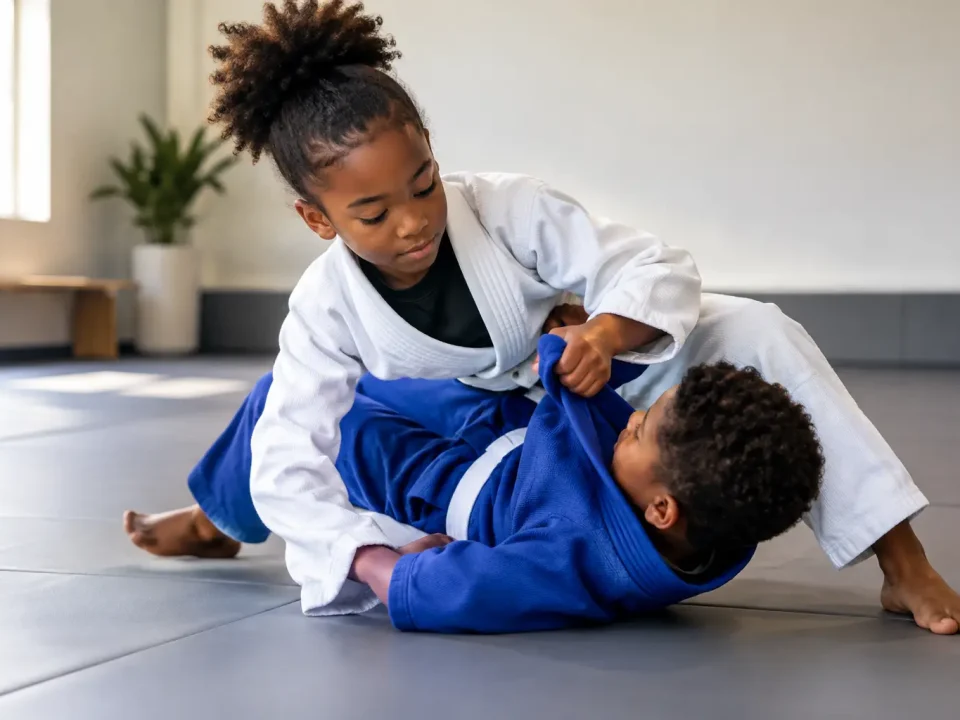
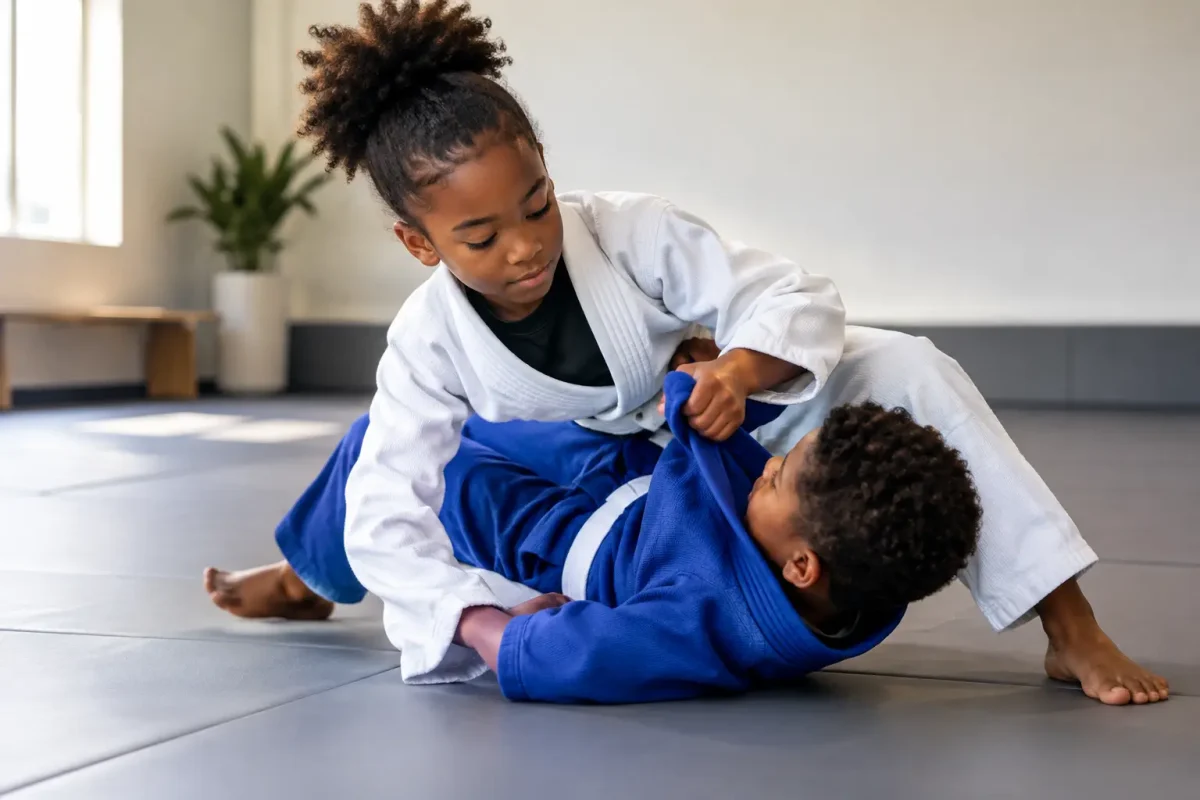
Brazilian jiu-jitsu is a grappling art built around position, leverage, escapes, control, and submissions. It can suit adults who prefer close-range skill development over punching and kicking. Strength helps, but learning how to use frames, angles, balance, and timing matters far more than trying to overpower everyone.
Jiu-jitsu gives the brain a genuine task. Each round presents a problem: how do you stay calm, protect yourself, improve position, and make a decision when another person is resisting? That makes it especially engaging for people who become bored with repetitive workouts.
It can also be humbling. You’ll tap out. You’ll get stuck. That isn’t failure; it’s part of the learning process. A healthy jiu-jitsu culture treats the tap as intelligent communication, not defeat. Beginners should choose a class where partners are taught to train with care, especially when there are major differences in size, age, or experience.
Kickboxing: full-body fitness with practical striking skills
Kickboxing combines punches, kicks, knees, movement, and conditioning. It’s an excellent option for adults who want a high-energy workout but also want to develop usable striking skills. The variety can make sessions feel less repetitive than boxing alone.
Learning to coordinate hands, feet, hips, and distance takes patience. At first, a simple combination may feel awkward. That’s normal. Repetition turns awkward movement into organised movement, and organised movement builds confidence.
Kickboxing is a strong choice if you enjoy dynamic training and want to improve cardiovascular fitness quickly. However, it isn’t a reason to throw wild kicks at full power. The foundation must come first: balance, chambering, safe hip rotation, controlled contact, and defensive awareness. Intensity without technique is just risk wearing gloves.
Taekwondo: discipline, mobility, and progressive structure
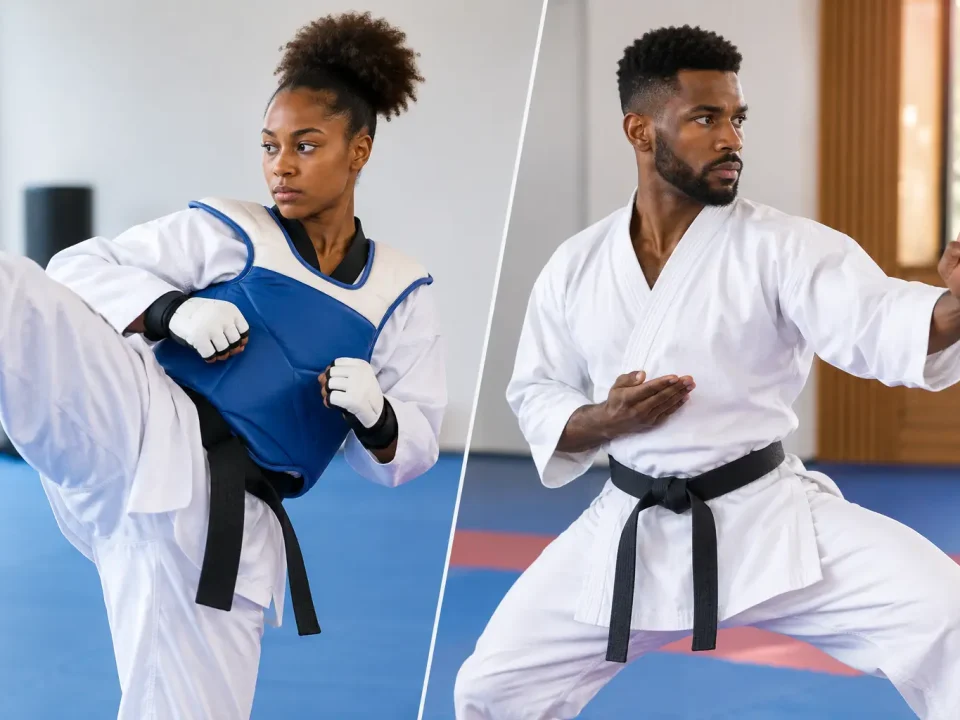
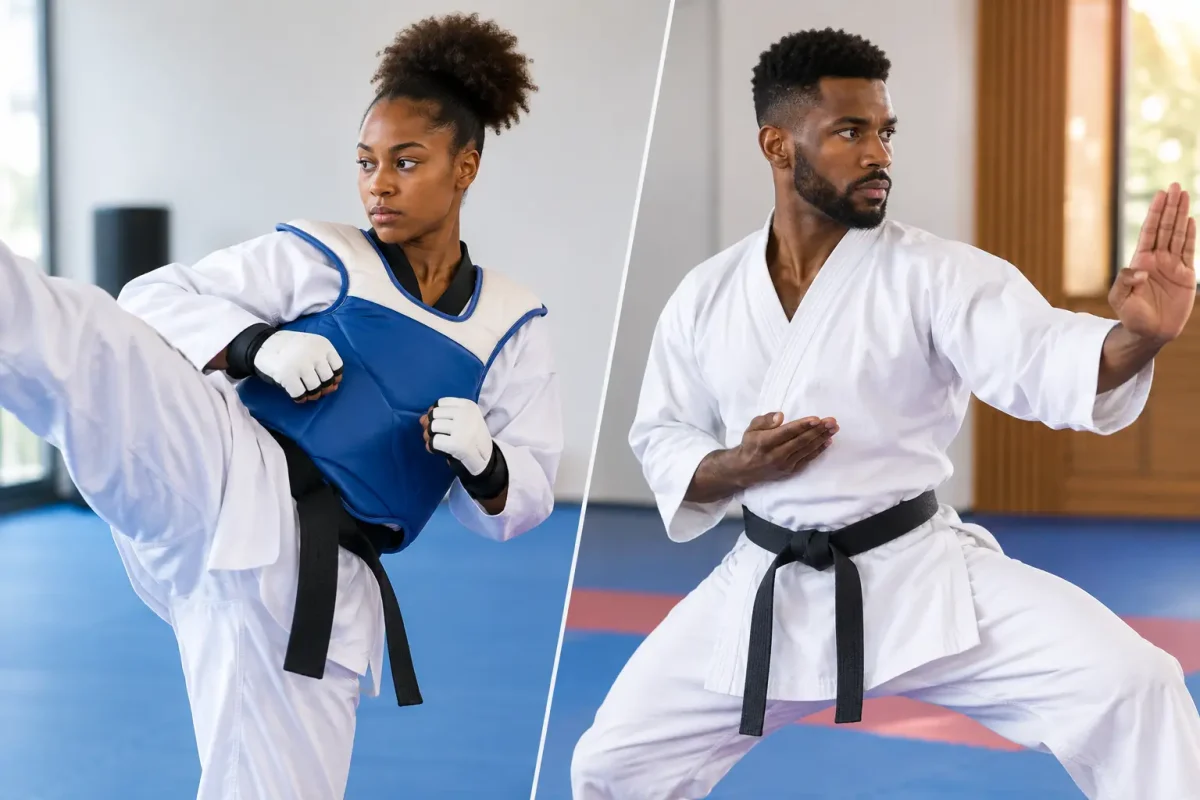
Taekwondo is often underestimated by adults because many first encounter it as a children’s activity. In reality, a well-taught adult Taekwondo programme offers demanding physical training, mobility, precision, striking mechanics, and a clear progression system.
It can be especially suitable for beginners who thrive with visible milestones. Patterns, grades, technical standards, and regular practice create a framework that makes progress easier to see. For someone rebuilding confidence, that structure matters. You don’t need to guess whether you’re improving; you can feel your balance sharpen, notice your kicks becoming cleaner, and work towards concrete goals.
Taekwondo does require patience with flexibility and coordination, particularly for higher kicks. You don’t need to arrive flexible. You need to train intelligently and respect your current range of motion. Adults with knee, hip, or back concerns should expect sensible adaptations rather than pressure to force positions their body isn’t ready for.
Choose by your goal, not by someone else’s image
If your primary goal is stress release and straightforward fitness, boxing or kickboxing may suit you. If you enjoy strategy, close-contact problem-solving, and technical learning, jiu-jitsu may hold your attention longer. If you want formal structure, discipline, mobility, and a visible progression path, Taekwondo is a serious option.
You may also benefit from training more than one discipline. Boxing can improve your hands and conditioning; jiu-jitsu can teach calm decision-making when space is limited; yoga and mobility work can support recovery and body awareness. There’s no prize for choosing the most dramatic route. Choose the practice you can sustain.
Your temperament matters too. Some adults need an energetic class to discharge accumulated tension after work. Others need a calmer, highly structured environment where they can build confidence without sensory overload. Neurodivergent trainees may benefit from coaches who explain expectations plainly, demonstrate movements clearly, and offer predictable class routines. Asking these questions before joining isn’t being difficult. It’s taking responsibility for your progress.
How to start combat sports as an adult
Start with a trial class or a short introductory period rather than committing based on a highlight video. Arrive early, tell the instructor you’re new, and be direct about injuries, health concerns, or what makes you nervous. A professional coach would rather adjust the session than have you hide discomfort to keep up.
For your first month, aim for consistency over intensity. Two sessions a week is enough to create momentum for most beginners. Your first targets should be simple: learn names, remember your stance, practise breathing under effort, and leave with enough energy to return. Stop negotiating with yourself about whether you must be perfect before you begin.
At Edson Breedy Athletics, adults can experience multiple disciplines during a trial week before deciding where to focus. That matters because the right fit is personal. The class that challenges you while still making you feel safe, coached, and capable is often the class that changes your routine for good.
You don’t need to wait until you’re fitter, braver, or less stressed to start. Training is where you build those qualities. Choose a class with standards, learn at your own honest level, and let disciplined repetition do what motivation alone never can.
Train your mind. Build your body.
Your first week is just TTD $50, every discipline, every class, no experience needed. Come find out what training with EBA feels like.