Mental Resilience Is Built Through Practice
September 16, 2026
A Guide to Beginner Strength Conditioning
September 20, 2026
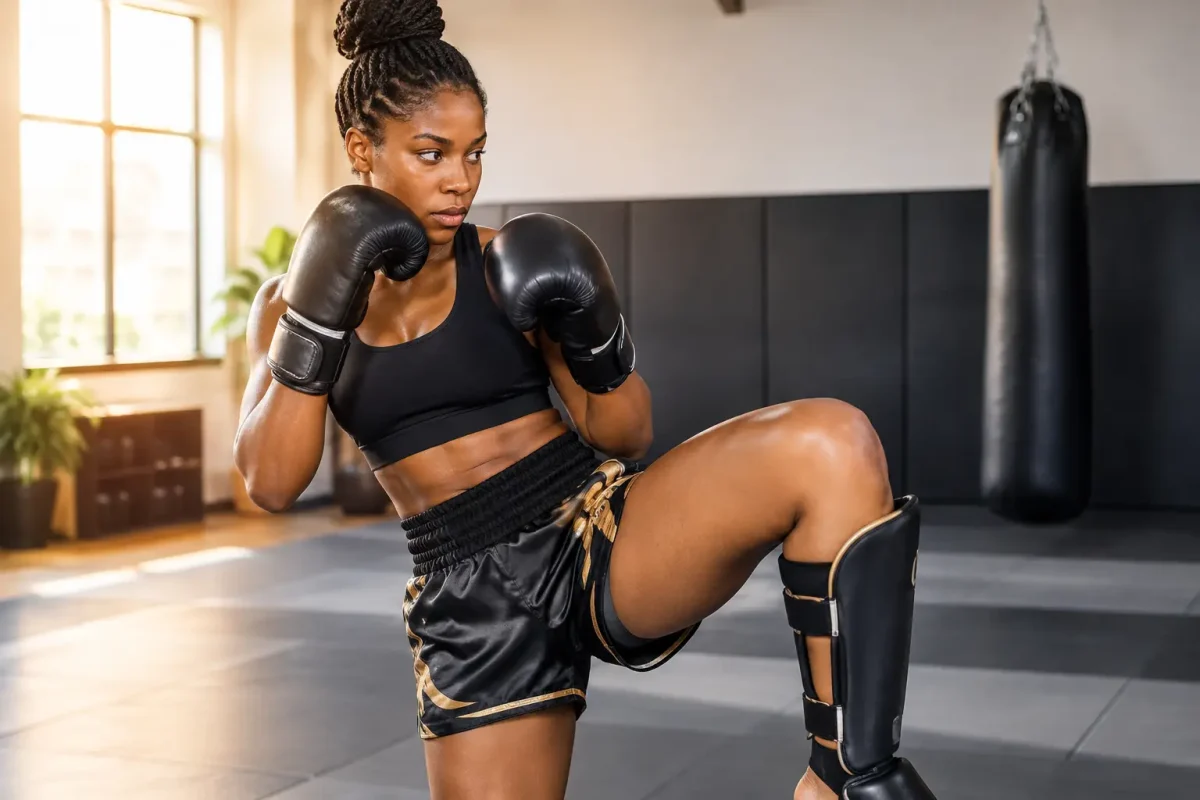
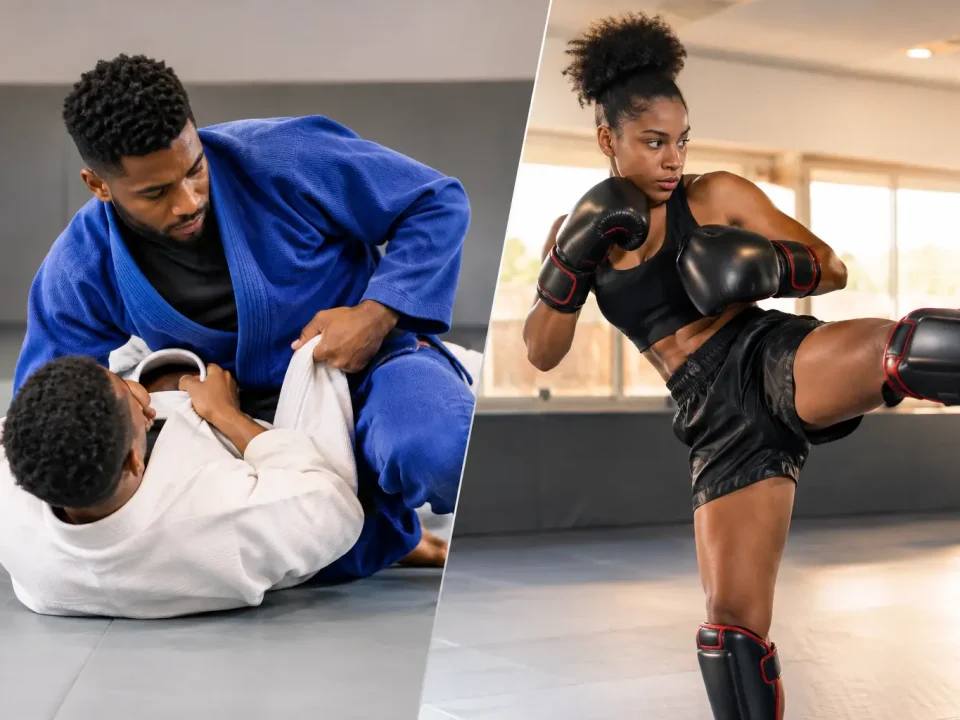
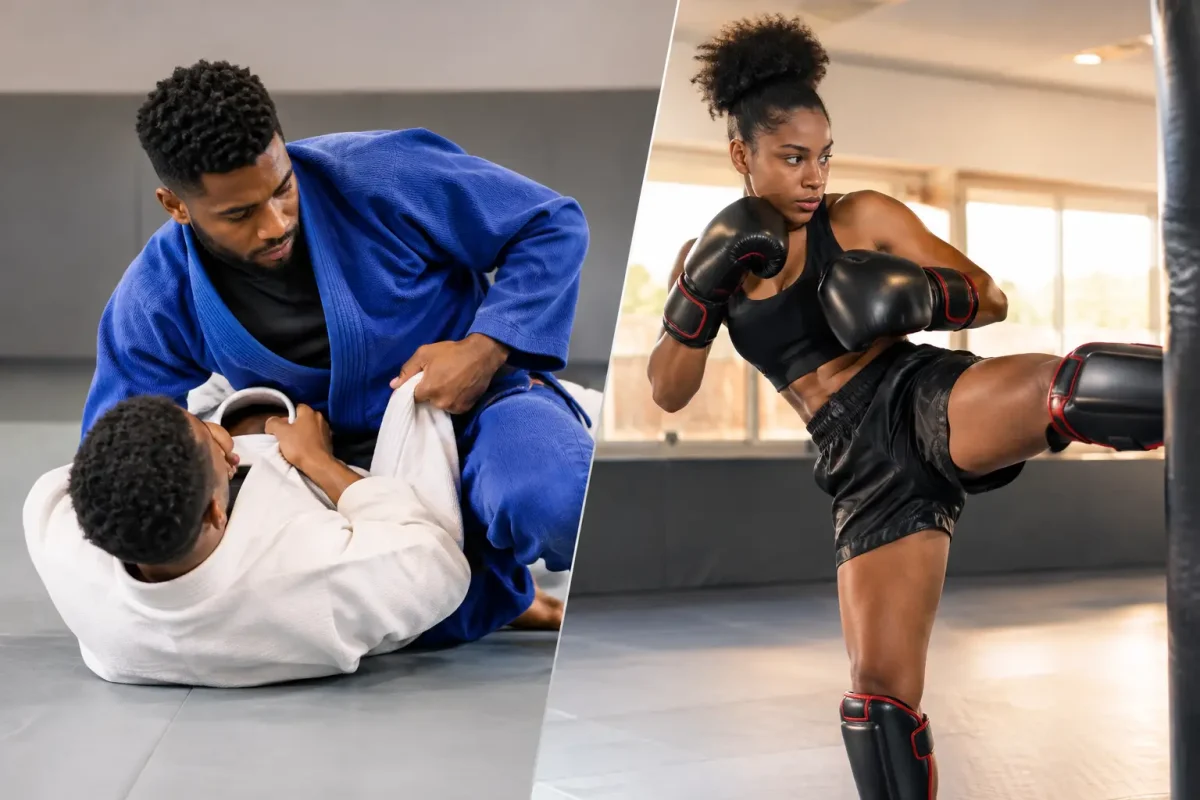
A kick can be fast, flexible and technically beautiful, then still fail because you can’t recover your stance afterwards. That’s the real test of control. Learning how to improve kickboxing balance isn’t about standing perfectly still on one leg. It’s about staying organised while you strike, defend, move and make decisions under pressure.
Balance is where physical skill meets self-regulation. When your body feels rushed or threatened, your nervous system may push you to tense up, lean too far, hold your breath or throw power without control. A disciplined fighter learns to return to position. Again and again. That habit makes your striking cleaner, your defence safer and your confidence more reliable.
Why kickboxing balance breaks down
Most balance problems aren’t caused by a lack of talent. They come from a few repeatable errors: a stance that’s too narrow, weight trapped on the front foot, overcommitting to power, or looking down at the floor when a kick lands. Fatigue can amplify all of them.
There’s also a mental component. Beginners often rush because they want to prove they can keep up. More experienced trainees can rush because they’re trying to win every exchange in sparring. Both responses create the same result: the body gets ahead of its base.
Your stance is your permission to strike. If you can’t comfortably stop, check a kick, step away or throw the next shot after your first attack, you aren’t truly balanced. You’re merely finishing the movement without falling.
Build a stance you can return to
A useful kickboxing stance should feel athletic, not frozen. Keep your feet around shoulder-width apart, with one foot slightly forward, knees soft and your weight distributed in a way that lets either leg move. For many people, that means feeling roughly centred rather than heavily planted on the front leg.
Don’t obsess over an exact percentage of weight. Body shape, style and the technique you’re about to use all matter. A fighter preparing to teep or check may feel a little more settled on the rear leg. A fighter stepping in to box may load differently for a moment. The rule is simpler: don’t get stuck.
Keep your heels light enough to adjust, but don’t rise so high that a small push takes you off line. Your chin stays level, your eyes stay forward and your ribs remain stacked over your hips. This alignment gives your legs a stable platform without turning your body into a stiff board.
Use a reset position
After every combination, return to a position from which you can move in any direction. This is your reset. Practise it deliberately in shadowboxing: jab-cross, reset; round kick, reset; three-punch combination, reset.
Pause for one second after each sequence. Can you lift either foot? Can you check, step back or throw another strike without first rearranging yourself? If not, slow down. Speed built on poor position only teaches your nervous system to repeat poor position faster.
Improve kickboxing balance through controlled footwork
Footwork isn’t decoration between attacks. It’s the mechanism that keeps your balance available.
When moving forwards, let the lead foot travel first, then bring the rear foot back to stance. When moving backwards, the rear foot moves first. When moving laterally, move the foot closest to the direction you’re travelling, then restore your stance. These principles prevent crossing your feet and leaving your base exposed.
Practise this at a pace that allows precision. Set a small square on the floor with tape or use imagined lines. Move around it for two minutes while keeping your stance width consistent. Add a jab when you step forwards, a defensive guard when you step back and a check after lateral movement.
The goal isn’t fancy movement. The goal is to stay capable. A controlled step that keeps you ready is more useful than a dramatic shuffle that leaves your legs crossed.
Stop lunging into punches
A lunge can feel powerful because your whole body is moving forwards. It also makes you easy to counter and difficult to recover. Let the floor drive your punch through a small, controlled step rather than a reach with your head and shoulders.
A simple correction is to shadowbox in front of a mirror or record a short round. Watch whether your head travels far beyond your lead knee when you jab or cross. If it does, shorten the step, keep your rear heel available and imagine that you must defend immediately after the punch.
Make every kick a return, not a fall
The kick is only half the technique. The return is where balance is proven.
For a round kick, pivot the supporting foot, turn your hip and keep the standing knee softly bent. Avoid throwing your upper body wildly in the opposite direction to force height or power. That may work on a bag, but it often collapses against movement, distance changes or a checked kick.
Bring the kicking leg back along a controlled path and land in stance, not with your feet together or too square. At first, kick below full power. Hold your posture for a beat after the return. This builds the awareness that your kick finishes only when you’re ready to act again.
Teep work demands a different kind of discipline. Don’t lean your chest far backwards and hope your arms save you. Lift the knee with control, extend the foot, recoil the leg and place it down with intention. If you lose balance often, reduce the height and range before trying to hit harder.
For knees, keep your supporting foot connected to the floor and your core organised. Pulling an opponent in the clinch can change your balance quickly, so practise kneeing with a stable posture before adding force and speed.
Train your core for force transfer, not just fatigue
A strong core does more than help you hold a plank. In kickboxing, it transfers force between the floor, hips, torso and hands while resisting unwanted rotation or collapse.
Choose exercises that teach control: dead bugs, side planks, slow mountain climbers, single-leg Romanian deadlifts and controlled carries. The quality of each repetition matters more than the burn. If your lower back arches, shoulders rise towards your ears or breath becomes chaotic, make the movement easier and regain control.
Single-leg work is especially valuable because every kick asks one leg to stabilise while the other moves. Start with support if needed. Holding a wall or rail while learning a single-leg hinge isn’t weakness. It’s intelligent progression. Remove support only when you can keep your hips level and your foot rooted.
Breathe before you try to move faster
Balance is partly a nervous system skill. A tense, breathless body has fewer good options.
Between rounds, take a longer exhale than inhale. Let your shoulders drop, unclench your jaw and feel both feet on the floor. This doesn’t make you passive. It helps shift you out of panic-driven movement so you can see, decide and respond.
During drills, use short exhales with strikes rather than holding your breath. Holding your breath often turns a simple combination into a rigid effort. You may not notice it until your legs become heavy and your technique starts to unravel.
For members who experience anxiety, ADHD or sensory overload, predictable balance drills can be particularly useful. Work with a clear rhythm, one task at a time and defined rest periods. Complexity can be added later. Safety and consistency come first.
Use progressive drills, not random repetition
A good balance drill gives you feedback. Try three rounds of slow shadowboxing where every kick is followed by a two-second hold in stance. Then work on the bag with light, clean kicks and an immediate defensive action after each return, such as a check, guard recovery or step out.
Partner drills should progress carefully. Start with agreed, predictable attacks. For example, your partner presents a pad for a round kick, then takes one step towards you as you return to stance. Your job isn’t to hit harder. Your job is to land ready.
Sparring comes later. Under pressure, simplify your targets and combinations. One clean kick followed by a stable exit is better training than five uncontrolled strikes. Discipline over adrenaline.
Know when balance issues need a different approach
If you’ve recurring ankle pain, knee instability, dizziness, a recent concussion or frequent falls, don’t simply push through it. Technique drills can help, but they don’t replace appropriate medical assessment or rehabilitation. Tell your coach what you’re experiencing so training can be adapted.
The same applies to fatigue. If your balance disappears only in later rounds, your conditioning may be part of the answer. Build your aerobic base, improve sleep and hydrate well, but also examine pacing. A fighter who spends every round at maximum intensity will eventually lose technical control.
At Edson Breedy Athletics, balance is trained as part of the wider discipline of movement, focus and emotional regulation. You don’t need to arrive coordinated or fearless. You need a coachable approach and the willingness to practise the basics without negotiating with yourself.
Your next session doesn’t need more power. It needs one standard: after every strike, return to a position where you can protect yourself, think clearly and choose what happens next.
Train your mind. Build your body.
Your first week is just TTD $50, every discipline, every class, no experience needed. Come find out what training with EBA feels like.